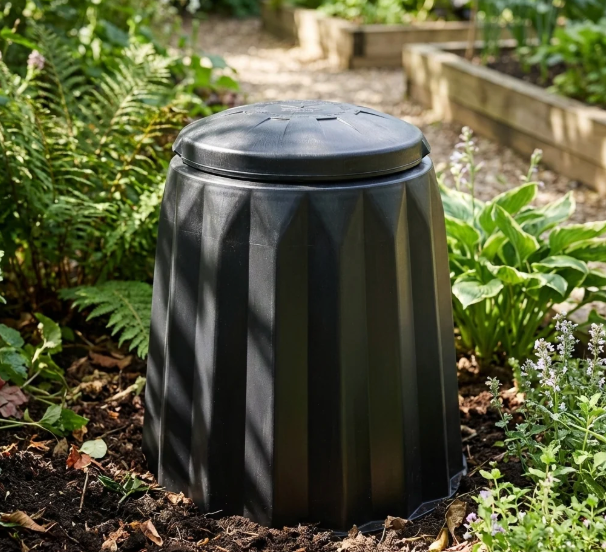
Quick answer: The best cheap compost bin in Australia is the Tumbleweed 220L Gedye Compost Bin (around $66)**. It is UV-stabilised, has a large open bottom for worm access, and handles Australian heat far better than thin plastic alternatives. If you want faster results and have a little more to spend, the **Maze Two Stage Compost Tumbler (around $79) is the best budget tumbler. If you have almost no budget at all, a wire mesh cylinder built for under $35 will out-compost many commercial bins in Australian conditions.
That is the short version. The rest of this article explains why those picks work, when a tumbler is worth paying extra for, and what to avoid so you do not waste money on a bin that frustrates you within a month.
Cheap compost bins get a bad reputation. Some of that is deserved. Thin plastic cracks after one summer. Tiny lids make emptying a chore. Open bottoms let rats move in. But the truth is that a $50–$100 bin can work brilliantly if you choose the right type and manage it properly. You do not need to spend $300 on a tumbler to make compost in Australia.
This guide cuts through the marketing and focuses on what actually matters: airflow, moisture retention, pest resistance, and how easy the bin is to live with. Every product reference below is based on verified Australian retail listings and specifications. Where I give a recommendation, it is clearly labelled as my assessment.
Comparison Table
| Compost bin | Approx. price | Capacity | Type | Best for | Main advantage | Main drawback |
|---|---|---|---|---|---|---|
| Tumbleweed 220L Gedye Compost Bin | ~$66 | 220 L | Static plastic bin | Most budget gardeners | Proven Australian design, UV-stabilised, large capacity | No lid on some models (check) |
| Tumbleweed 150L Gedye Compost Bin | ~$49.99 | 150 L | Static plastic bin | Small gardens, courtyards | Compact footprint, lightweight, very cheap | Smaller capacity fills quickly |
| Maze Two Stage Compost Tumbler | ~$79 | 180 L (90 L × 2) | Dual-chamber tumbler | Small to medium households | Continuous batch composting, pest-resistant | Limited capacity per batch |
| Saxon 65L Compost Tumbler | ~$49.95 | 65 L | Single tumbler | Beginners, very small spaces | Cheapest commercial tumbler at Bunnings | Small batch size only |
| Tumbleweed 200L Flat Pack Compost Bin | ~$53.90 | 200 L | Flat-pack plastic bin | Budget-conscious families | Large capacity for the price | Assembly required |
| Goplus 142L Dual Chamber Tumbler | ~$75.90–$92.95 | 142 L | Dual-chamber tumbler | Budget tumbler buyers | Cheapest dual-chamber option online | Frame quality varies |
| DIY Wire Mesh Cylinder | ~$25–$35 | ~650 L | DIY static pile | Renters, DIYers, anyone with almost no budget | Enormous capacity for almost nothing | No pest protection, exposed to weather |
Prices verified from Australian retailers including Bunnings, eMEGA, and BuyWisely price comparisons as of 2026. Prices fluctuate; check current listings before buying.
1. Best Cheap Compost Bin Overall: Tumbleweed 220L Gedye Compost Bin
Approximate price: $66 at Bunnings
The Tumbleweed Gedye is the workhorse of Australian backyard composting. It is not glamorous. It is a black plastic cylinder with an open bottom. But that simple design is exactly why it works so well here.
Why it earns the overall pick:
- UV-stabilised plastic. Australian sun destroys cheap plastic. The Gedye is made from UV-treated material that will not go brittle and crack after a summer of 40°C days.
- Large open bottom. This allows worms and beneficial soil organisms to enter the pile from below. That is free labour. It also means you never have to turn the entire bin to get finished compost from the bottom.
- 220 litres is the sweet spot. Big enough for a family of four’s kitchen scraps plus some garden waste, but not so big that it becomes unmanageable.
- Widely available. You can walk into almost any Bunnings and buy one. That matters for a budget purchase because you avoid shipping costs.
What to watch: Some versions of this bin do not come with a lid. A lid helps retain moisture in hot weather and keeps rain from turning your compost into sludge. If the model you buy is uncovered, a piece of hessian or a custom lid is a cheap addition. One thing worth considering is that open-bottom bins can attract rats if you compost meat, dairy, or oily food scraps. Stick to fruit and vegetable scraps, coffee grounds, tea leaves, and garden waste, and bury food scraps under brown material.
My assessment: For most budget-conscious Australian gardeners, this is the best value compost bin you can buy. It does not try to be clever. It just works.
2. Best Cheap Compost Bin for Small Gardens: Tumbleweed 150L Gedye Compost Bin
Approximate price: $49.99 at Bunnings
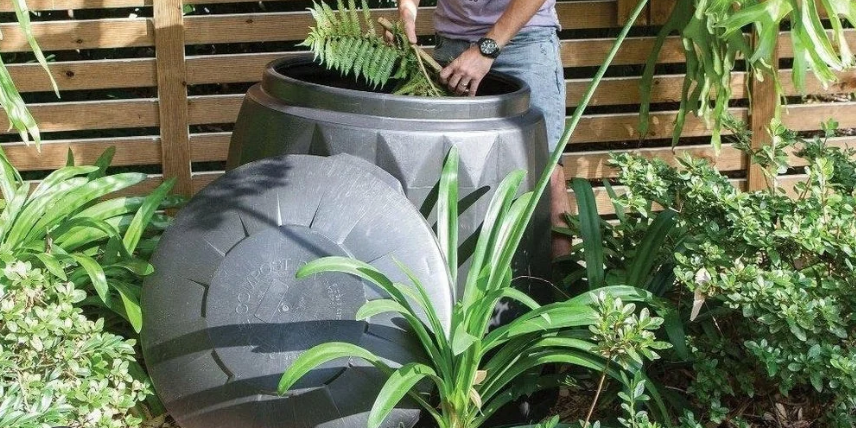
If your backyard is measured in square metres rather than acres, the 150L Gedye is the same proven design in a smaller package. It suits courtyards, townhouse gardens, and anyone who generates a moderate amount of kitchen scraps but does not have much garden waste to add.
Why it suits small spaces:
- Compact footprint. It takes up roughly the space of a large pot plant.
- Lightweight. You can move it by yourself if you need to relocate it.
- Cheap enough to try. At under $50, it is a low-risk entry point if you are new to composting.
The trade-off: 150 litres fills faster than you might expect. A household of two people producing regular kitchen scraps will fill this bin in a few months. If you have any garden waste to add, you will outgrow it quickly. For a single person or a couple with a small veggie patch, it is ideal. For a family, go bigger.
My assessment: A solid choice for renters and small-space gardeners. Just be realistic about how much organic waste you actually produce.
3. Best Budget Compost Tumbler: Maze Two Stage Compost Tumbler
Approximate price: $79 at Bunnings (listed as the “budget champion” in independent testing)
Tumblers solve the two biggest problems with static bins: pests and slowness. The enclosed drum keeps rats and possums out, and the turning action aerates the pile so it breaks down faster.
The Maze Two Stage is the cheapest tumbler that independent Australian testing has found genuinely reliable. It has a 180-litre total capacity split into two 90-litre chambers. That dual-chamber design is important. You fill one side while the other side finishes composting. When one batch is ready, you empty it and start filling that side while the first side matures. Continuous composting without waiting for the whole bin to finish.
Verified features (from manufacturer and retailer specs):
- Galvanised steel frame with UV-resistant plastic drums
- Easy-turn handle system
- Removable sliding doors for harvesting finished compost
- Australian-made construction
Performance notes from independent testing: During a six-month Australian test period, this tumbler handled Brisbane’s humid summers without the plastic warping, and the galvanised frame remained rust-free through multiple storm seasons. Compost production averaged 3–4 weeks in warm months and 6–8 weeks in cooler periods .
What a tumbler will not do: It will not handle large volumes of woody garden waste. It will not produce compost if you forget to turn it. And it will dry out faster than a ground-based bin in hot, dry conditions, so moisture monitoring is essential. Tumblers generally do better in humid or temperate climates and need more attention in arid areas like Perth or Alice Springs .
My assessment: If you want faster compost and live in a suburb with rats or possums, the $79 Maze tumbler is the best budget tumbler in Australia. If you are happy with slower results and have space for a ground bin, save the $13 and buy the 220L Gedye instead.
4. Best Compost Bin for Beginners: Tumbleweed 200L Flat Pack Compost Bin
Approximate price: $53.90 at Bunnings
Beginners often overcomplicate composting. The best first bin is one that is simple, cheap, and forgiving. The Tumbleweed 200L Flat Pack ticks all three boxes.
It arrives flat and assembles in minutes. No tools required for most models. It is a static bin, which means you do not need to remember to turn it every few days. You add materials, keep the moisture roughly right, and let nature do the work. Finished compost takes longer—typically 3–6 months in a static bin—but the process is far more forgiving of neglect than a tumbler.
Why it is good for beginners:
- Large capacity. 200 litres means you are not constantly monitoring how full it is.
- Simple operation. Add greens, add browns, keep it damp, wait.
- Cheap enough to replace. If composting turns out not to be for you, you have not lost $300.
- Made from UV-protected recycled plastic .
What beginners commonly get wrong: Adding too much green material (kitchen scraps, grass clippings) and not enough brown material (dry leaves, cardboard, shredded paper). The result is a smelly, slimy mess. Aim for roughly 3 parts brown to 1 part green by volume in a static bin . Keep a bag of shredded cardboard or a pile of dry leaves next to the bin so you can add a handful every time you add kitchen scraps.
My assessment: A no-fuss, no-regret first compost bin. It will not win awards for speed, but it will teach you the rhythm of composting without punishing your mistakes.
5. Cheapest DIY Compost Bin: Wire Mesh Cylinder (Under $35)
Approximate cost: $25–$35 in materials from Bunnings
If you want the absolute cheapest practical composting option, build a wire mesh cylinder. It is not a product you buy. It is a cylinder you make from a galvanised welded mesh panel, held together with cable ties or wire.
Materials (from Bunnings):
- 1.2m × 3m galvanised welded mesh panel: $20–$25
- Cable ties or galvanised wire: $3–$5
- Optional hinged gate latch for access: $5–$8
Capacity: Approximately 650 litres .
That is three times the capacity of a 220L commercial bin for roughly half the price. The wire mesh provides excellent airflow, which means faster decomposition than a solid plastic bin. It is also the easiest compost system to turn. You can lift the entire cylinder off the pile, set it beside the pile, and fork the uncomposted material back into the cylinder. Finished compost stays on the ground where you can use it.
The drawbacks are real:
- No pest protection. Rats and mice can walk straight in. Only compost fruit and vegetable scraps, bury them well, and turn regularly.
- No moisture control. In hot, dry Australian conditions, the pile dries out fast. You will need to water it regularly and cover it with hessian or shadecloth.
- No rain protection. In wet regions, the pile can become waterlogged. A lid or cover helps.
- Not suitable for apartments or courtyards. It is a functional garden structure, not a neat container.
My assessment: The wire mesh cylinder is the best cheap compost bin for anyone with a bit of ground and a tight budget. It outperforms most commercial bins on airflow and capacity. It just requires more active management.
6. Best Budget Option for Australian Conditions: Tumbleweed 400L Gedye Compost Bin
Approximate price: $93.35 at Bunnings
Australian conditions are brutal on compost systems. Extreme heat dries out piles. Heavy rain turns them into swamps. Rats and mice are persistent. The Tumbleweed 400L Gedye is the same proven design as the 220L model but with more thermal mass.
Why size matters in Australian heat: A larger pile retains moisture and temperature more effectively than a small one. The 400L capacity means the centre of the pile stays biologically active even when the surface dries out. You still need to monitor moisture in summer, but the bin is more forgiving than a 150L or 200L model.
Why it works in cooler regions too: In Melbourne, Adelaide, and Tasmania, a larger static bin maintains enough internal heat to keep decomposition ticking over through winter. Small bins can go dormant for months.
Price reality check: At around $93, this is at the upper end of “cheap” for a static bin. You are paying for capacity and the Tumbleweed name. If you have a large garden and generate significant green waste, it is still excellent value compared to a $300+ tumbler.
My assessment: The best budget option for Australian conditions if you have the space. If you are in a hot, dry climate or a cooler southern region, the extra thermal mass is worth the extra $27 over the 220L model.
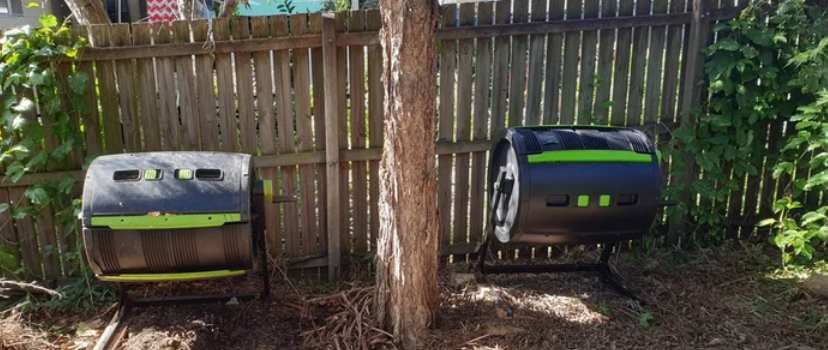
7. Best Cheap Compost Bin for Families: Tumbleweed 200L Flat Pack + a Second Bin
Approximate price: $53.90 × 2 = ~$108
Families produce more organic waste than couples or singles. A single 200L bin will fill up fast. But the solution is not to buy one enormous bin. It is to buy two cheap bins and run them in sequence.
How a two-bin system works:
- Bin A: actively filling with fresh kitchen scraps and garden waste.
- Bin B: sitting and maturing. No new material added. Finished compost is harvested from the bottom as needed.
When Bin A is full, Bin B should be ready or close to ready. Swap roles. This is the simplest continuous composting system and it costs less than a single mid-range tumbler.
Why this suits families:
- No waiting for the whole pile to finish. You always have one bin you can add to.
- Forgiving of imperfect management. If one bin goes anaerobic or dries out, you still have the other.
- Cheap to expand. Adding a third bin later is $54, not $300.
Alternative for families with more space: A DIY three-bin pallet system costs roughly $80–$95 in materials and holds around 1,000 litres . That is the most cost-effective high-volume system if you have a larger backyard and access to free pallets.
What I Would Buy If I Had $50, $100 or $150
This is where I stop talking about products and start talking about practical decisions.
$50 budget:
Buy the **Tumbleweed 150L Gedye Compost Bin ($49.99)** if you have a small garden and generate mostly kitchen scraps. Alternatively, buy materials for a **wire mesh cylinder ($25–$35)** and spend the remaining $15–$25 on a compost turner tool or a bag of compost starter. The wire cylinder gives you far more capacity and better airflow, but it requires active management and offers no pest protection.
If you want a tumbler at this price, the Saxon 65L Compost Tumbler ($49.95) is available, but 65 litres is very small. It suits a single person or a couple with minimal waste. Do not buy it expecting to compost garden waste.
$100 budget:
Buy the Tumbleweed 220L Gedye ($66)** and a **compost turner tool ($25.99). Total: about $92. This gives you a proven static bin with the tool you need to aerate it properly. Alternatively, buy the **Maze Two Stage Tumbler ($79)** if pest resistance and faster composting matter more to you than capacity and simplicity.
Do not split your $100 between two mediocre products. A single good bin and a turner is better than a tiny tumbler and a kitchen caddy.
$150 budget:
Buy the Tumbleweed 220L Gedye ($66)** and a **Tumbleweed 200L Flat Pack ($53.90). Run them as a two-bin system. Total: about $120. Spend the remaining $30 on a compost thermometer or a bag of compost accelerator. This setup gives you continuous composting without the mechanical complexity of a tumbler.
If you prefer a tumbler at this budget, the **Maze Two Stage ($79)** is still the best value. You could add a second-hand or budget thermometer and still have change. Spending $150 on a single tumbler does not get you a meaningfully better product than the $79 Maze for a household of four. The returns diminish quickly above $100.
How to Choose a Cheap Compost Bin
Choosing a cheap compost bin is not about finding the absolute lowest price. It is about finding the bin that matches your household, your climate, and your willingness to manage it.
Capacity
The single most common mistake is buying too small. A 150L bin feels spacious when empty. It fills in weeks. As a rough guide:
- 1–2 people, mostly kitchen scraps: 150–200 L
- 2–4 people, kitchen scraps plus some garden waste: 200–300 L
- 4+ people or significant garden waste: 300 L+ or a multi-bin system
Ventilation
Compost needs oxygen. Without it, you get anaerobic decomposition: slow, smelly, and unpleasant. Solid plastic bins rely on the open bottom and any vents or gaps for airflow. Wire mesh and pallet bins have excellent natural ventilation. Tumblers aerate through turning. Ventilation matters more than you think. A sealed plastic box with no airflow is a failed compost bin waiting to happen.
Moisture Control
Compost should feel like a wrung-out sponge: damp but not dripping. In hot Australian summers, bins dry out fast. In wet regions, they waterlog. Look for a bin with a lid that can be adjusted or removed. In arid areas, a lid helps retain moisture. In humid areas, ventilation matters more than a tight seal.
Drainage
If your bin sits on concrete or pavers, liquid cannot drain away. You end up with a soggy mess. Bins with open bottoms on soil drain naturally. If you must place a bin on a hard surface, choose a tumbler with drainage holes, or put the static bin on a pallet or grate.
Access to Finished Compost
This is where cheap bins often fall down. Some static bins have a small hatch at the bottom for removing finished compost. Some tumblers have sliding doors. Some have neither, forcing you to lift the entire bin off the pile to harvest. Before buying, look at how you will actually get the compost out. A bin that is hard to empty becomes a bin you stop using.
Ease of Turning or Mixing
Static bins need occasional turning or mixing with a fork or compost turner. Tumblers have a handle or crank. The easier the turning mechanism, the more likely you are to do it. A stiff, awkward tumbler handle is worse than no handle at all because it discourages use.
Durability
Australian UV is relentless. Cheap plastic that is not UV-stabilised will crack within a summer or two. Look for UV-treated or UV-stabilised plastic. Galvanised steel frames on tumblers should be powder-coated or otherwise protected against rust. Wooden pallets should be heat-treated (marked HT), not chemically treated.
Pest Resistance
Rats and mice are a problem in most Australian suburbs. The most pest-resistant bins are enclosed tumblers with secure lids. Static plastic bins with open bottoms are vulnerable unless you lay wire mesh underneath. Wire mesh cylinders offer almost no pest protection. Never compost meat, dairy, oily food, or pet waste in an open-bottom bin.
Odour Control
A well-managed compost bin should not smell bad. If it does, the cause is almost always too much green material, too much moisture, or not enough air. A cheap bin that is properly managed will smell earthy, not rotten. A cheap bin that is poorly managed will stink regardless of price. Odour is a management problem, not a product problem.
Australian Weather
Hot weather: compost dries out, so a lid and regular watering help. Dry conditions: shade and moisture retention matter more than ventilation. Heavy rainfall: a lid and good drainage prevent waterlogging. Fruit fly zones: check your state’s restrictions before composting fruit and vegetable scraps. Rats and mice: choose an enclosed design or lay wire mesh. Small suburban backyards: compact bins and tumblers work better than large static piles.
Available Space
A tumbler needs clearance to rotate. A static bin needs enough room to lift the lid and fork material. A wire mesh cylinder needs a circle of ground about one metre across. Measure your space before buying.
Number of People in the Household
More people means more food scraps. A household of four generates roughly twice the kitchen waste of a couple. Size up accordingly.
Amount of Food and Garden Waste Produced
If you have a large garden with lots of prunings and grass clippings, a static bin or DIY system handles volume better than a tumbler. If you mostly have kitchen scraps, a tumbler or small static bin is fine.
Australian-Specific Considerations
This is not a generic composting article with “yard” changed to “backyard.” Australian composting is genuinely different.
Hot Weather
Compost piles can reach 60–70°C internally during active decomposition. That is normal and good. But in extreme heat, the surface of a pile can dry out completely, killing the microbial activity at the edges. Mulch or cover the surface with hessian, shadecloth, or a lid. Water if the pile is dry. In 40°C weather, turn the pile every 3–4 days instead of weekly to release excess heat and maintain oxygen levels .
Dry Conditions
In Perth, Adelaide, and inland areas, moisture loss is the biggest challenge. A static bin with a lid retains moisture better than an open tumbler. If you use a tumbler in a dry climate, check the contents weekly and add water when needed. A tumbler in full sun can cook and dry its contents faster than you expect.
Heavy Rainfall
In tropical and subtropical regions, the wet season can waterlog compost. A lid is essential. If your bin sits on soil, ensure the ground around it drains well. If it sits on concrete, elevate it on a pallet. Soggy compost goes anaerobic and smells like sewage.
Fruit Flies
Fruit flies are a year-round nuisance in many parts of Australia, and compost bins are a magnet. The solution is to bury food scraps under at least 15cm of brown material or finished compost every time you add them. Never leave food scraps exposed on the surface. In fruit fly outbreak zones, check your state’s restrictions before composting fruit and vegetable scraps. Some councils require host fruit to be double-bagged and put in general waste rather than composted .
Rats and Mice
Rodents burrow under compost bins and nest in the warm, moist material. The simplest prevention is to lay a piece of vermin wire mesh (approximately 1cm grid) on the ground before placing your bin. This allows worms through but blocks rats. Keep compost moist and turn it regularly. Rodents prefer dry, undisturbed piles . Never compost meat, dairy, or oily foods in a bin with an open bottom.
Bushfire-Conscious Gardening
In bushfire-prone areas, compost piles are not a significant fire risk if they are kept moist and managed. However, dry, woody mulch and compost materials stored above ground can smoulder if embers land on them. Keep compost areas clear of dry vegetation and consider locating bins away from the house in high-risk zones. This is general advice; check your local council’s bushfire preparedness guidelines.
Small Suburban Backyards
Most Australian suburban backyards are too small for a traditional three-bin system. Tumblers and compact static bins are the practical choice. A 150–200L bin or a 100–180L tumbler fits comfortably in a corner without dominating the space.
Australian Household Food Waste
Australian households throw away roughly $2,000–$3,800 worth of food each year. A significant portion of that is compostable. Even a small compost bin diverts a meaningful amount of organic waste from landfill, where it would otherwise produce methane.
Green and Brown Materials
Green materials are nitrogen-rich: kitchen scraps, fresh grass clippings, coffee grounds, green leaves. Brown materials are carbon-rich: dry leaves, cardboard, newspaper, straw, wood chips. The ideal ratio is roughly 3 parts brown to 1 part green by volume in a static bin, or 3:1 in a tumbler . Most Australian beginners add far too much green and not enough brown. Keep a stash of shredded cardboard or dry leaves next to the bin.
Composting in Different Australian Climates
- Tropical (Cairns, Darwin): Fast decomposition but high risk of anaerobic conditions in the wet season. Use a lid, ensure drainage, and turn frequently.
- Subtropical (Brisbane, northern NSW): Excellent composting conditions year-round. Tumblers work well. Watch for fruit fly.
- Temperate (Sydney, Melbourne, Adelaide, Perth): Good composting for most of the year. Winter slows decomposition. Tumblers maintain heat better than static bins.
- Arid (Alice Springs, inland WA): Moisture is the limiting factor. Static bins with lids outperform tumblers. Shade is essential.
- Cool (Tasmania, high country): Composting slows dramatically in winter. Larger bins with more thermal mass help. Tumblers keep working longer than static bins.
Cheap Does Not Mean Bad
There is a persistent idea in gardening circles that you need to spend $300+ on a compost tumbler to get serious results. That is not true. Here is when a cheap bin is actually better value, and when spending more makes sense.
When a Cheap Bin Wins
You are new to composting. A $50 static bin teaches you the rhythm of composting without a large financial commitment. If you discover you hate turning a tumbler every two days, you have lost $50, not $300.
You have space for a ground-based bin. The cheapest bins—wire mesh cylinders, static plastic bins—rely on soil contact and natural airflow. If you have a patch of ground, these outperform tumblers on capacity, airflow, and cost per litre.
You produce mostly kitchen scraps. A $66 Tumbleweed Gedye handles kitchen scraps fine. You do not need a tumbler’s speed if you are not in a rush.
You are willing to manage the bin actively. A cheap static bin with regular turning, proper moisture, and good green/brown balance will produce excellent compost. The limitation is management, not the bin.
When Spending More Is Worth It
You have a rat or possum problem. Enclosed tumblers are worth the extra money if rodents are persistent. A $79 tumbler that keeps rats out is better value than a $66 static bin that becomes a rat nest.
You want faster results. Tumblers produce compost in 6–8 weeks. Static bins take 3–6 months. If you need regular batches of compost for a productive vegetable garden, the speed matters.
You have very limited space and want a neat appearance. Tumblers look tidier than static bins or wire cylinders. In a courtyard or balcony setting, aesthetics matter.
You want a bin that lasts 10–15 years. Quality tumblers with galvanised steel frames and UV-stabilised drums will outlast cheap plastic static bins. The upfront cost is higher, but the cost per year of use can be lower.
You cannot bend or lift easily. Tumblers are easier to turn than static bins. If mobility is a consideration, the extra cost is justified.
Common Mistakes
Buying a bin that is too small. The most common regret. A 150L bin fills faster than you expect. Size up if you can.
Poor ventilation. A sealed plastic box with no airflow will go anaerobic. Choose a bin with an open bottom, vents, or a turning mechanism.
Adding too much food waste without brown material. Food scraps are green material: wet, nitrogen-rich, and prone to smelling. Cover every addition with a handful of shredded cardboard, dry leaves, or sawdust.
Not enough brown material overall. The ideal ratio is roughly 3 parts brown to 1 part green by volume. Most beginners add far too much green. Keep a supply of browns next to the bin.
Excess moisture. Compost should be damp like a wrung-out sponge, not dripping. If it is soggy, add browns and turn. If it is dry, add water and turn.
Letting compost dry out. In Australian summers, this is as common as waterlogging. Check moisture weekly and water if needed.
Putting unsuitable materials in the bin. Meat, dairy, oily food, pet waste, and diseased plants do not belong in a home compost bin. They attract pests and create odour.
Expecting compost too quickly. A static bin takes 3–6 months. A tumbler takes 6–10 weeks. A wire cylinder in winter might take 6 months. Patience is part of the process.
Not turning the pile. Static bins need occasional turning to aerate. Tumblers need regular turning to work at all. If you never turn, you get slow, smelly compost.
Placing the bin in full sun. A compost bin in full Australian sun dries out and overheats. Morning sun with afternoon shade is ideal.
Frequently Asked Questions
What is the cheapest way to make compost?
A wire mesh cylinder built from a $20–$25 galvanised mesh panel and cable ties. Total cost: under $35. It holds around 650 litres and produces excellent compost if you manage moisture and turn it regularly. The cheapest commercial option is the Tumbleweed 150L Gedye at around $49.99.
Are cheap compost bins worth it?
Yes, if you choose the right type. A cheap static bin with an open bottom and UV-stabilised plastic will work well for years. The main compromises are speed, pest resistance, and convenience. If you are willing to manage the bin actively, a cheap bin is excellent value.
What is the best compost bin for beginners?
The Tumbleweed 200L Flat Pack Compost Bin ($53.90). It is simple, forgiving, and large enough that you are not constantly monitoring it. It teaches you the basics without punishing mistakes.
How much does a good compost bin cost in Australia?
A functional compost bin starts at around $50 for a 150L static bin and $66 for a 220L static bin. A reliable budget tumbler costs around $79. You do not need to spend more than $100 to get a bin that works well for a typical household.
Is a compost tumbler better than a normal compost bin?
It depends on your priorities. Tumblers are faster (6–8 weeks vs 3–6 months), better for pest resistance, and neater in small spaces. Static bins hold more, need less active management, and cost less per litre of capacity. In hot, dry climates, static bins retain moisture better. In humid or temperate climates, tumblers work very well.
Can I compost in a small backyard?
Yes. A 150L static bin or a 100L tumbler fits in a courtyard or small garden. Keep it in morning sun with afternoon shade, and stick to kitchen scraps and small amounts of garden waste. For very small spaces, a worm farm or bokashi bin may be more practical.
How do I stop a cheap compost bin from smelling?
Smell is almost always caused by too much green material, too much moisture, or not enough air. Add brown material (shredded cardboard, dry leaves), turn the pile to introduce oxygen, and check that the bin is not waterlogged. Bury food scraps under brown material every time you add them.
How do I keep rats out of my compost bin?
Lay a piece of vermin wire mesh (1cm grid) on the ground before placing the bin. Keep the compost moist and turn it regularly. Never compost meat, dairy, oily food, or pet waste in an open-bottom bin. Enclosed tumblers are the most rat-resistant option.
How long does compost take to make?
A tumbler in warm weather: 6–10 weeks. A static bin in warm weather: 3–6 months. A static bin in cool weather: 6–12 months. A wire cylinder: similar to a static bin but often faster due to better airflow.
Can I make my own compost bin?
Yes. The cheapest option is a wire mesh cylinder ($25–$35). A pallet bin costs $35–$45 if you source free pallets. A three-bin pallet system costs $80–$95. All three work well in Australian conditions.
What size compost bin should I buy?
For 1–2 people with mostly kitchen scraps: 150–200L. For 2–4 people with kitchen scraps and some garden waste: 200–300L. For 4+ people or significant garden waste: 300L+ or a multi-bin system. When in doubt, size up.
Can I compost in hot Australian weather?
Yes, but you need to manage moisture. Cover the pile to reduce evaporation, water if it dries out, and turn more frequently in extreme heat. A larger bin retains moisture better than a small one.
1 thought on “Best Cheap Compost Bin in Australia: 7 Budget Options That Actually Work”