Table of Contents
Introduction
Let’s be honest, most Australian households throw away way too much food. It’s not something we’re proud of, but between busy weeknights, fussy kids, and that sad bag of spinach you forgot at the back of the fridge, food waste piles up fast.
The stats back this up. In South Australia alone, around 40% of what ends up in landfill bins is food and other compostable items. That’s nearly half your rubbish bin filled with stuff that didn’t need to be there. And when that organic waste gets buried under a landfill, it doesn’t just disappear; it releases methane, a greenhouse gas roughly 21 times more potent than carbon dioxide.
But here’s the good news: composting at home is genuinely easier than most people think. And it starts with one simple tool, a compostable compost bin. Whether you’re in a Sydney apartment or a sprawling backyard in regional Victoria, there’s a solution that fits your space.
What Is a Compostable Compost Bin?
Okay, so this term trips people up all the time. Let’s clear the air.
A compostable compost bin typically refers to two different things, and both matter for eco-friendly composting:
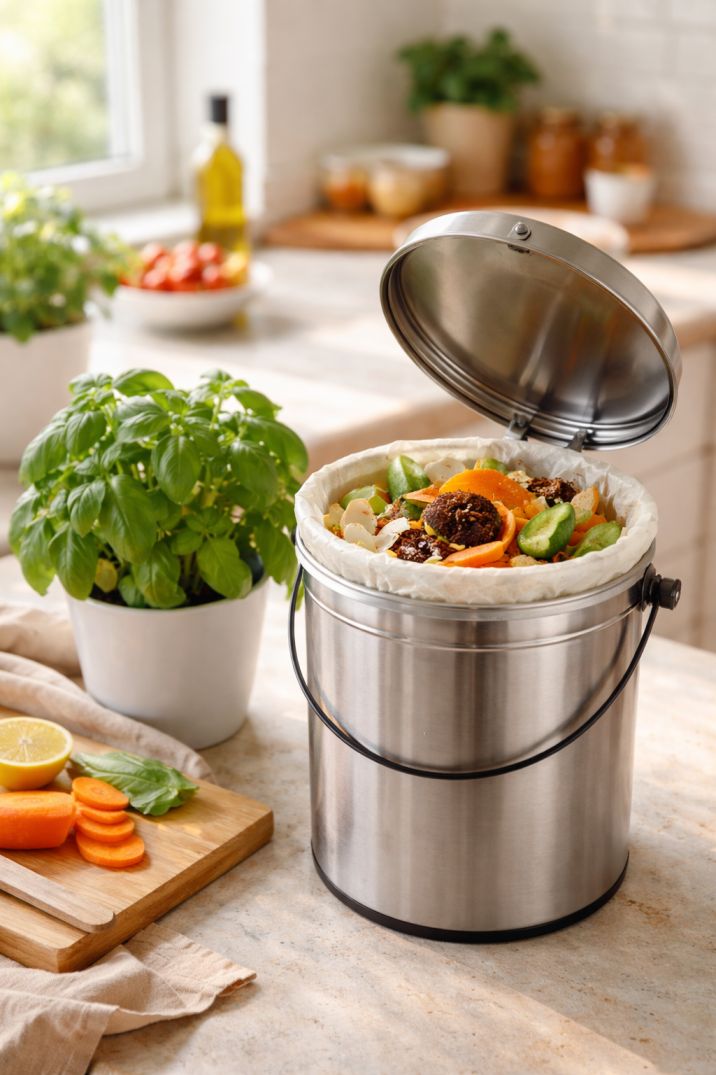
1. A bin designed to hold compostable waste — This is the container that sits on your kitchen bench or under the sink, collecting your day-to-day food scraps before they head to the garden or council green bin. These bins themselves aren’t compostable (they’re usually stainless steel, ceramic, or recycled plastic), but they store compostable waste.
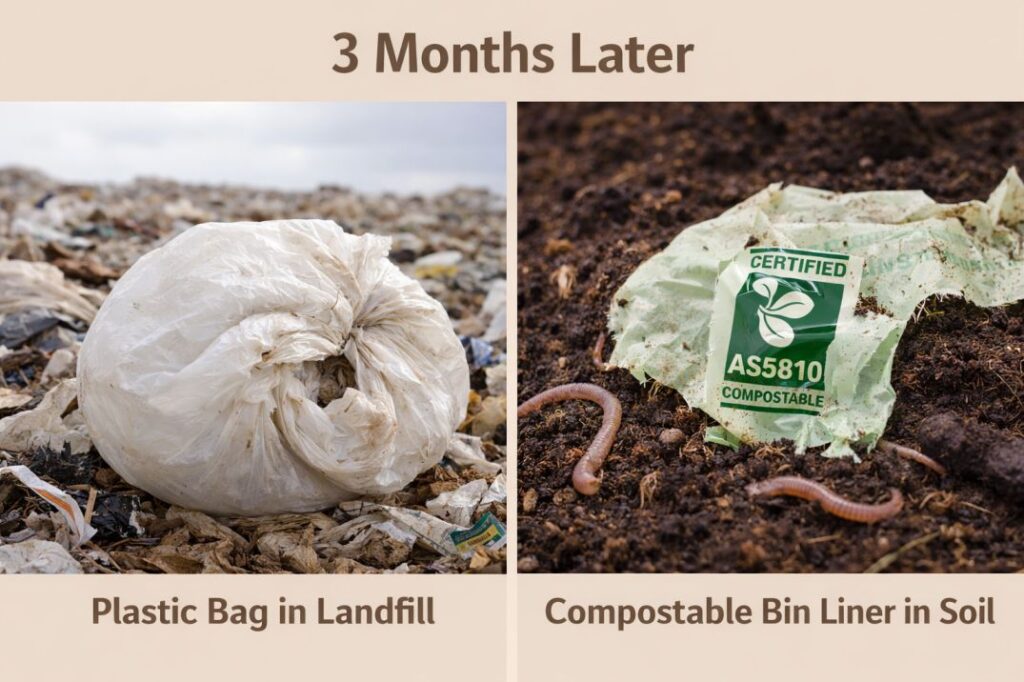
2. Compostable bin liners — This is where the “compostable” part really kicks in. These liners are made from plant-based materials (often corn starch) and break down completely in soil, water, or your compost heap, no microplastics left behind.
The key difference between a regular bin and a proper compostable compost bin setup? Regular bins use plastic bags that’ll outlive your grandkids. A true eco-friendly system pairs a durable collection bin with liners certified to Australian standards like AS4736 or AS5810, meaning they genuinely biodegrade.
Benefits of Using a Compostable Compost Bin
If you’re still on the fence, here’s what’s actually in it for you (beyond feeling virtuous):
You’ll slash your household waste — Once you start separating food scraps, you’ll be shocked at how little actual rubbish you produce. Many Aussie households find their general waste bin is suddenly half-empty each week.
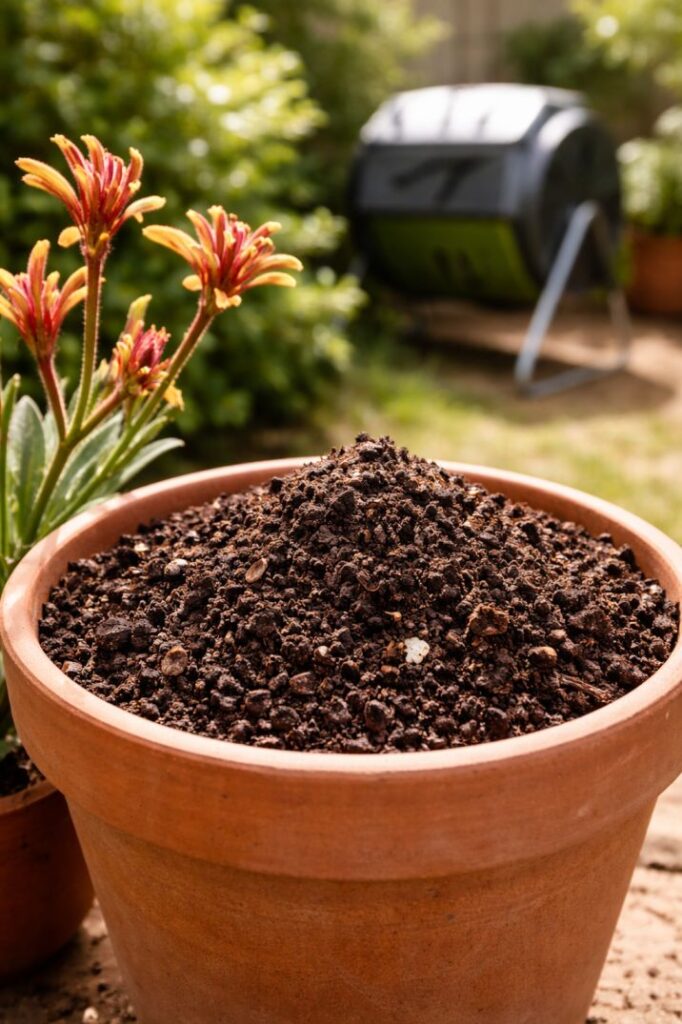
Your garden will thank you — That nutrient-rich compost? Gardeners call it “black gold” for a reason. It improves soil structure, retains moisture, and feeds your plants without chemical fertilisers.
No stinky kitchen bin — A proper compostable compost bin with a charcoal filter traps odours like a champ. No more holding your breath when you open the lid.
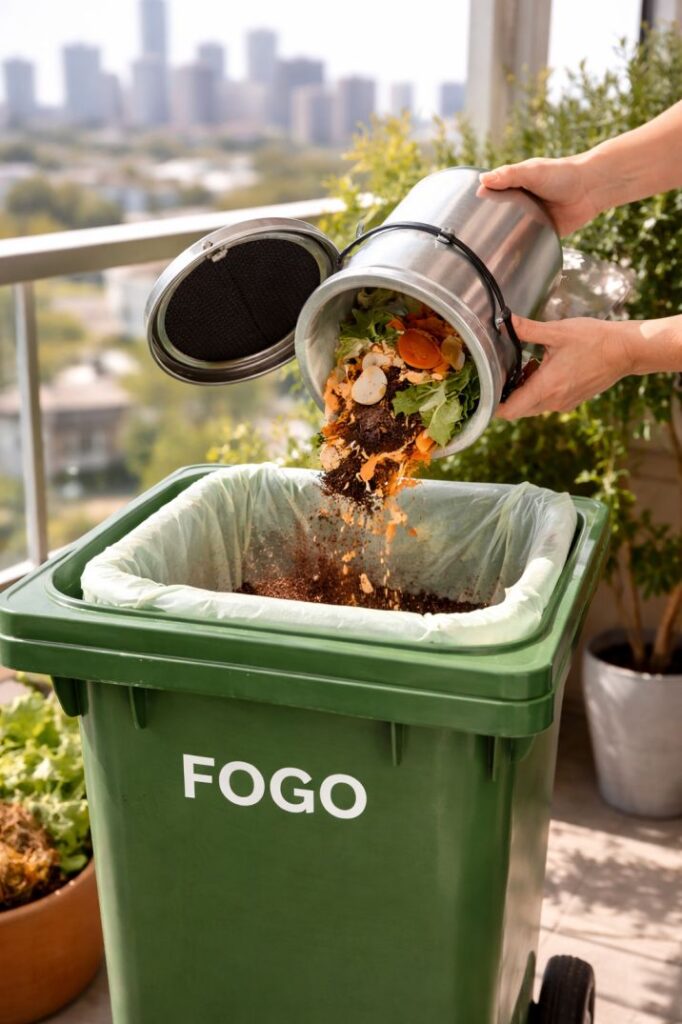
Perfect for apartments and small homes — Don’t have a backyard? No worries. Compact kitchen compost bins take up minimal bench space, and many Aussie councils now offer FOGO (Food Organics Garden Organics) collection, just empty your scraps into the green-lidded kerbside bin.
It’s cheap (or even free) to start — Some councils, like the Gold Coast, offer subsidised composting equipment through programs like Compost Revolution, we’re talking compost bins for under $50.
Types of Compostable Compost Bins
Not all setups are created equal. Here’s what’s available for Australian homes:
Kitchen Countertop Bins
These are your everyday workhorses, compact bins (usually 6-9 litres) that live on your bench or under the sink. The best ones feature:
- Stainless steel construction for durability
- Charcoal filters to neutralise smells
- Carry handles for easy emptying
- Compatibility with compostable bin liners
Bokashi Bins
Bokashi is a bit different; it actually ferments your scraps using a special spray or bran containing beneficial microbes. It’s brilliant for apartment dwellers because it’s compact, virtually odour-free, and can handle things traditional compost can’t (like small amounts of meat and dairy). The liquid by-product makes excellent plant fertiliser when diluted.
Outdoor Compost Bins
For those with yards, a larger outdoor bin (often 200-300 litres) sits directly on soil and breaks down both kitchen scraps and garden waste. The open-bottom design lets worms and microorganisms do their thing.
A Quick Word on Liners
Here’s where people get confused: not all “biodegradable” bags are created equal. Look for Australian certification, AS4736 or AS5810, which guarantees the liner will break down in home compost conditions, not just industrial facilities.
How to Use a Compostable Compost Bin (Step-by-Step)
Ready to dive in? Here’s the no-fuss approach:
Step 1: Set up your station
Place your kitchen compost bin somewhere convenient, a bench, under the sink, wherever you’ll actually use it. If it comes with a charcoal filter, pop that in the lid.
Step 2: Line it (optional but helpful)
Using certified compostable liners makes emptying mess-free. The liner breaks down right along with your scraps.
Step 3: Know what goes in
✅ Greens (nitrogen-rich) :
- Fruit and veggie scraps
- Coffee grounds and loose tea leaves
- Fresh grass clippings
- Eggshells (crushed)
✅ Browns (carbon-rich) :
Step 4: Know what stays out
❌ Avoid these :
- Meat, bones, and dairy (small amounts okay in Bokashi systems)
- Oils and fats
- Pet waste
- Plastic fruit stickers
- Glossy or coated paper
- Diseased plants
Step 5: Empty regularly
Depending on your household size, empty your kitchen bin every 2-4 days into your outdoor compost, worm farm, or council green bin.
Step 6: Basic maintenance
Wash your bin with warm, soapy water between uses. Replace charcoal filters every few months for ongoing odour control.
Best Compostable Compost Bin Options in Australia
I’m not going to push specific brands, but here’s what to look for based on your living situation:
| Living Situation | Recommended Setup |
|---|---|
| Apartment (no outdoor space) | Compact 6-8L benchtop bin + council FOGO collection or Bokashi system |
| Unit/townhouse with small courtyard | Benchtop bin + small outdoor tumbler or worm farm |
| Suburban home with garden | Benchtop bin + 200-300L outdoor compost bin on soil |
| Large property/rural | Multiple outdoor bins + dedicated compost bays |
For kitchen bins, stainless steel with charcoal filters tends to outlast plastic and looks decent on the bench. Some Aussie-made options use recycled plastic and support local manufacturing.
Common Mistakes to Avoid
Learn from others’ compost fails:
The soggy, smelly mess — This happens when you’ve got too many “greens” (food scraps) and not enough “browns” (dry leaves, cardboard). Aim for a roughly 50/50 balance.
Wrong stuff in the bin — Meat scraps in a traditional compost attract rats faster than you can say “pest control.” Stick to plant-based scraps unless you’re using Bokashi.
Forgetting to empty it — A full kitchen bin left for two weeks in summer? You’re gonna have a bad time. Empty every few days.
Using “biodegradable” bags that aren’t certified — Some bags labeled biodegradable just break into smaller plastic pieces. Look for the Australian certification logo.
Tips for Faster Composting
Want that black gold sooner? Here’s what works:
Chop it up — Smaller pieces break down faster. Give chunky veg scraps a quick chop before tossing them in.
Layer like lasagne — Alternate greens and browns in your outdoor bin. Think of it as a sandwich: browns are the bread, greens are the filling.
Keep it damp (not wet) — Your compost should feel like a wrung-out sponge. In hot Aussie summers, you might need to add water occasionally.
Turn it over — Aerating your compost with a garden fork or corkscrew turner speeds things up significantly. Once a week is plenty.
Let it rest — Once your outdoor bin is full, stop adding new scraps and let it cure for about three months. This is when the magic happens.
Is It Worth It? (Honest Opinion)
Look, I’m not going to pretend composting will change your life overnight. It takes a tiny bit of effort, remembering to empty the bin, occasionally dealing with fruit flies in summer, and figuring out the green/brown balance.
But here’s the thing: once it becomes a habit, you barely think about it. And the payoff is genuinely solid:
- Your rubbish bin stops smelling like, well, rubbish
- You’re sending less waste dramatically to the landfill
- If you garden, you get free, incredible soil conditioner
- It’s one of those small actions that actually makes a measurable difference
For apartment dwellers using council FOGO collection, it’s practically effortless, just a separate bin under the sink. For homeowners with gardens, it’s a no-brainer that saves money on fertiliser and soil conditioners.
Start small. Grab a basic kitchen compost bin, some compostable liners, and figure out where your scraps will go (backyard bin, worm farm, or council collection). You can always upgrade later.
Ready to Give It a Crack?
Your compostable compost bin journey doesn’t need to be perfect from day one. Even collecting a few veggie scraps each week makes a difference.
Start today, pop a container on your bench, toss in tonight’s carrot peels, and you’re already on your way. Your garden (and the planet) will genuinely thank you.
Got questions? Drop them in the comments below. I’d love to hear how your composting journey is going.
FAQs
What’s the difference between biodegradable and compostable?
Biodegradable just means something will eventually break down, but it might take decades and leave microplastics behind. Compostable (with proper certification) means it breaks down completely into non-toxic organic matter within a specific timeframe. Always look for the Australian AS4736 or AS5810 certification on liners.
Can I compost if I live in an apartment with no garden?
Absolutely. Use a small benchtop bin with compostable liners and empty it into your council’s green FOGO bin (if available in your area). Alternatively, try a Bokashi system, which ferments scraps right in your kitchen; the liquid can be used to feed indoor plants.
How do I stop my kitchen compost bin from smelling?
Two things help massively: a bin with a charcoal filter in the lid, and emptying it every 2-3 days. Sprinkling a little bicarb soda in the bottom also neutralises odours.
Are compostable bin liners actually worth the extra cost?
Yes, if you buy certified ones. They prevent the gross factor of cleaning out a slimy bin and break down completely without harming your compost. The convenience factor alone makes composting more sustainable long-term.
How long until I get usable compost?
In a well-maintained outdoor bin, expect 3-6 months. Hotter weather speeds things up; cooler weather slows it down. You’ll know it’s ready when it’s dark, crumbly, and smells earthy—not like rotting food.
Great content! Keep up the good work!