
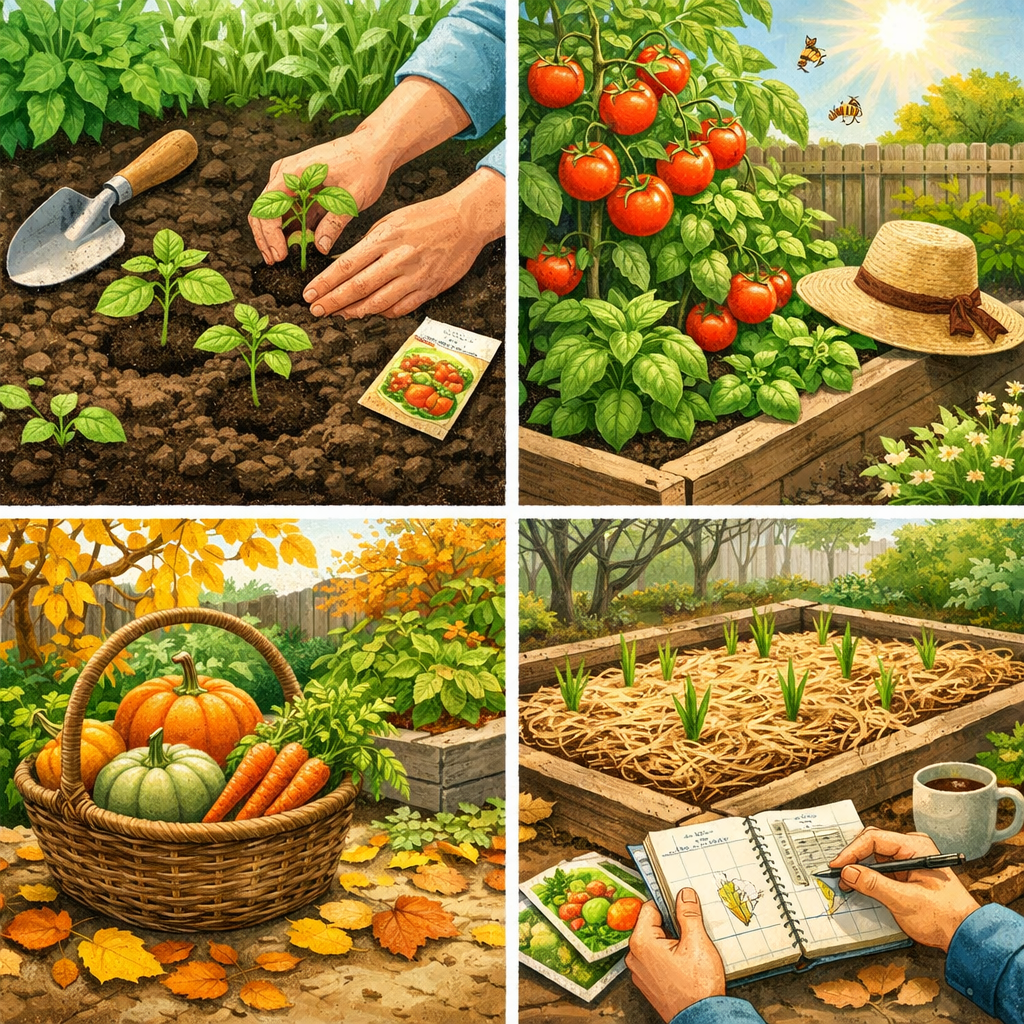
Seasonal planting guide Australia, these four words are the key to unlocking a productive, vibrant, and satisfying garden all year long. If you’ve ever planted tomato seeds in autumn only to watch them shiver, or wondered why your spinach bolted before you could pick a leaf, you know that timing is everything. In a country as climatically diverse as ours, gardening by the calendar isn’t just helpful; it’s essential.
This guide is your new gardening bible. We’re moving beyond a simple list of months and plants. We’re diving into the why and how of seasonal gardening in Australia. You’ll learn not just what to plant, but how to work with your local climate, transform your soil, and create a seamless cycle of planting, growing, and harvesting that keeps your garden, and your kitchen, full.
Let’s get started.
Table of Contents
Why “Right Plant, Right Time” is Your Gardening Mantra
Gardening against the seasons is an uphill battle. Gardening with them feels like magic. Getting your timing right means:
- Higher Germination Rates: Seeds sown in their preferred soil temperature sprout faster and stronger.
- Healthier, More Resilient Plants: Plants growing in their ideal season face less stress from heat, cold, or humidity, making them less prone to pests and diseases.
- Bigger and Better Harvests: When a plant can grow steadily through its preferred conditions, it directs more energy into producing fruit, leaves, or roots for you to enjoy.
- Less Water and Effort: A plant struggling in the wrong season needs constant babysitting. A plant in its happy season often thrives with minimal fuss.
As the experts note, Australia broadly has two main planting flurries: spring and autumn. But within that, your specific location makes all the difference.
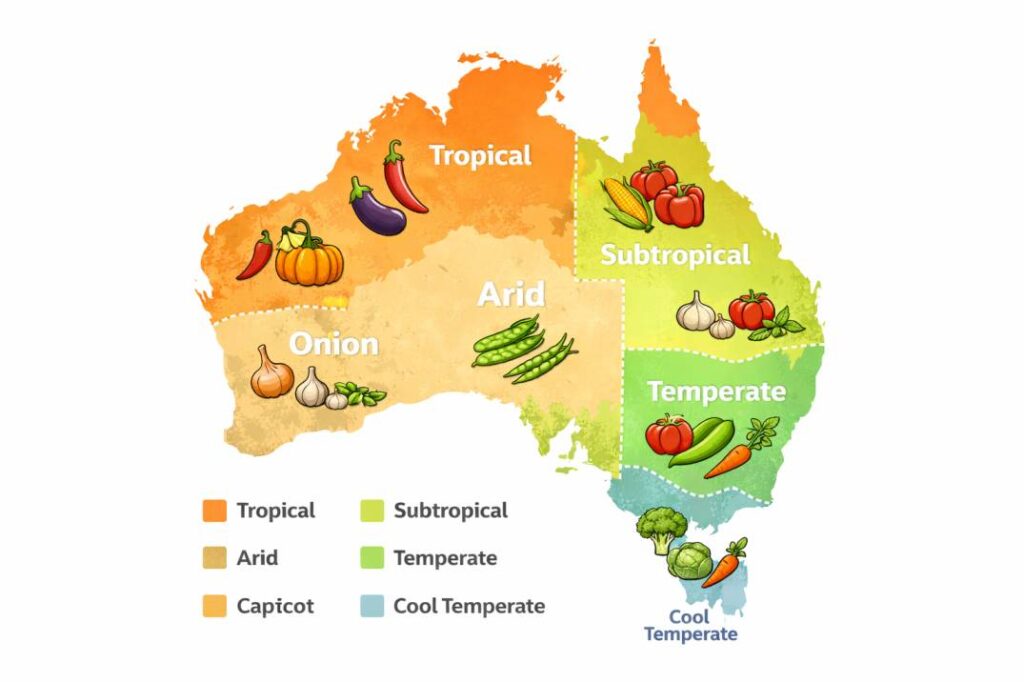
Understanding Your Australian Climate Zone
A national guide is a good start, but a local guide is what leads to success. Australia is divided into several major climate zones. Before you plant a single seed, figure out which one you’re in:
- Tropical (e.g., North QLD, NT top-end): Hot, humid summers with distinct wet and dry seasons.
- Subtropical (e.g., Southeast QLD, Northern NSW): Warm, humid summers and mild, dry winters.
- Arid/Semi-Arid (e.g., Central Australia): Low rainfall, high temperature extremes.
- Temperate (e.g., Sydney, Melbourne, Adelaide, Perth): Four distinct seasons with moderate rainfall.
- Cool/Cold Temperate (e.g., Tasmania, Victorian highlands): Cooler summers with cold, frosty winters.
The following state-by-state guide incorporates these zones to give you tailored advice.
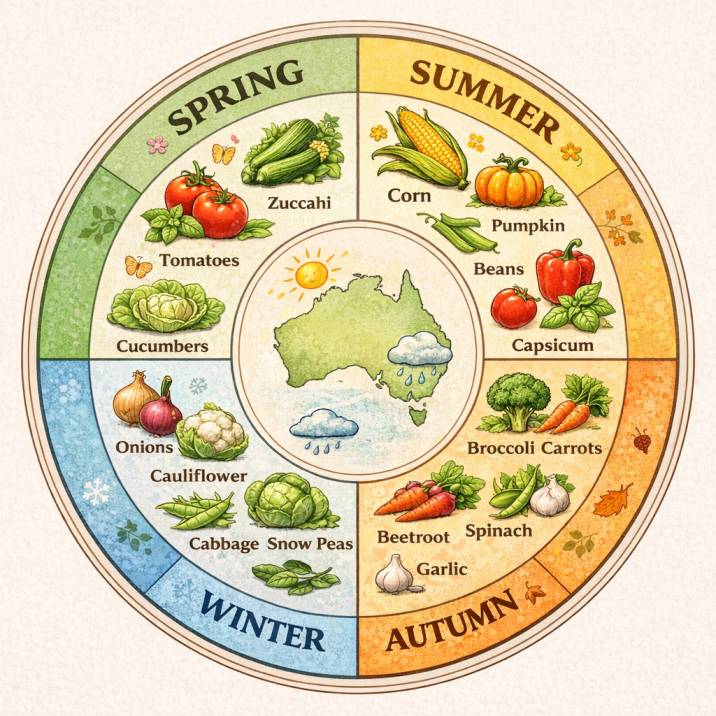
Your Australian State-by-State Seasonal Planting Guide
Think of this as your core vegetable planting calendar. These tables synthesise the best planting times for seeds (S) and the ideal window for transplanting seedlings (T) in each region.
New South Wales (NSW) – Temperate & Subtropical
Best for: Tomatoes, Beans, Lettuce, Herbs
NSW Pro Tip: Coastal gardeners can stretch the summer season. Inland gardeners should be mindful of sharper frosts in winter.
Victoria (VIC) – Temperate & Cool Temperate
Best for: Broccoli, Kale, Carrots, Leafy Greens
VIC Pro Tip: Use cloches or frost cloth to protect autumn seedlings and extend the harvest of summer crops into autumn. Succession planting lettuce every 3-4 weeks ensures a constant supply.
Queensland (QLD) – Tropical & Subtropical
Best for: Sweet Corn, Cherry Tomatoes, Asian Greens, Basil
QLD Pro Tip: In humid subtropical areas, focus on airflow to prevent fungal disease. In tropical zones, align planting with the wet season for easier irrigation, but ensure good drainage. Herbs like basil thrive in the heat.
South Australia (SA) – Temperate & Arid
Best for: Tomatoes, Garlic, Onions, Drought-tolerant Herbs
SA Pro Tip: Mulch is non-negotiable for conserving water in arid zones. Drip irrigation is your best friend. In cooler temperate parts like Adelaide Hills, follow similar timing to Victoria.
Western Australia (WA) – Temperate (South) & Arid (North)
Best for: Mediterranean Herbs, Carrots, Potatoes, Lettuce
WA Pro Tip: The south-west corner (Perth) has a glorious Mediterranean climate perfect for rosemary, olives, and tomatoes. In the north, gardening is largely a winter activity, focus on dry-season crops like beans, corn, and cucurbits.
Tasmania (TAS) – Cool Temperate
Best for: Potatoes, Peas, Berries, Leafy Greens, Root Veggies
TAS Pro Tip: The growing season is shorter but intense. Use greenhouses, cloches, or warm north-facing walls to create microclimates for heat-lovers like tomatoes. You excel at growing crisp, sweet root vegetables and brassicas.
Northern Territory (NT) – Tropical & Arid
Best for: Tropical Fruits, Bush Tomatoes, Sweet Potato, Chillies
NT Pro Tip: In the Top End, the wet season (Oct-Apr) is for preparing beds and growing tropical perennials. The dry season (May-Sep) is your main cropping period for veggies. In arid Central Australia, gardening is almost exclusively a winter pursuit with heavy reliance on irrigation.
The Rhythm of the Year: Your Monthly Garden Tasks Breakdown
A seasonal planting guide Australia is more than just sowing dates. It’s about the ongoing care that turns seeds into harvests. Here’s a snapshot of the essential monthly garden tasks that keep your garden thriving.
- January (Peak Summer): Focus on harvesting, deep morning watering, and pest patrols. Provide shade for delicate greens. Start thinking about and ordering seeds for your autumn planting.
- February (Late Summer): Continue harvesting. Sow your first autumn crops like broccoli and cabbage in seed trays. It’s also a great month to plant bulbs for a spring show.
- March (Autumn): The prime planting month for temperate zones. Direct sow carrots, beetroot, and spinach. Transplant brassica seedlings. It’s time to test your soil and add compost.
- April (Mid-Autumn): Continue planting cool-season crops. This is a critical time for mulching to retain soil moisture as temperatures drop. Clear spent summer crops.
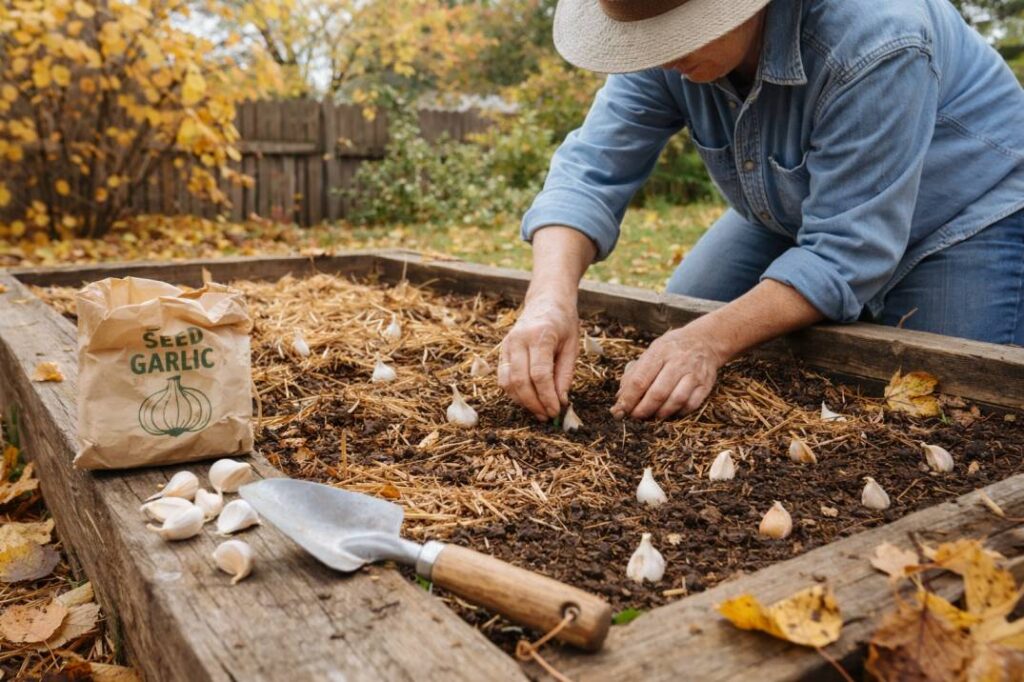
- May (Late Autumn): Plant garlic and onions. In colder areas, protect tender plants from early frosts. Clean and sharpen your tools.
- June (Winter): In mild zones, continue planting winter greens. In cold zones, focus on planning, tool maintenance, and building garden structures. Prune deciduous trees and vines.
- July (Mid-Winter): Order seeds for spring. Force rhubarb and prune fruit trees. In subtropical zones, start planting warm-season seeds indoors.
- August (Late Winter): Spring fever begins! In temperate zones, plant potatoes and early peas. In all zones, begin sowing spring seeds like tomatoes and capsicums indoors or in a greenhouse.
- September (Spring): The main spring planting month. Harden off and transplant tender seedlings after the last frost. Direct sow corn and beans later in the month. Watch for aphids on new growth.
- October (Mid-Spring): Plant all remaining summer crops. Install trellises for beans and cucumbers. Water consistently as temperatures rise.
- November (Late Spring): The garden is growing rapidly. Stay on top of watering, weeding, and tying up climbing plants. Mulch summer beds to conserve water.
- December (Early Summer): Harvest early summer crops like zucchini and new potatoes. Ensure consistent watering and feeding for heavy-fruiting plants like tomatoes. Plant successions of basil and lettuce.
Climate & Soil: The Foundation of Your Seasonal Success
Your timing can be perfect, but if your soil isn’t ready, plants will struggle.
- Soil Temperature Trumps Air Temperature: A seed germinates based on the warmth of the soil, not the day. Use a soil thermometer. In early spring, warm the soil by covering it with black plastic or cloches a few weeks before planting.
- Working with Wet Soil: Never dig or walk on waterlogged soil after winter rains. It destroys the structure. Wait until it crumbles lightly in your hand.
- The Organic Matter Cycle: Each season, add compost or well-rotted manure. In autumn, dig it in for winter crops. In spring, use it as a top-dressing for summer crops. This is the single best thing you can do to improve garden soil Australia-wide. For a deep dive on this, see our complete guide to building healthy soil.
- Local Rainfall Patterns: Align your planting with natural rainfall. In Mediterranean climates (Perth, Adelaide), plant autumn crops as the rains return. In summer-dry areas, choose drought-tolerant species or invest in efficient irrigation.
Common Seasonal Gardening Mistakes to Avoid
- Ignoring Your Microclimate: Your backyard might be frostier, shadier, or windier than the general zone advice. Observe where frost settles, where the sun hits, and plant accordingly.
- Planting Too Early (Especially in Spring): Impatience is a gardener’s biggest foe. Cold soil and unexpected late frosts can kill seedlings. Wait for the right soil temp, not just a warm day.
- Forgetting Succession Planting: Don’t sow all your lettuce seeds at once. Sow small batches every 2-3 weeks for a continuous harvest, not a glut-and-famine cycle.
- Neglecting Soil Prep: Throwing a seedling into unprepared, compacted, or nutrient-poor soil sets it up for failure. Always prepare the bed before planting.
- Misjudging Plant Size: It’s easy to overplant. Respect the spacing on the seed packet. Crowded plants compete for light and nutrients and are more susceptible to disease.
Frequently Asked Questions
Q: Where can I find a simple, printable vegetable planting calendar?
A: Many state agriculture departments and trusted seed companies offer them. The key is to find one specific to your climate zone, not just a national one. We recommend using the detailed tables in this guide as your primary reference, as they are tailored by state.
Q: How do I know what to plant now in my exact location?
A: Use this state guide as your baseline. Then, connect with local wisdom: visit a community garden, join a local gardening Facebook group, or chat with staff at your nearest independent nursery. They know the hyper-local frost dates and quirks.
Q: Can I grow vegetables year-round in Australia?
A: In most regions, yes! Even in cold climates, you can grow hardy greens like kale and spinach under cover in winter. The secret is understanding the seasonal shifts and rotating your crops—follow leafy greens with fruit-bearing plants, then root vegetables, in a constant cycle.
Q: What’s the best way to start if I’m a beginner?
A: Start small and simple. In spring, plant a tomato, a basil plant, and a lettuce. In autumn, try spinach and radishes. Observe them, learn from them, and expand your garden season by season. Getting the basics of companion planting right from the start can also give your plants a major boost.
Q: How does companion planting fit into a seasonal guide?
A: Perfectly! Seasonal timing tells you when to plant, and companion planting tells you what to plant together. For example, when you plant your spring tomatoes (seasonal timing), plant basil alongside them (companion planting) to help improve flavour and repel pests. Check out our ultimate companion planting Australia guide for powerful plant partnerships.
Conclusion: Your Garden, Your Seasonal Journey
A true seasonal planting guide Australia is more than a calendar, it’s a conversation with the land, the weather, and the unique environment of your own backyard. It’s about embracing the rhythm of the year: the eager anticipation of spring planting, the abundant buzz of summer growth, the satisfying harvest of autumn, and the quiet planning of winter.
Start this season. Choose your climate from the guide above, pick three vegetables to plant in their optimal window, and prepare your soil with care. Whether you’re in the humid tropics of Cairns or the frosty hills of Hobart, your garden is waiting to produce for you. All it needs is for you to work with the season, not against it.
Ready for more? Discover how to extend your harvest and protect your plants by building your own DIY raised garden bed, or learn how to turn your garden waste into garden gold with our Ultimate Australian Guide to Backyard Composting. For a beautiful, low-maintenance foundation, don’t forget to explore our guide on the best native plants for every Australian state.
2 thoughts on “Seasonal Planting Guide Australia: Your Complete Year-Round Handbook (For 7 Different State)”