
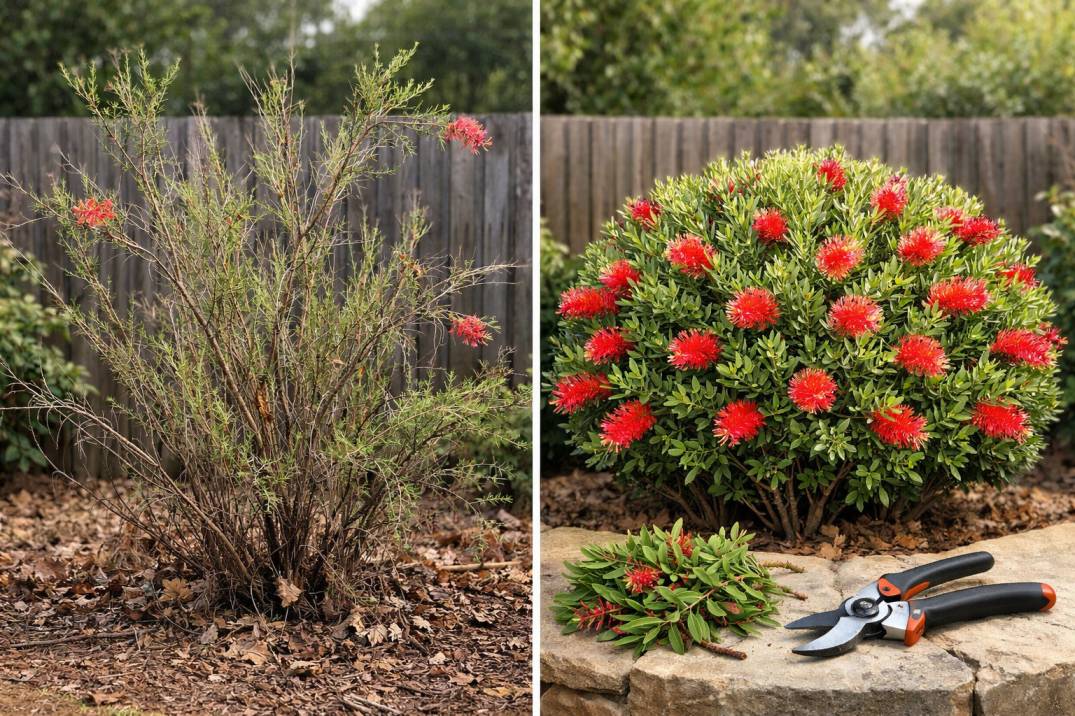
Pruning Australian natives is the gardening job that can fill even the most confident green thumb with a bit of doubt. We often treat our local plants with a hands-off reverence, worried that we might harm them. But here’s the secret our bushland already knows: in nature, native plants are constantly pruned by weather, animals, and fire, and they respond with vigorous new growth. By learning a few simple techniques, you can harness that same resilience in your own backyard.
G’day, I’m Mehedi Hasan. Over many years of gardening with Australian plants, from the clay soils of Melbourne to sandy coastal plots, I’ve learned that thoughtful pruning is not an act of interference, but one of partnership. It’s the key to transforming a scrappy, leggy shrub into a dense, flowering marvel. It can extend the life of a short-lived plant and turn a humble native grass into a sculptural feature.
This guide will walk you through everything, from the why to the how. We’ll bust the myth that natives should be left alone, cover the golden rules for timing and technique, and give you the confidence to pick up those secateurs. Whether you’re shaping a young grevillea or rejuvenating an old bottlebrush, you’ll have the know-how to help your garden thrive.
Table of Contents
Why Pruning is a Gift to Your Native Garden
Pruning is so much more than just controlling size. It’s a vital practice for plant health and garden beauty. When you prune correctly, you’re giving your plants several powerful benefits:
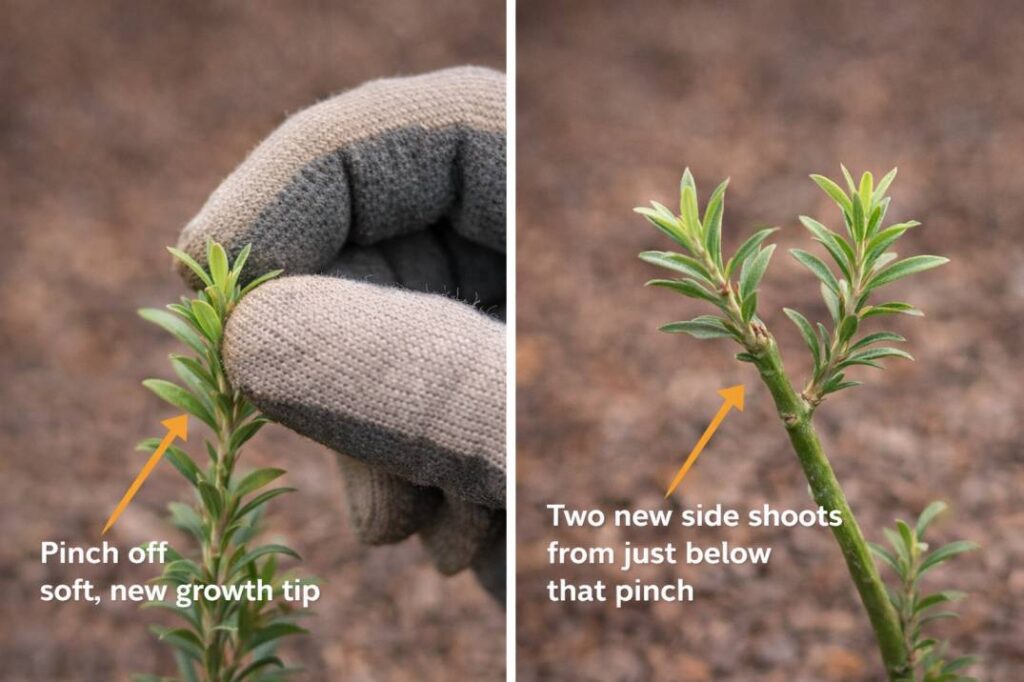
- Promotes Bushier, Denser Growth: The most immediate effect. Tip pruning, or pinching out the soft new growth, encourages the plant to send out multiple side shoots instead of putting all its energy into one long, lanky stem. This creates a lush, compact shape that’s perfect for screens and hedges.
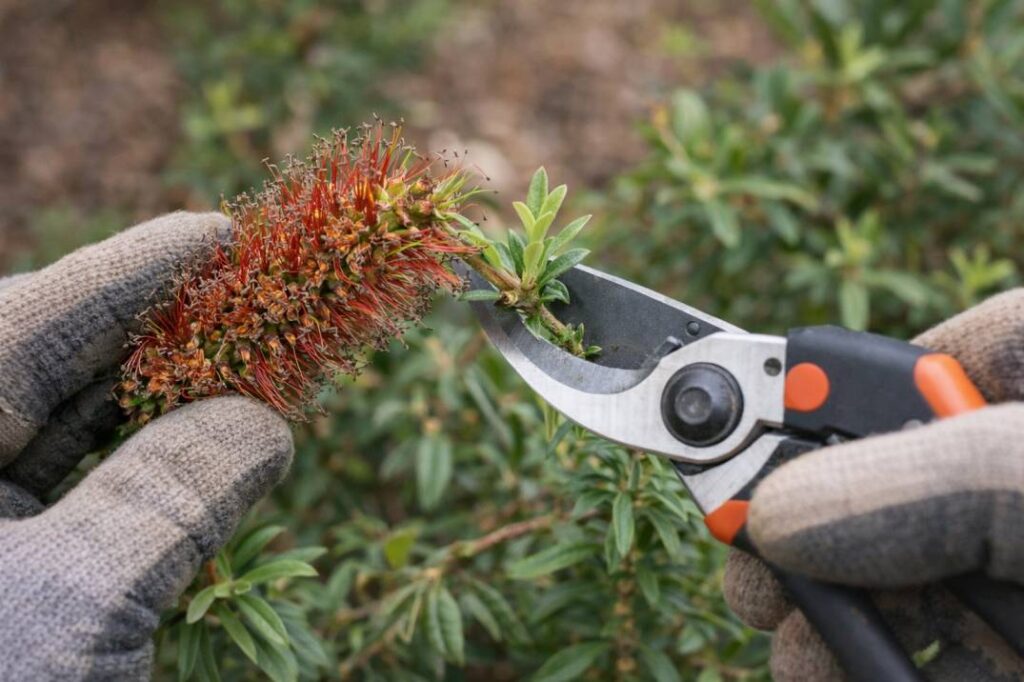
- Encourages More Flowers: For many natives, flowers form on new growth. By prompting fresh growth through pruning, you’re directly setting the stage for a better floral display next season. Removing spent flowers also stops the plant from wasting energy on producing woody seed pods.
- Improves Plant Health and Longevity: Removing dead, diseased, or damaged wood stops problems in their tracks and improves air circulation through the plant. For some short-lived shrubs, such as certain grevilleas and callistemons, a hard prune can completely rejuvenate them, adding years to their lives.
- Creates a Strong Structure: Early and regular shaping helps a young plant develop a strong branch framework. This prevents it from becoming top-heavy and splitting in the wind, a common issue with fast-growing natives.
The Golden Rule: When to Prune Natives
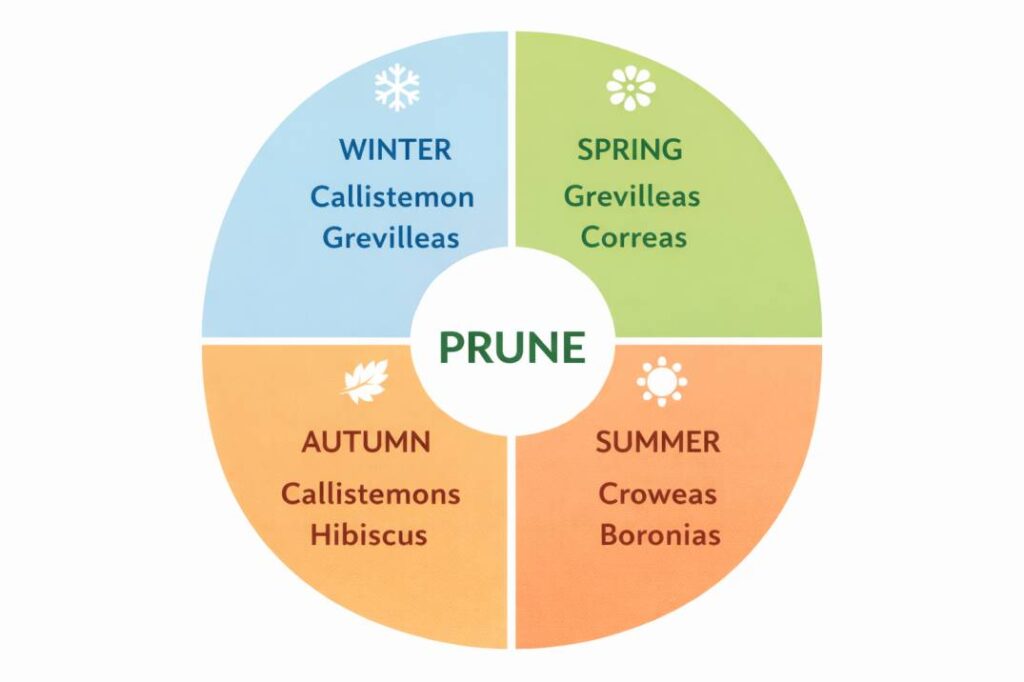
Getting the timing right is half the battle. The general mantra for flowering shrubs is prune after flowering. This allows the plant to use the following growing season to produce the new wood that will bear next year’s blooms.
However, Australia’s diverse climates and plant types mean your schedule needs a local touch. The following table breaks down the key seasonal tasks.
A Special Note on Fruit Trees: While natives have their rhythm, don’t forget about your fruit trees. How to prune fruit trees Australia-wide follows different rules. Deciduous trees like apples and pears are best pruned in winter when dormant. Stone fruits like peaches and apricots are often pruned after harvest in late summer or autumn to minimise disease risk. Always use sharp, clean tools and prune on a dry day to help wounds heal quickly.
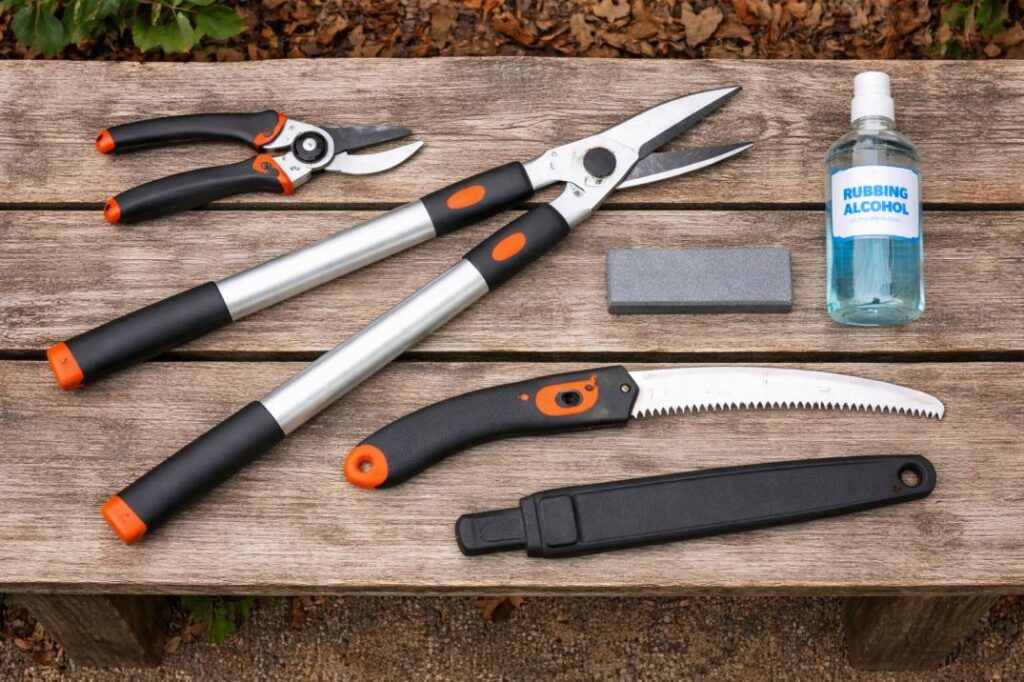
Your Toolkit: Essential Pruning Techniques Demystified
Once you know when to prune, you need to know how. Here are the three core techniques every native gardener should master.
1. Tip Pruning (The Foundation for Business)
This is your go-to method for young plants and maintaining density.
- How: Use your fingers or sharp secateurs to pinch or cut off the very tip of a soft, new shoot.
- Why: It removes the dominant growing point, forcing the plant to activate dormant buds further back along the stem and produce multiple side branches.
- Best For: Creating a dense hedge, encouraging a compact shape in young shrubs like grevilleas and thryptomene, and maintaining general fullness.
2. General Pruning for Shape and Health
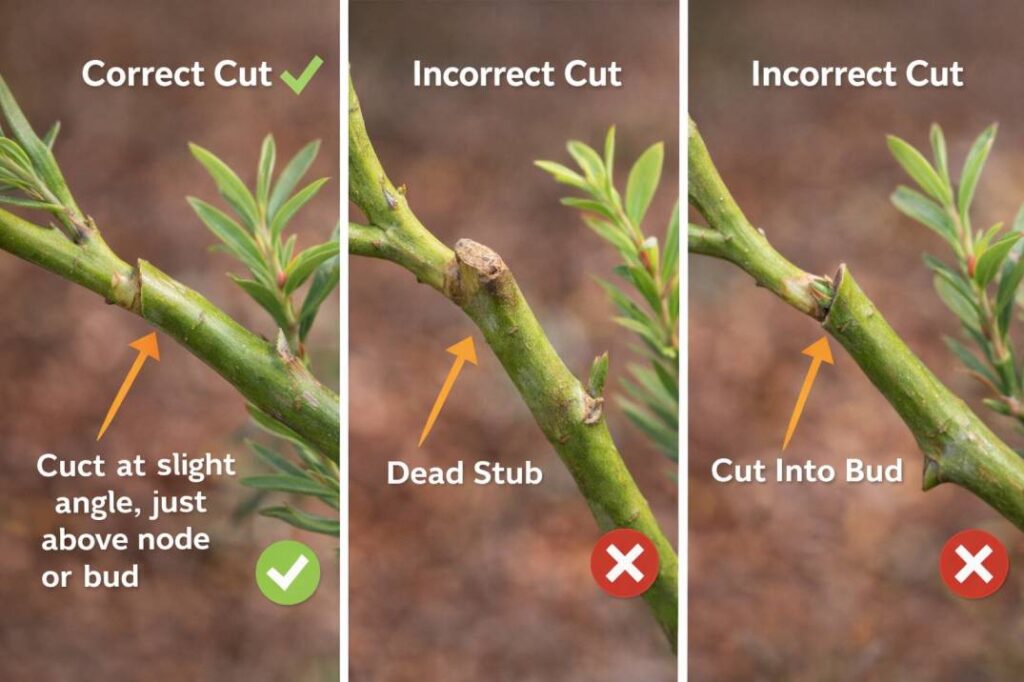
This involves cutting back whole branches to a bud or a side branch.
- How: Always make clean, angled cuts just above an outward-facing leaf node or bud. For larger branches, use the three-cut method to prevent bark tearing: make an undercut first, then a top cut further out, and finally a clean cut near the branch collar.
- Why: To remove crossing or inward-growing branches, open up the plant’s centre for light and air, and maintain a balanced shape.
- Best For: Mature shrubs that are getting leggy, removing dead wood, and shaping plants like callistemons after flowering.
3. Hard or Rejuvenation Pruning
A more drastic cut to revive an old, overgrown, or woody plant.
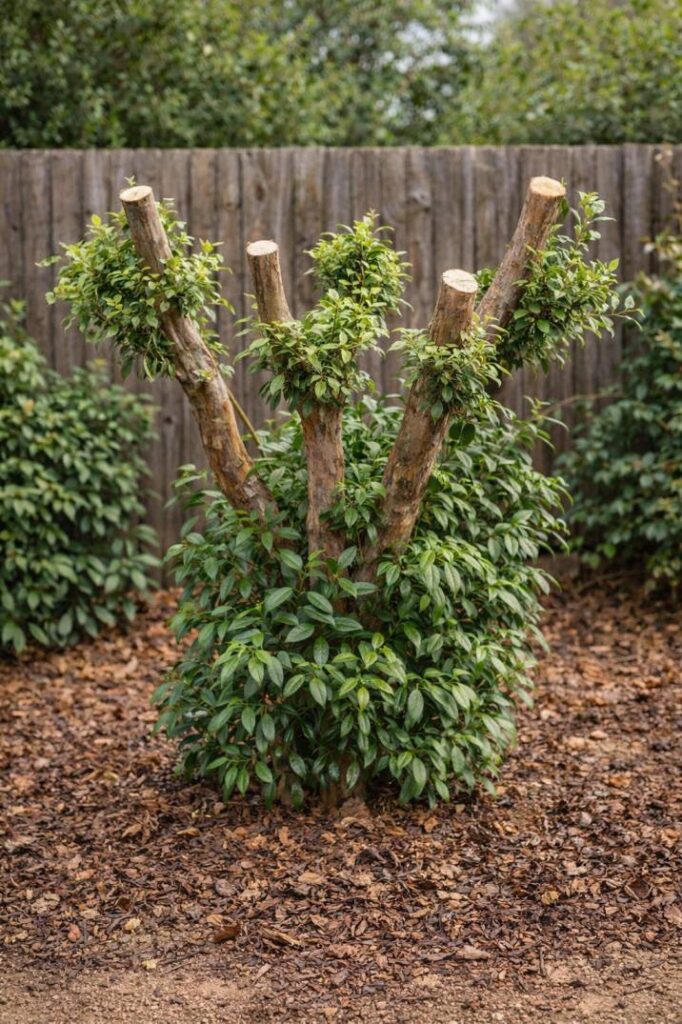
- How: Cutting the plant back severely, often by two-thirds or even to near ground level.
- Why: Many Australian natives have a lignotuber (a woody growth at the base) or dormant buds on old wood that can spring back to life. This can save a plant you might otherwise throw out.
- Best For: Old, straggly callistemons, melaleucas, and some grevilleas. Crucial: Not all natives can handle this. Avoid hard pruning banksias below green foliage or plants like some leptospermums that may not reshoot.
A Guide to Common Australian Natives: What to Cut and When
Common Pruning Mistakes (And How to Avoid Them)
Even with the best intentions, it’s easy to slip up. Here are the big ones to watch for:
- Using Blunt or Dirty Tools: This is a top offender. Crushed, torn cuts from blunt secateurs are an open invitation for disease. Always use sharp, clean tools and wipe them with disinfectant (like methylated spirits) between plants.
- Pruning at the Wrong Time: Pruning a spring-flowering native in winter can mean cutting off all the developing flower buds. Stick to the “after flowering” rule as your default.
- Being Too Timid (or Too Brutal): Hesitant, shallow cuts leave unsightly stubs. Conversely, hacking a plant back without knowing if it can handle it can be fatal. Research your specific plant or use the “test branch” method: prune one branch hard and wait to see if it reshoots before doing the whole plant.
- Topping or “Hat-Racking”: Lopping off the top of a tree or large shrub to control height is a terrible practice. It destroys its natural shape, promotes weak, unstable new growth, and stresses the plant immensely. It’s always better to choose the right plant for the space.
- Ignoring the Plant’s Natural Shape: The best pruning enhances a plant’s inherent form. Don’t try to turn a graceful, weeping grevillea into a tight ball. Work with its natural habitat.
Your Pruning Questions, Answered
Q: I’m scared of killing my plant. Where do I start?
A: Start with the “3 D’s”: remove any Dead, Diseased, or Damaged wood first. This is always beneficial and helps you get a feel for your tools. Then, move on to simple tip pruning of new growth. It’s hard to go wrong with that.
Q: How much of the plant can I safely remove at once?
A: A good general rule is to remove no more than one-third of the living foliage in a single season. For rejuvenation pruning of tough species, you can go harder, but ensure the plant is healthy, and you do it at the right time of year (often spring).
Q: Should I use wound paint or sealant on cuts?
A: No. Research shows that these products can actually trap moisture and hinder the tree’s natural healing process. A clean cut made with a sharp tool at the correct angle is the best defence.
Q: My native has become lanky and woody at the base. Is it too late?
A: Not necessarily! Many natives are champions of recovery. Try a hard rejuvenation prune in spring. If the plant has a lignotuber (like many banksias and eucalypts) or is known to reshoot (like callistemons), you might be pleasantly surprised. If it doesn’t work, it was likely on its way out anyway.
Q: How does pruning fit into a bigger organic garden plan?
A: Perfectly. Pruning improves plant health, which is the first line of defence in organic pest control. A strong, open plant is less susceptible to pests and diseases. The clippings (excluding diseased material) can be added to your compost bin to eventually return nutrients to your garden, completing the sustainable cycle.
Conclusion: Confidence is in Your Secateurs
Pruning Australian natives isn’t about imposing strict control; it’s about mindful care. It’s a conversation with your garden, where you listen to the plant’s shape and needs, and respond with a careful cut that guides it toward better health and beauty.
Start this weekend. Walk through your garden with your secateurs. Snip off a few spent correa flowers. Tip prune the long, new shoots on your grevillea. Remove that one dead branch that’s been bothering you. With each small, correct cut, you’ll build confidence and see your garden respond with gratitude, in the form of lush growth, abundant flowers, and resilient health.
Ready to give your whole garden a strong foundation? Great gardening, including pruning, starts from the ground up. Learn how to create the perfect environment for your plants with our ultimate guide on how to improve your garden soil in Australia. And for more ways to support a vibrant ecosystem right outside your back door, discover how to attract pollinators Australia-wide to your flourishing space.