
Let’s be honest. Watching clean water from your shower or washing machine disappear down the drain while your garden thirsts feels wrong. During our last big dry spell, I stood in my parched backyard, listening to the washing machine rinse cycle humming inside, and had that exact thought. There had to be a way to connect the two. That’s the powerful promise of a greywater system for garden Australia turning waste into a resource. But I also learned it’s not as simple as just attaching a hose to the laundry pipe.
The world of greywater is full of confusing advice. Some sources make it sound like a DIY weekend project, while others warn of strict regulations and potential health risks. After years of research and helping neighbours navigate the process, I’ve learned the truth is in the middle. A safe, effective greywater system for garden Australia is absolutely achievable, but it requires careful planning and respect for some important rules. This guide walks you through five essential steps, from understanding what greywater really is to choosing the right system for your home. We’ll cut through the confusion so you can make an informed decision about harnessing this valuable water source for your garden.
Table of Contents
What Exactly is Greywater? (The Good, The Bad, and The Rules)
Before we talk about pumps and pipes, we need to get our definitions straight. Misunderstanding this is the biggest mistake people make. When we talk about installing a greywater system for garden Australia, we’re talking about a specific type of water.
- Greywater is the “lightly used” water from your: Shower, bath, bathroom basin, and laundry (specifically the rinse cycle). It contains soap, shampoo, lint, skin cells, and some nutrients. It’s not clean, but it’s not toxic waste.
- Blackwater is the “heavily used” water from your: Toilets, kitchen sinks, and dishwashers. This contains human waste, food scraps, fats, and greases. Blackwater is never, ever part of a residential garden system.
Here’s the crucial mindset shift: greywater is a resource for irrigation, not waste. But it’s a resource that needs to be managed carefully. The core idea of a greywater system for garden Australia is to capture this water, guide it safely to your garden, and use it to keep plants alive without using precious drinking water from the tap. It’s about closing the loop in your own home.
Step 1: The Rulebook – Your Local Council is the First Stop
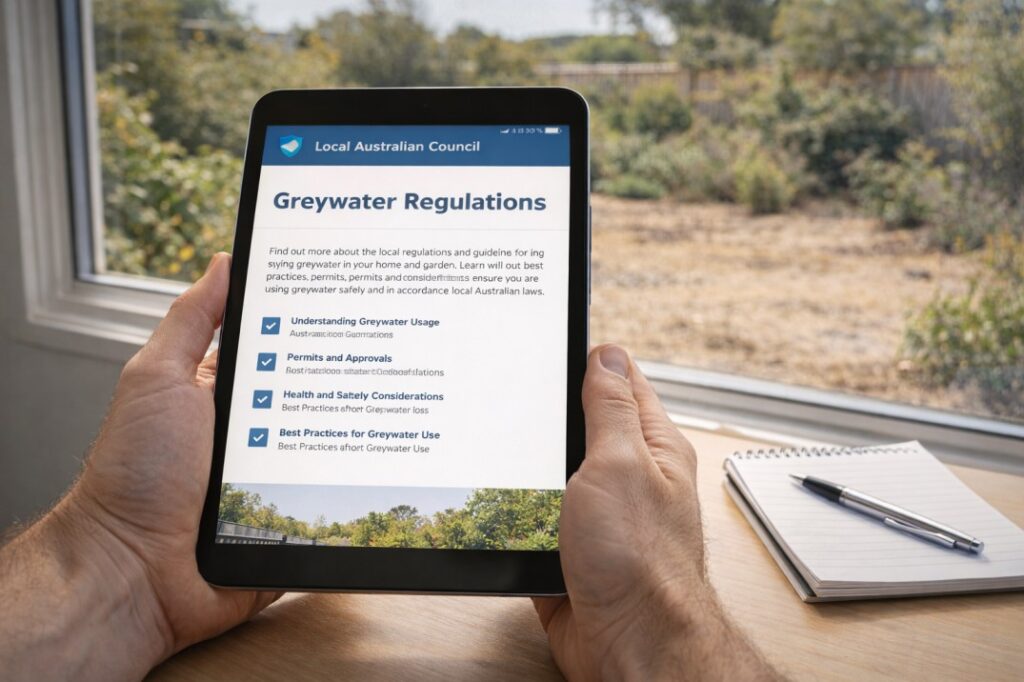
This step is non-negotiable. Jumping straight to YouTube tutorials without checking the rules is the fastest way to waste money and potentially create a health hazard. Regulations for a greywater system for garden Australia are not uniform; they vary by state and, most importantly, by your local council.
- Your First Task: Visit your local council’s website. Look for sections like “Wastewater,” “Environmental Health,” or “Sustainable Living.” Search for “greywater” or “wastewater reuse.” The rules will be there.
- What You’ll Likely Discover (Common Regulations):
- Kitchen Sink is Usually a No-Go: Due to food solids and fats, water from the kitchen sink is often excluded from simple systems.
- Product Restrictions: You’ll be required to use laundry detergents, shampoos, and soaps that are low in sodium, phosphorus, boron, and salt. Look for products with the “Greywater Approved” label or those that are biodegradable and plant-friendly.
- Sub-Surface Irrigation is Mandatory: Greywater must be applied below the surface (under 10cm of mulch or soil) via a trench or a sub-surface drip line. This prevents human or pet contact, stops odours, and allows soil to act as a natural filter.
- No Long-Term Storage: Basic diversion systems send water directly to the garden. Storing untreated greywater for more than 24 hours allows harmful bacteria to multiply rapidly.
The Australian Government’s Your Home guide to greywater is an excellent national resource for understanding the principles, but your local council’s development guidelines are the legal document you must follow. Think of them as your instruction manual.
Step 2: Choose Your Path – From a Bucket to a Full Treatment Plant
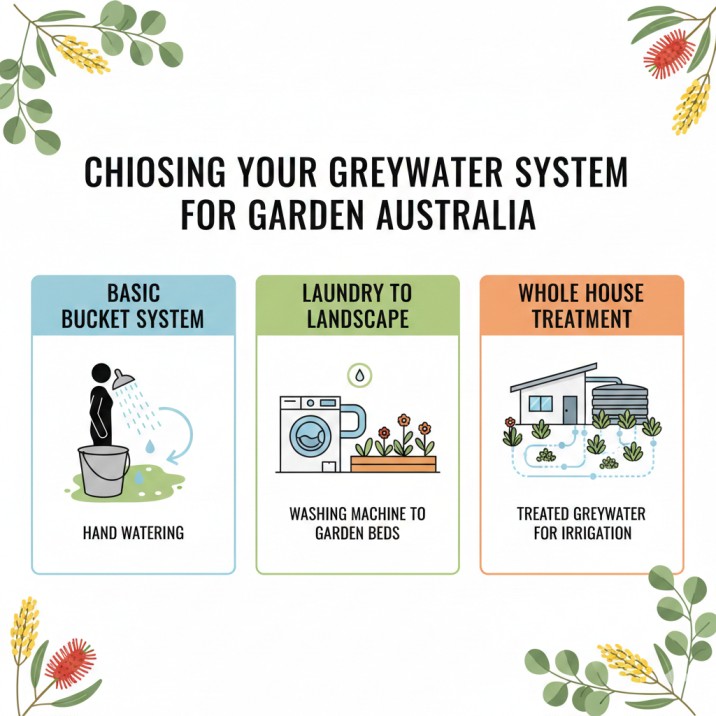
Not every greywater system for garden Australia is the same. Your choice depends on your budget, how much water you want to capture, and your willingness to maintain it. Let’s break down the three main tiers.
Tier 1: The Manual “Bucket & Boots” Method
This is the perfect, zero-risk starting point for anyone curious about a greywater system for garden Australia.
- How it Works: Simply place a bucket in your shower to catch the cold water while it heats up. Bucket out the final rinse water from your washing machine. Carry it outside and pour it directly onto established garden beds or fruit trees.
- Pros: Totally free, immediate to start, requires no council approval, gives you a hands-on feel for how much water you can save.
- Cons: Labour intensive, limited volume, you must be diligent about using garden-safe products.
Tier 2: The Laundry-to-Landscape (L2L) Diversion System
This is the most popular and practical entry point for a permanent greywater system for garden Australia. It’s a favourite because laundry water is relatively clean, consistent, and comes in large volumes (over 100 litres per wash).
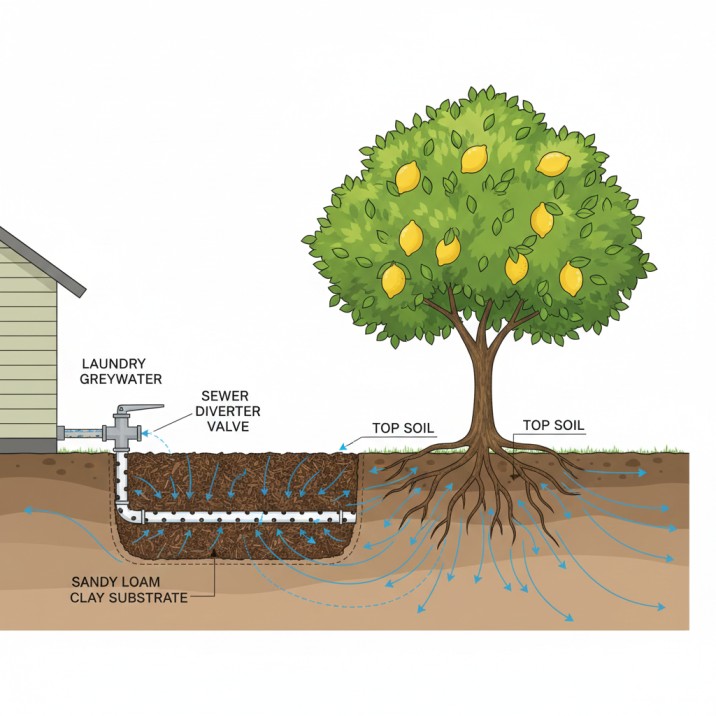
- How it Works: A licensed plumber (or a very handy DIYer, where permitted) installs a three-way diverter valve on your washing machine outlet. One pipe goes to the sewer as normal. The other connects to a dedicated pipe or hose that carries the rinse water directly to a mulch pit or sub-surface irrigation system in your garden.
- Pros: Captures large volumes automatically, relatively low cost for the payoff, uses simple gravity or a small pump.
- Cons: Only uses laundry water, requires careful slope design, needs council approval in most areas.
Tier 3: The Full Treatment & Irrigation System
This is the premium, whole-of-house greywater system for garden Australia. It collects water from showers, baths, and laundry, filters it, sometimes disinfects it with UV light or chlorine, and then pumps it to a dedicated, sub-surface drip irrigation system.
- How it Works: A professional installs a tank, filters, pumps, and control systems, often integrating with your existing plumbing.
- Pros: Maximises water capture (up to 50% of household use), provides the highest quality treated water, fully automated.
- Cons: High upfront cost ($5,000 – $15,000+), requires council approval, engineering, and a licensed plumber, needs regular maintenance.
For the average gardener looking to make a significant impact, the Laundry-to-Landscape system often represents the best balance. It pairs beautifully with other water-saving strategies, like the ones outlined in our guide on water saving tips backyard Australia.
Step 3: Design for Safety & Simplicity
If you choose a Laundry-to-Landscape greywater system for garden Australia, smart design is everything. This isn’t about just running a hose out the window.
- The Product Pledge: Before you install a single pipe, switch your entire household to greywater-friendly products. This means phosphate-free, low-sodium, and low-boron laundry detergents, shampoos, and soaps. Your plants’ health depends on this.
- Gravity is Your Friend (or Pump is Your Plan): Map the route from your laundry to your garden. Does the garden sit lower than the laundry outlet? If so, gravity can do the work. If not, you’ll need to budget for a small, greywater-safe submersible pump.
- Create a Mulch Pit Trench System: This is the safe, approved disposal method. Dig a trench 30cm deep and 30cm wide in your garden bed. Lay a slotted ag-pipe in the trench, connect it to your greywater line, and fill the trench back in with coarse woodchips or scoria, then soil. The water disperses underground, hidden and safe.
- Always Have a Sewer Diverter: A proper greywater system for garden Australia must have a manual or automatic switch to send water back to the sewer. You’ll use this when the garden is saturated after rain, if you need to use a harsh cleaning product like bleach, or if someone in the house is ill.
Step 4: Plant the Right Garden for Greywater
Your garden is the final component of your greywater system for garden Australia. You are irrigating an ecosystem, so plant choices matter.
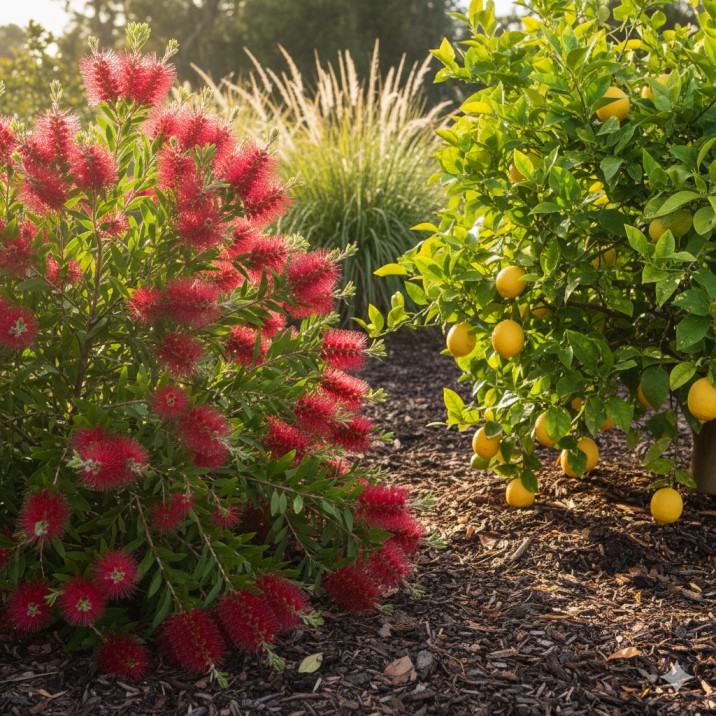
- Greywater Champions: Established fruit trees (citrus, stone fruit, figs), robust ornamental shrubs (oleander, plumbago), and many Australian natives (like Melaleucas and Callistemons) generally tolerate greywater well due to their deeper root systems.
- Proceed with Caution: Avoid using greywater on vegetables where the edible part touches the soil (like carrots, potatoes) or that you eat raw (lettuce, spinach). Also be wary with acid-loving plants like azaleas, camellias, and gardenias, as greywater is often slightly alkaline.
- Observation is Key: Watch for signs of stress. Leaf burn, yellowing, or a white crust on the soil surface indicates salt or chemical buildup. If you see this, switch off the greywater and flush the area thoroughly with rainwater or tap water.
Building a resilient garden starts with the right plants. For inspiration on tough, beautiful species, explore our guide to the best native plants for a sustainable Aussie backyard.
Step 5: Maintenance – The Key to Long-Term Success
A greywater system for garden Australia isn’t a “set and forget” project. Simple, regular care keeps it safe and effective.
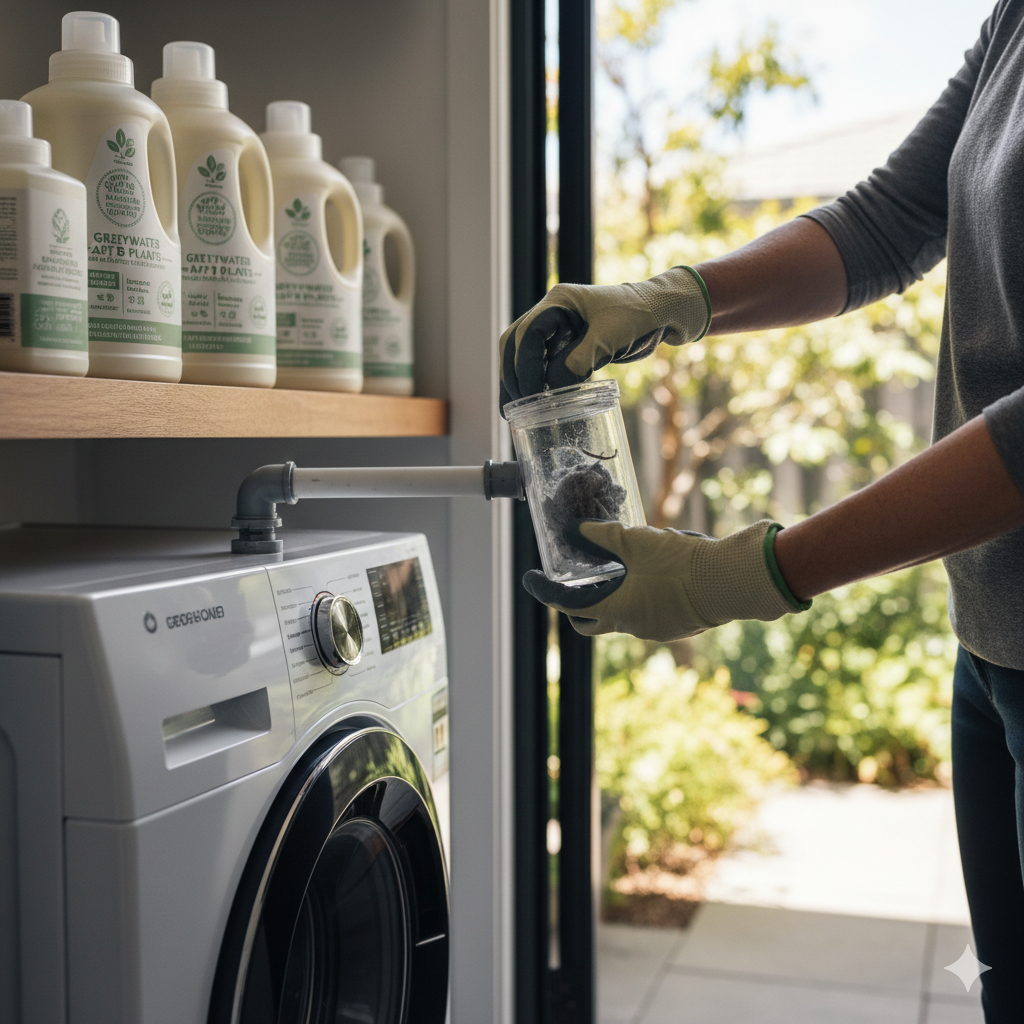
- Monthly: Check your mulch pits or irrigation lines for surfacing water or blockages. Clean the lint filter on your washing machine outlet (if your system has one) to prevent clogs.
- Seasonally: Flush your sub-surface lines with clean water to prevent biofilm buildup. Observe your plants for any changes in health.
- The “Switch-Off” Rules: Religiously divert greywater to the sewer when:
- Using bleach, disinfectants, or strong cleaning agents.
- Washing nappies or heavily soiled work clothes.
- Anyone in the household has an infectious illness.
- The garden is waterlogged from rain.
Is a Greywater System Right for You? A Honest Checklist
Before you invest time and money, take this quick quiz:
- Have I spoken to my local council and understand my specific rules?
- Is my garden soil well-draining (not heavy clay that will become waterlogged)?
- Am I willing to permanently switch to garden-safe laundry and body products?
- Do I have suitable, non-edible garden areas (ornamental beds, fruit trees) for irrigation?
- Can I commit to the basic maintenance and monitoring required?
If you checked most of these boxes, then exploring a greywater system for garden Australia is a logical next step for your sustainable home. Start with the bucket method. It costs nothing and teaches you the basics of volume and plant tolerance.
Installing a responsible greywater system for garden Australia is one of the most tangible acts of water conservation you can take. It’s a statement of resilience. It turns every shower and laundry load into a contribution to your garden’s life. By following these steps putting rules first, designing for safety, and maintaining diligently you can harness this resource with confidence. Your garden will become greener, your water bill smaller, and your connection to the resources you use, deeper. Start with the research. The water is already flowing; you just need to guide it.
1 thought on “5 Essential Steps for a Safe Greywater System for Garden Australia”