
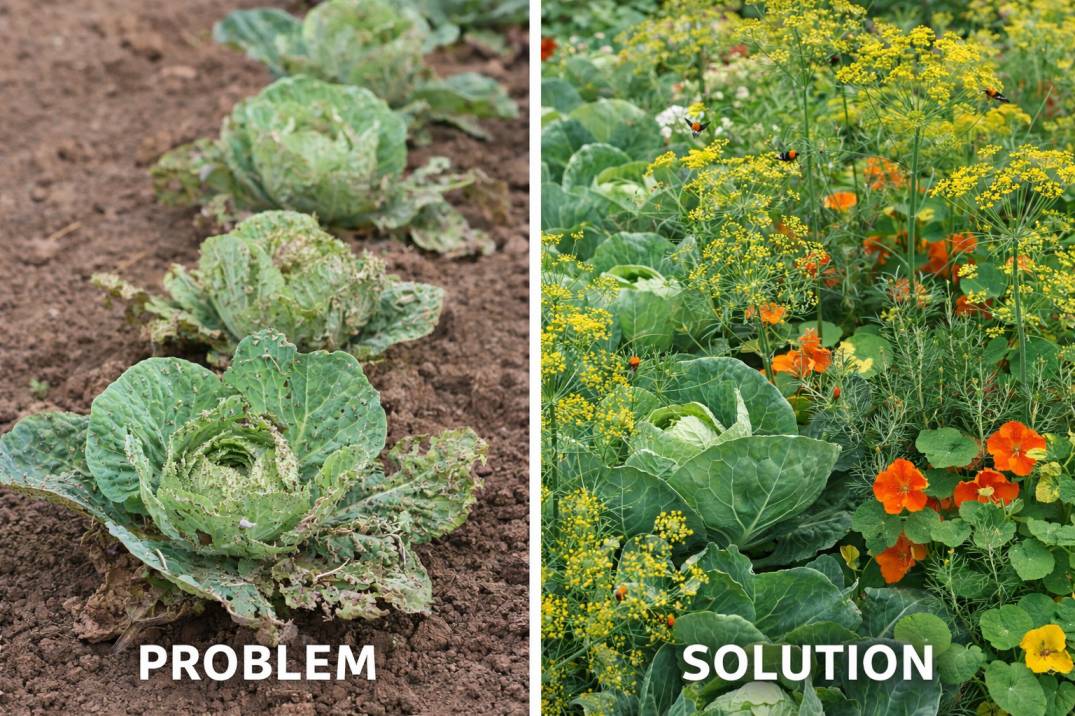
Companion planting Australia is more than just an old gardening trend, it’s a smart, natural way to create a resilient and productive backyard ecosystem. If you’re tired of battling aphids on your roses, watching caterpillars decimate your cabbages, or simply want your veggie patch to yield more with less effort, then you’re in the right place.
G’day, I’m Sarah. Over many seasons in my Melbourne garden, I’ve learned that the secret to fewer pests and healthier plants isn’t found in a spray bottle. It’s found in clever plant partnerships. Companion planting is about knowing which plants help each other and which ones hinder. It’s like creating a supportive neighbourhood for your veggies, herbs, and flowers, where everyone plays a helpful role.
This guide will cut through the confusion and give you a clear, practical roadmap. You’ll learn which combinations are proven winners in our unique climate, which ones to avoid, and how to use these partnerships to save water, build better soil, and create a garden that’s buzzing with life, the good kind!
Table of Contents
Why Companion Planting is a Game-Changer for Aussie Gardens
So, what’s the big deal? Why go to the “trouble” of planning partnerships instead of just planting rows of the same thing? The benefits are real, especially under the Australian sun.
- Natural Pest Control (Your Garden’s Bodyguards): This is the biggest drawcard for most of us. Certain plants repel specific pests with their strong scents. Others attract beneficial insects, the predators that eat your aphids and caterpillars for you. It’s about creating balance, not declaring chemical war.
- Improved Pollination & Fruit Set: By planting flowers that attract bees, butterflies, and other pollinators right next to your veggie patch, you ensure your zucchinis, tomatoes, and berries get all the visits they need to produce a great harvest.
- Better Use of Space & Nutrients: Some plants have deep taproots that draw up nutrients from deep in the soil, while others have shallow roots. Pairing them means they’re not competing for dinner. Tall plants can provide shade for smaller, heat-sensitive ones—a perfect strategy for a hot Australian summer.
- Enhanced Flavour & Growth: There’s some solid gardener wisdom (and emerging science) that suggests certain plant neighbours can actually improve each other’s flavour and vitality. It’s the garden version of a good influence!
- Builds Soil Health & Suppresses Weeds: Dense, mixed planting covers bare soil, which suppresses weeds and protects it from erosion and crusting under heavy rain. Legume companions, like beans and peas, even fix nitrogen from the air into the soil, acting as a natural fertiliser for their neighbours.
The Core Principles: How Companion Planting Actually Works
It’s not magic; it’s mostly clever ecology. Plants “communicate” and interact through chemistry, scent, and space.
- The Aroma Barrier: Strongly scented herbs and flowers (like basil, rosemary, marigolds) confuse or repel pest insects looking for their favourite host plant. The scent masks the smell of your veggies.
- The Trap Crop Strategy: You deliberately plant something a pest loves more than your main crop nearby. The pests go for the sacrificial plant, leaving your prize veggies alone. It’s a classic diversion tactic.
- The Beneficial Insect Hotel: Flowers like alyssum, calendula, and coriander provide nectar and pollen for tiny wasps, ladybirds, lacewings, and hoverflies. These insects then lay their eggs near your pest problems, and their hungry larvae get to work.
- The Physical Support: Tall, sturdy plants (like corn or sunflowers) can act as a living trellis for climbers like beans. Low, sprawling plants (like pumpkin) act as a living mulch, shading the soil for other plants.
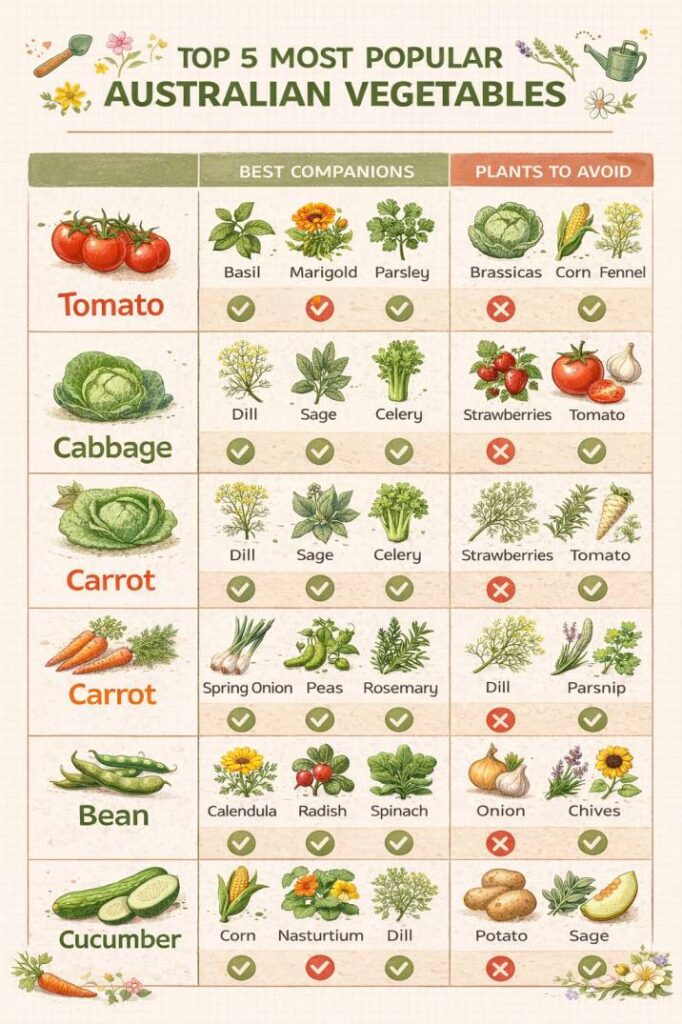
Your Australian Companion Planting Chart: Top Veggie Partnerships
Let’s get practical. Here’s a breakdown of some of the best vegetable plant companions for common Aussie garden crops. Think of this as your starting companion planting chart.
The Tomato Tribe: Basil, Marigolds & More
Tomatoes are the heart of many gardens and have great friends.
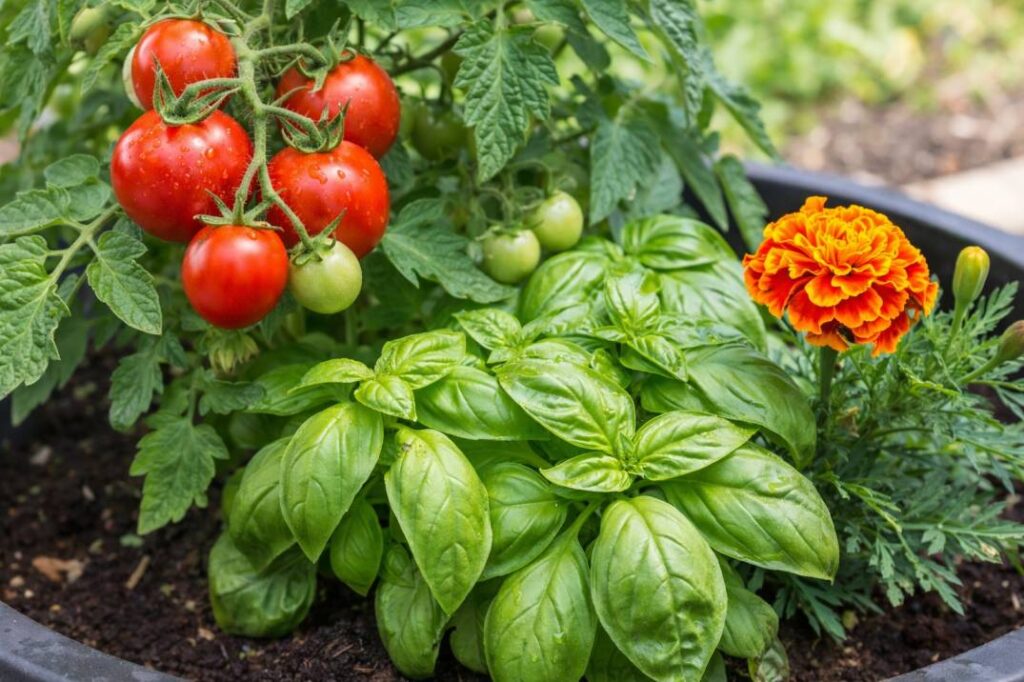
- Best Friends: Basil is the ultimate companion. It’s said to improve flavour and repel thrips and flies. Marigolds (French marigolds, specifically) repel root-knot nematodes in the soil, a major tomato pest. Borage deters tomato hornworm and attracts pollinators.
- Also Helpful: Lettuce, spinach, parsley, chives, asparagus.
- Avoid Planting Near: Corn, potatoes, fennel, cabbage family.
Cucumbers, Zucchinis & Pumpkins (The Cucurbit Family)
These vines can be pest magnets, but their friends help.
- Best Friends: Nasturtiums are fantastic trap crops for aphids. Let the aphids feast on the nasturtiums instead! Radishes repel cucumber beetles. Corn provides a sturdy trellis for lighter cucumbers.
- Also Helpful: Beans, peas, dill, marigolds.
- Avoid Planting Near: Potatoes, strong aromatic herbs like sage.
The Cabbage Family (Broccoli, Cauliflower, Kale, Cabbage)
These are beloved by white cabbage moths. We need to distract and repel.
- Best Friends: Dill, sage, rosemary, and thyme confuse the moths with their scent. Nasturtiums (again!) are excellent trap crops. Celery and onions are also good neighbours.
- Also Helpful: Beets, chamomile, potatoes.
- Avoid Planting Near: Strawberries, tomatoes, climbing beans.
Root Vegetables: Carrots, Beetroot & Radishes
Their main issue is the carrot fly (for carrots) and needing loose soil.
- Best Friends: Onions, leeks, and chives mask the scent of carrots from carrot fly. Lettuce is a perfect space-filling neighbour. Rosemary and sage also deter the fly.
- Also Helpful: Beans, peas, tomatoes.
- Avoid Planting Near: Dill, parsnip (too similar to carrots).
Beans & Peas (The Soil Improvers)
These legumes are garden heroes, fixing nitrogen. They need good support.
- Best Friends: Corn (for beans to climb), carrots, cucumbers, potatoes. They enjoy the company of summer savoury, which deters bean beetles.
- Also Helpful: Beetroot, radishes, lettuce.
- Avoid Planting Near: Onions, garlic, chives, gladioli (they can inhibit growth).
The Power Players: Herbs & Flowers as Natural Pest Control
This is where your garden transitions from simply productive to intelligently resilient. Think of these plants as your dedicated pest management team and pollinator recruitment officers.
Top Herbs for Natural Pest Control:
- Basil: Repels flies, thrips, and mosquitoes. Perfect with tomatoes and peppers.
- Rosemary & Sage: Their strong scent deters cabbage moths, carrot flies, and bean beetles. Plant near brassicas and carrots.
- Mint: Repels ants, aphids, and cabbage moths. (Warning: Best grown in a pot to contain its vigorous roots!).
- Dill & Coriander (Cilantro): Attract hoverflies and parasitic wasps that prey on aphids and caterpillars. Let some of your coriander “bolt” (flower) to maximise this benefit.
- Garlic & Chives: Their sulphur compounds repel aphids and can help deter fungal diseases. Great throughout the garden.
Champion Flowers for a Healthy Ecosystem:
- French Marigolds (Tagetes patula): Non-negotiable for healthy soil. Their roots exude a substance that suppresses root-knot nematodes. Plant them densely, then chop and drop them into the soil at season’s end.
- Nasturtiums: The ultimate sacrificial plant. Aphids, whiteflies, and cabbage moths adore them. Plant them as a border or under fruit trees.
- Calendula (Pot Marigold): Attracts a huge range of beneficial insects, including pollinators and pest predators. It’s also edible!
- Alyssum & Phacelia: These are tiny powerhouses. Their small flowers are perfect for the smallest beneficial insects, like parasitic wasps. They make excellent ground cover or border plants in the veggie patch.
- Sunflowers: Attract pollinators, provide shade for heat-sensitive plants, and can act as a sturdy trellis for beans.
Designing Your Companion Planting Garden: A Step-by-Step Guide
Knowledge is great, but application is key. Here’s how to turn that companion planting chart in your head into a real garden plan.
Step 1: Start with Your “Must-Grow” List.
Write down the 5-10 vegetables you absolutely want this season. This is your core.
Step 2: Apply the “Neighbourhood” Principle.
For each plant on your list, note 2-3 known companions and 1-2 antagonists (to avoid). Use the chart above.
Step 3: Plan Your Beds with Succession in Mind.
Remember, timing is everything. A classic companion planting Australia trio is the “Three Sisters”: Corn (provides structure), Beans (climb the corn and fix nitrogen), and Pumpkin (spreads below, shading soil). They’re planted together. But you can also succession plant: follow heavy feeders (like tomatoes) with soil-improving legumes (like beans), or follow deep-rooted veggies with shallow-rooted ones.
Step 4: Integrate Flowers & Herbs as Infrastructure.
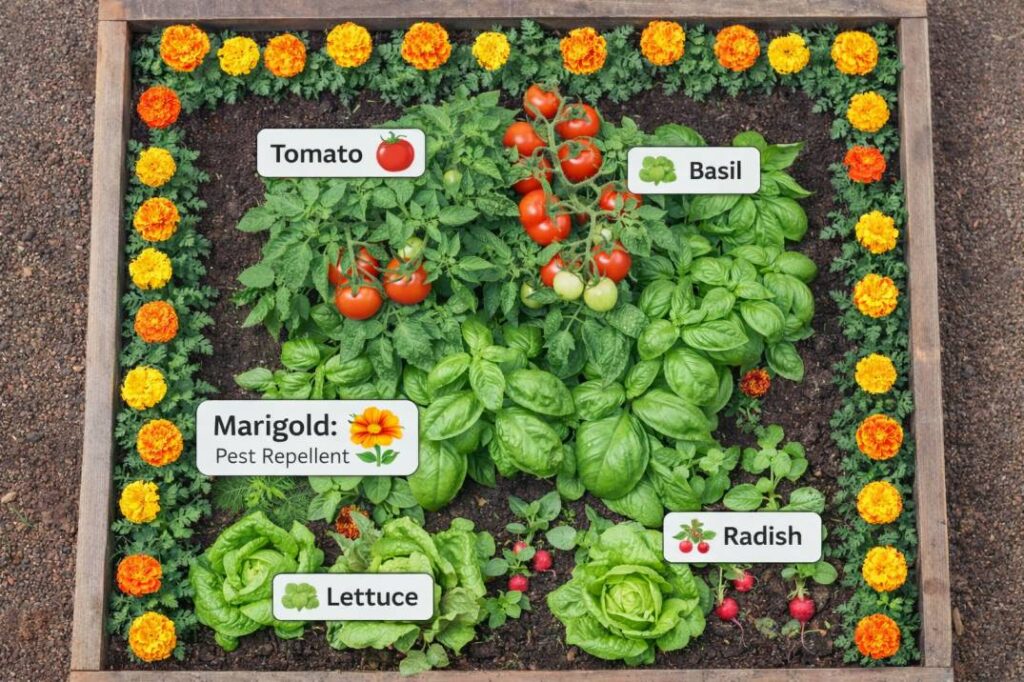
Don’t relegate them to a separate herb garden. Interplant them throughout your veggie beds. Create borders of marigolds and nasturtiums. Dot calendula and alyssum in any gaps. Plant basil between every second tomato plant.
Step 5: Observe and Adapt.
Keep a simple garden journal. What worked? Where did you still see pest problems? Gardening is a dialogue with nature. Your local microclimate might mean a suggested pairing works brilliantly or not at all. Adjust next season.
Australian Climate & Soil Considerations for Success
Our harsh climate makes smart planting even more critical.
- Heat & Sun Protection: Use tall companions to create dappled shade. Plant corn or sunflowers on the western side of beds to protect lettuce, spinach, or chard from the brutal afternoon sun.
- Water-Wise Pairings: Group plants with similar water needs. Don’t plant thirsty zucchinis next to drought-tolerant rosemary. This principle, alongside a good layer of garden mulch, is key to efficient watering. Our guide on creating a water-wise backyard has more tips.
- Soil Preparation is Foundational: All the companion planting in the world won’t help if your soil is poor and compacted. Before you plant anything, take the time to improve your garden soil Australia-style by adding plenty of compost. Healthy soil grows resilient plants that are better able to withstand pest pressure.
- Embrace Australian Natives: Don’t forget our local flora! Many native shrubs and flowers are superb at attracting beneficial insects. A small patch of native plants near your veggie garden can be a powerhouse habitat. Check out our guide to native plants for every Australian state for ideas.
Common Companion Planting Mistakes to Avoid
- Ignoring Plant Spacing: Just because plants are friends doesn’t mean they can be crammed together. They still need space for air circulation and root growth. Follow spacing guides, then interplant with smaller companions.
- Forgetting About Rotation: Don’t plant the same family (e.g., tomatoes, potatoes, capsicums) in the same spot year after year, even with companions. Rotate your crops to prevent soil-borne diseases.
- Overcomplicating It in Year One: Start with two or three proven pairs. Tomato + basil + marigold is a perfect, easy first experiment. Success builds confidence.
- Treating It as a Silver Bullet: Companion planting is a powerful tool within an organic system. It works best combined with other practices: healthy soil, crop rotation, encouraging biodiversity, and physical barriers (like nets for fruit fly).
- Relying on Folklore Without Observation: Some traditional pairings are less proven. The best guide is your own garden. Try things, see what happens, and form your own local knowledge.
Your Companion Planting Questions, Answered
Q: Is there a simple, printable companion planting chart I can use?
A: Absolutely! We’ve created a free, downloadable companion planting chart tailored for common Australian vegetables. You can find it by signing up for our Sustainable Aussie Backyard newsletter. It’s a great quick-reference for your shed or kitchen.
Q: Can I use companion planting in a small garden or pots?
A: Yes, it’s perfect for small spaces! The principles are the same. In a large pot with a tomato, plant some basil around the edge and a dwarf marigold. In a garden bed, mix everything together more intensively.
Q: What are the best companion plants for fruit trees?
A: Underplanting fruit trees with a “guild” is a fantastic idea. Try garlic or chives at the base to deter pests, daffodil bulbs (their bulbs deter rodents), comfrey (its deep roots mine nutrients and its leaves make great mulch), and clover as a living mulch to fix nitrogen. Nasturtiums will happily sprawl underneath as a trap crop.
Q: Do I still need to use other forms of pest control?
A: Often, you’ll need less. But you might still need to hand-pick the odd caterpillar, use a spray of soapy water for a sudden aphid outbreak, or net your berries from birds. Companion planting reduces problems; it rarely eliminates them 100%.
Q: Where can I find more science-based information on this for Australia?
A: Excellent resources include your local state’s agriculture department website (e.g., NSW DPI, Agriculture Victoria) and organisations like Sustainable Gardening Australia. They provide region-specific advice that’s invaluable.
Conclusion: Grow a Community, Not Just a Garden
Starting your companion planting Australia journey is one of the most rewarding shifts you can make as a gardener. You move from seeing plants as isolated individuals to understanding them as part of a connected, supportive web of life. You’ll spend less time fighting problems and more time enjoying the vibrant, buzzing ecosystem you’ve helped create.
This season, choose just one partnership to try. Plant those marigolds with your tomatoes. Let some dill flower near your cabbages. Observe what visits your garden. You might be surprised by how a few simple changes can lead to a healthier, more abundant, and truly joyful garden.
Ready to build the perfect foundation for your companion planting success? Great soil is where it all begins. Learn how to create a thriving underground ecosystem with our ultimate guide on how to improve your garden soil in Australia. And once your plants are growing strong, protect that precious soil moisture with our complete Australian garden mulch guide.
1 thought on “Companion Planting Australia: Your 7 Genuine Step Guide to a Thriving Garden”