Let me ask you a question. Have you ever stood in the gardening aisle, staring at a wall of compost bins, feeling completely lost? Or maybe you bought one that now sits in your yard unused cracking in the sun, full of flies, or just sad.
I have. It’s a rite of passage for any aspiring composter.
We’ve all felt the spark of wanting to do better. To turn our kitchen scraps into something useful instead of sending them to landfill. You’ve probably already read our guide to composting at home Australia and gotten inspired. But when it comes to choosing equipment, inspiration can quickly turn into confusion.
Here’s the good news: finding the best compost bin Australia has to offer isn’t about finding a single “perfect” product. It’s about matching a system to your real life your space, your time, and your patience level.
This guide will walk you through every option, from high-tech tumblers to simple DIY setups. By the end, you’ll know exactly which bin will become your garden’s new best friend, not your next regret.
Table of Contents
Why Getting the Right Bin is a Total Game-Changer
Choosing the right bin isn’t just a purchase. It’s the single most important factor in whether you’ll stick with composting.
A bad bin becomes a chore. It smells. It attracts pests. It’s impossible to use. A good bin? It becomes an effortless part of your routine. The best compost bin Australia can offer you is the one that makes the process feel simple, clean, and even satisfying.
Think about it. A great bin:
- Saves you time by working efficiently.
- Saves you frustration by keeping critters out.
- Saves you money by lasting for years and creating free garden food.
- Fuels your motivation by actually producing that beautiful “black gold” you dreamed of.
Let’s stop the guesswork and find your match.
The Ultimate Showdown: 7 Best Compost Bin Australia Contenders
We’ve tested, researched, and talked to dozens of Australian gardeners. These are the seven systems that consistently rise to the top. Remember, the winner depends on your personal scorecard.
Contender 1: The Speedy Gonzales (The Tumbler)
The Pitch: “I want compost fast, and I don’t want to break my back turning a pile with a fork.”
If patience isn’t your virtue, a tumbler is a serious candidate for the best compost bin Australia offers for speed demons.
How It Really Works:
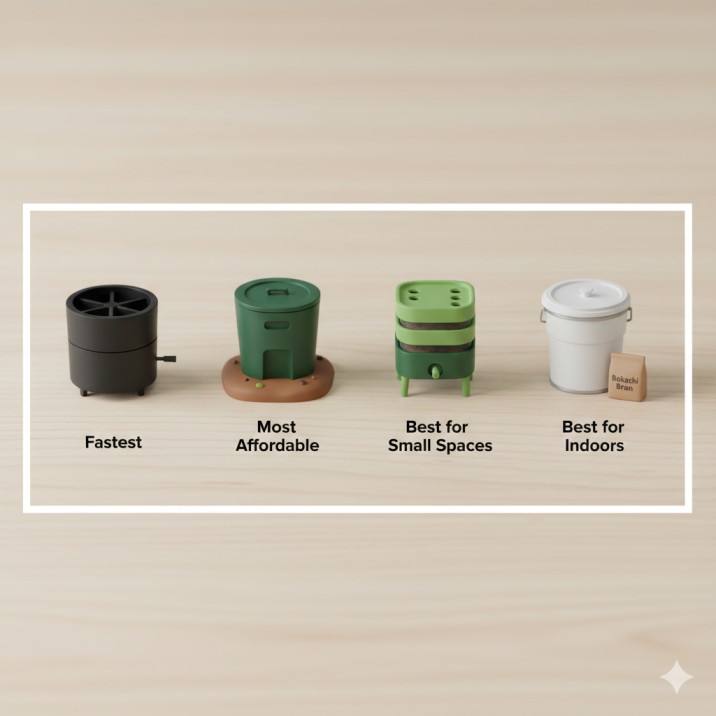
You load your “greens” and “browns” into a barrel. Every few days, you give a crank (or roll the barrel). This isn’t just mixing it’s supercharging the pile with oxygen, which heats everything up. You can have usable compost in as little as 4-6 weeks in warm weather.
Top Australian Pick: The Maze Tumbler Composter
Why it stands out: It’s Aussie-made for our conditions. The twin chambers are genius you can let one batch “cook” while you fill the other. The steel frame won’t warp in our harsh sun, and users rave about how smoothly it turns, even when full.
The Real-World Pros:
- Speed King: Nothing beats it for fast results.
- Easy on the Body: No heavy fork work required.
- Fort Knox for Scraps: Fully sealed against rats, possums, and flies.
- Clean & Tidy: Raised off the ground, looks neat in the garden.
The Honest Cons:
- Investment: One of the more expensive upfront options.
- The Spin Struggle: When completely full, it can be a real workout to turn.
- Size Limit: You can’t just keep adding; you have to work in batches.
Best For: The busy gardener with a small-to-medium yard who wants quick, hassle-free results. If you’re pairing this with other sustainable systems, like a greywater setup, you’ll be building a seriously efficient backyard ecosystem.
Contender 2: The Classic Workhorse (The Stationary Bin)
The Pitch: “I have a corner of the garden, I’m not in a huge rush, and I want something simple and affordable.”
This is the OG of composting. For reliability and value, it’s hard to beat this as the best compost bin Australia-wide for traditionalists.
How It Really Works:
You add materials to the top. Over months, with occasional turning, it decomposes from the bottom up. You harvest the finished compost from a small door at the base. It’s a lesson in patience and the slow magic of nature.
Top Australian Pick: The ‘Soil Saver’ Style Bin
Why it stands out: Its tapered shape is clever it’s wider at the top for easy filling and narrower at the bottom to retain heat. The lid snaps on securely, and the bottom hatch is a true game-changer for harvesting without dismantling your whole pile.
The Real-World Pros:
- Budget-Friendly: Often under $100, and councils frequently offer discounts.
- Big Appetite: Great for large families or gardens that produce lots of weeds and clippings.
- Simple Soul: No moving parts to break. It just works.
- Sets & Forgets: Lower maintenance than a tumbler.
The Honest Cons:
- The Waiting Game: Takes 6-12 months for a full cycle.
- Manual Labour: You do need to turn it with a fork every few weeks for best results.
- Bend and Scoop: Harvesting requires some bending and shoveling.
Best For: The patient, hands-on gardener with a dedicated garden space. It’s perfect if you’re also working on building soil health for native plants, as it produces large volumes of soil conditioner.
Contender 3: The Space-Saving Superhero (The Worm Farm)
The Pitch: “I live in an apartment, or my backyard is just a courtyard. I want to compost, but I have no space!”
For small spaces, the worm farm isn’t just an option it’s often the undisputed best compost bin Australia has for urban dwellers.
How It Really Works:
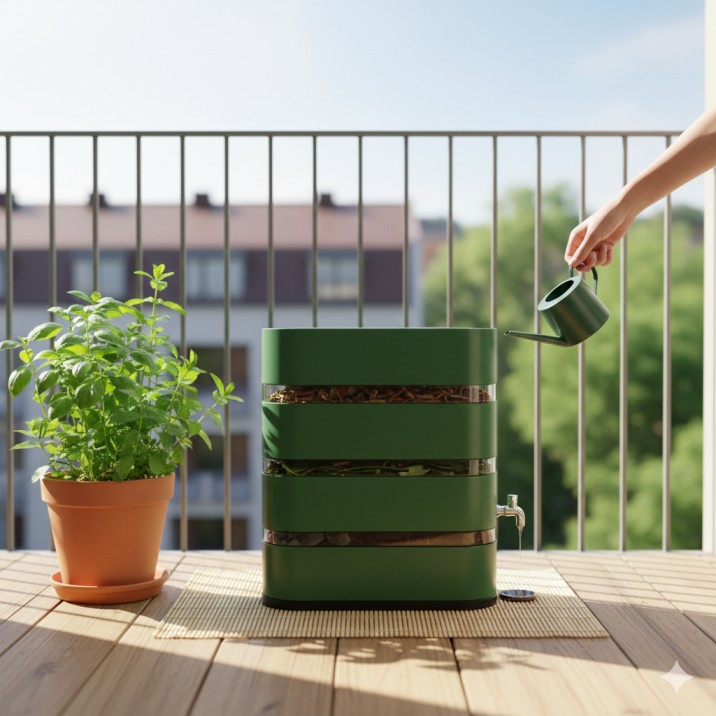
You host a colony of tiger worms in stacked, ventilated trays. You feed them your kitchen scraps (they love fruit and veg peels, coffee grounds). They eat, breed, and produce two amazing products: solid “worm castings” (super-rich compost) and liquid “worm wee,” a powerful fertiliser you drain from a tap.
Top Australian Pick: The Tumblebee Worm Farm
Why it stands out: It’s designed for our climate with UV-protected plastic. The layered tray system makes it easy to harvest castings without disturbing the whole farm, and the clever tap design makes collecting liquid fertiliser mess-free.
The Real-World Pros:
- Odour-Free Operation: Seriously, a healthy worm farm smells like damp earth.
- Double the Bounty: You get both solid compost and liquid fertiliser.
- Compact Powerhouse: Fits on a balcony, patio, or in a laundry.
- Living Science Project: Kids absolutely love them.
The Honest Cons:
- Worm Whispering Required: They can’t handle extreme heat, cold, or acidic foods (lots of citrus/onions).
- Slow and Steady: Processes scraps slower than a hot tumbler.
- Initial Setup: You need to buy the worms and set up their bedding correctly.
Best For: Apartments, units, townhouses, and families. It’s the ideal companion to a small-space garden.
Contender 4: The Kitchen Magician (The Bokashi Bucket)
The Pitch: “I want to compost EVERYTHING meat, cheese, cooked leftovers and I want to do it indoors without any smell.”
For dealing with all food waste in a clean, indoor way, the Bokashi bucket is a unique and brilliant contender.
How It Really Works:
This is fermentation, not decomposition. You put all your food scraps into an airtight bucket and sprinkle them with a special bran packed with microbes. The bran pickles the scraps in about two weeks. The output isn’t compost yet it’s “pre-compost” that you then bury in a garden bed or add to a traditional compost bin to break down fully.
Top Australian Pick: The Maze Bokashi One Bucket Kit
Why it stands out: It comes with two buckets, so you can always have one fermenting while you fill the other. The included press helps eliminate air pockets (key for stopping smells), and the tap makes it easy to drain the nutrient-rich “bokashi tea.”
The Real-World Pros:
- No Scrap Left Behind: Meat, fish, dairy, bones it takes it all.
- Truly Indoor-Friendly: When sealed, it has a mild, pickled smell at most.
- Incredibly Fast Fermentation: Two weeks and it’s ready for the next step.
- Great for Renters: The end product can be buried in a pot or community garden plot.
The Honest Cons:
- Ongoing Cost: You must keep buying the Bokashi bran.
- Two-Step Process: You still need soil to bury the fermented scraps.
- Small Capacity: Best for 1-2 person households.
Best For: The zero-waste enthusiast, the renter, or anyone who wants a smell-free way to handle tricky kitchen scraps.
Contender 5: The Handy Hero (The DIY Bay)
The Pitch: “I have space, some spare timber, and I love a good DIY project. I want big, cheap, and custom.”
If you’re handy, the best compost bin Australia has might be the one you build yourself.
How It Really Works:
Typically, this is a three-bay system made from timber pallets, hardwood, or sleepers. One bay is for fresh scraps, the middle is actively “cooking,” and the third holds finished compost. You simply turn the pile from one bay to the next as it matures.
Top “Pick”: The 3-Bay Pallet System
Why it stands out: Cost (often free if you source free pallets!), massive capacity, and total control over the size and design to fit your garden perfectly.
The Real-World Pros:
- Extremely Low Cost: Often just the price of a few screws or brackets.
- Industrial Capacity: Perfect for large properties with lots of garden waste.
- Perfect Workflow: The three-bay system is the gold standard for easy management.
- Custom Fit: Build it to match your garden’s style and space.
The Honest Cons:
- Requires Space & Skill: You need a good-sized area and basic DIY ability.
- More Exposed: Can be accessed by pests if not designed carefully.
- Weather Dependent: Can dry out or get waterlogged more easily than enclosed bins.
Best For: The DIYer with a large block. It pairs perfectly with a big vegetable garden or native planting scheme that consumes lots of compost.
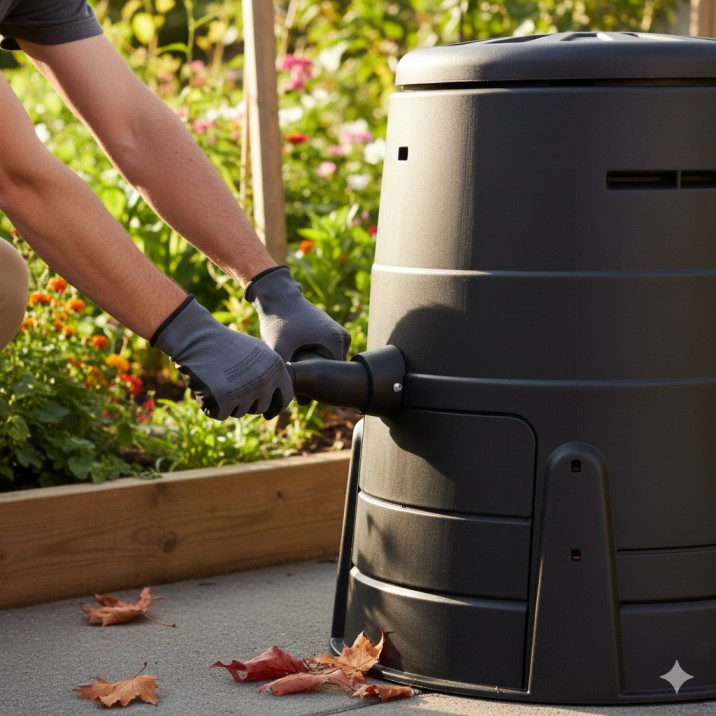
Contender 6: The Heavy-Duty Digester (The Hot Composter)
The Pitch: “I’m serious about gardening. I generate a lot of waste, and I want professional-grade compost, fast, all year round.”
For the committed gardener, a hot composter is a premium investment that delivers phenomenal results.
How It Really Works:
These are super-insulated bins (like the “Hot Bin” or in-ground “Subpod”) that retain intense microbial heat. They can reach temperatures high enough to break down scraps incredibly quickly (even weeds and diseased plants, as the heat kills seeds and pathogens) and work through winter.
Top Australian Pick: The Subpod
Why it stands out: It’s an in-ground, dual-purpose system. It composts your waste while also aerating the soil and feeding worms in your garden bed directly. It’s pest-proof, neat, and integrates seamlessly into a raised garden bed.
The Real-World Pros:
- Unbeatable Speed & Efficiency: Works in all seasons.
- Handles Tough Waste: Can cope with weeds, pet hair, and more.
- Pest-Proof & Neat: Fully sealed and often very aesthetically designed.
- Garden Bed Integration: Systems like Subpod actively improve your soil.
The Honest Cons:
- Premium Price Tag: The most expensive home composting option.
- Learning Curve: Requires more attention to the mix of materials to maintain heat.
- Permanent Fixture: Some systems, like Subpod, are not easily moved.
Best For: The dedicated food gardener or eco-conscious family with a high waste output who views composting as a core part of their sustainable home.
Contender 7: The Tech Wizard (The Electric Composter)
The Pitch: “I want scraps gone from my kitchen today. I don’t mind using electricity, and I want the ultimate in convenience.”
A new player on the field, these countertop devices offer a futuristic, but different, approach.
How It Really Works:
Machines like the Lomi use heat, grinding, and sometimes a proprietary pod to dehydrate and pulverise scraps into a fine, soil-like material in just a few hours. Important note: This material is not immediately usable as compost. It needs to be mixed with soil and left to mature for several weeks to become biologically active.
Top Pick: The Lomi
Why it stands out: It’s quiet, sleek, and can process small batches in a few hours. It has different cycles and claims to handle a wider range of materials, including some bioplastics.
The Real-World Pros:
- Instant Gratification: Scraps disappear in hours, not months.
- Ultra-Clean & Odourless: Perfect for kitchen bench use.
- Zero Pests, Zero Maintenance: Just press a button.
- Space-Saving: No outdoor space needed.
The Honest Cons:
- High Energy Use: It’s an appliance that runs for hours.
- The “Pre-Compost” Truth: The output is not ready-to-use compost.
- Very High Cost: Both upfront and if using proprietary additives.
- Small Capacity: Only handles a kitchen caddy’s worth at a time.
Best For: Tech-lovers in apartments who prioritise immediate kitchen cleanliness over traditional microbial composting and understand the process. It’s a reduction tool more than a true composter.
The Final Decision: Your Personal Checklist
Forget the hype. Answer these questions honestly to find your true match:
- Where will it live? (Big garden, small courtyard, kitchen bench?)
- How hands-on do I want to be? (Love puttering in the garden, or want a “set and forget” system?)
- What’s my timeline? (Want compost next month, or happy to wait half a year?)
- What am I composting? (Mostly veggie peels, or also garden weeds, lawn clippings, and food leftovers?)
- What’s my budget? (Including any ongoing costs for bran or filters?)
The Verdict: There Is No Single “Best”
The search for the one best compost bin Australia stocks is a mirage.
The best compost bin Australia has for you is the one that aligns with your answers above. It’s the system that feels easy, not like a second job. It’s the one that turns your good intention into a lasting, rewarding habit.
Start where you are. A small worm farm is better than a giant tumbler you never use. A simple council bin is better than an expensive hot composter that overwhelms you.
Choose your bin. Start the cycle. Your garden and the planet will reap the rewards for years to come.
1 thought on “The Unbeatable Guide to Finding Your Best Compost Bin Australia (2026)”