
Let’s talk about the great Australian backyard battle. You plant with hope. You water with care. And then… the sun bakes everything to a crisp. Or a late frost nips your seedlings in the bud. Or the wind howls and shreds your precious greens. Sound familiar? Welcome to the grand, glorious, and sometimes infuriating challenge of the backyard gardening Australia climate.
I’ve been there. I’ve mourned tomato plants fried in a November heatwave. I’ve watched mulch literally blow off the garden bed in a gale. But after years of trial and (plenty of) error, I’ve learned we’re not powerless. We just need a different playbook. Forget the gentle, rainy-season advice from overseas. Here, gardening is a sport, and to win, you need to understand the playing field. This guide gives you five brilliant, practical strategies to stop fighting the weather and start using it to grow a garden that’s not just alive, but absolutely thriving.
Table of Contents
The Aussie Climate: Your Garden’s Greatest Teacher (Not Its Enemy)
First, let’s shift our mindset. That blistering sun, drying wind, and unpredictable rain aren’t out to get you. They’re your head gardeners, giving you very clear instructions on what will and won’t work. Trying to grow a delicate English rose in the Adelaide plains is like wearing a woollen jumper to the beach in Darwin—it’s just the wrong gear for the place.
Our backyard gardening Australia climate is a masterclass in extremes. It teaches resilience, resourcefulness, and the beauty of plants that have evolved to not just survive, but shine, in these conditions. Once you listen to it, gardening becomes infinitely more rewarding and a whole lot less frustrating.
Step 1: Become a Climate Zone Detective – Know Your Exact Patch
You wouldn’t use a map of Tasmania to navigate Perth. So why use generic “Australian” gardening advice? The first, non-negotiable step is to get hyper-local. Australia has over eight major climate zones, and your backyard might even have its own microclimates.
Your Detective Kit:
- The Official Map: Start with the Bureau of Meteorology (BOM) Climate Classifications map. This gives you the broad zone—is your area Temperate, Grassland, Subtropical, or Arid?
- The Gardener’s Map: For more practical gardening advice, cross-reference with the zones outlined by Sustainable Gardening Australia. They translate BOM data into what it means for your soil and plant choices.
- Your Own Eyes (The Microclimate Hunt): This is the fun part. Spend a day noticing:
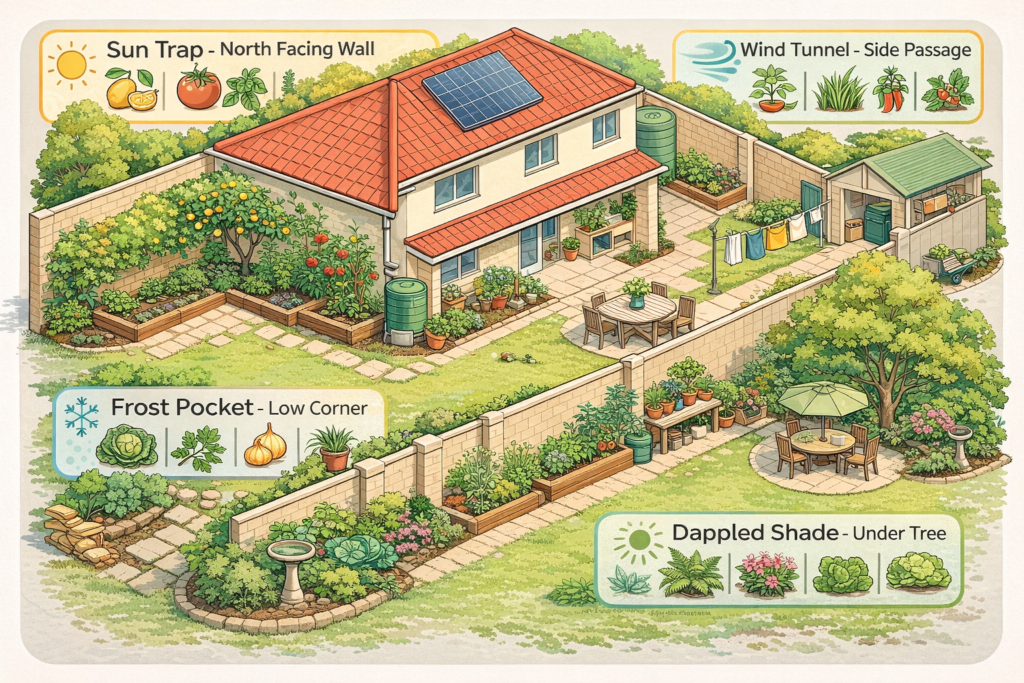
- The Frost Pocket: Is there a low corner where cold air settles, leaving a white sheen while the rest of the lawn is clear? Avoid planting frost-tender things there.
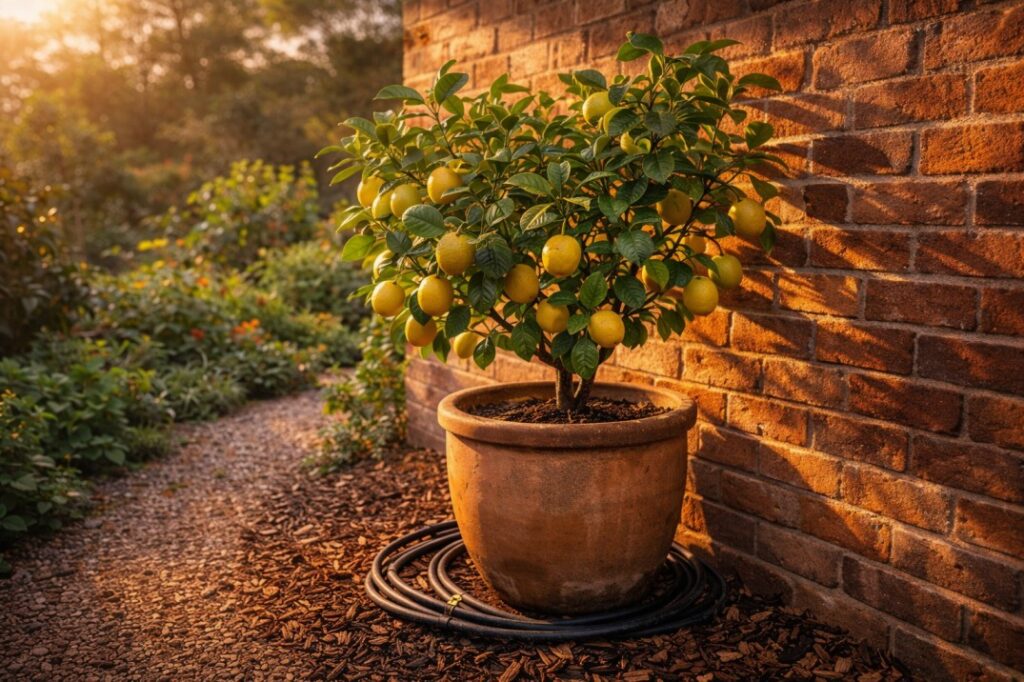
- The Heat Trap: Is there a north-facing brick wall that radiates blistering heat in summer? That’s a perfect spot for a potted citrus or chilli plant!
- The Wind Tunnel: Does wind scream down a side passage? That spot needs a windbreak, not your prized lettuces.
Why This Matters: This knowledge is power. It means you’ll never waste money on a plant doomed from the start. A plant labelled for “cool, moist climates” will struggle in most of Australia. Knowing you’re in a “warm temperate” zone immediately points you to a world of suitable, resilient plants.
Step 2: Build Your Soil Fortress – The Ultimate Climate Buffer
If plants are the actors, your soil is the stage. And in our climate, you can’t have a great show on a shaky, dry, or flooded stage. You need to build a fortress.
Imagine your soil as a sponge. In a drought, a good sponge holds the last precious drops of water. In a downpour, it absorbs the deluge without getting waterlogged. You create this sponge with organic matter.
Your Fortress-Building Plan:
- The Foundation: Compost. This is non-negotiable. Mixing homemade compost into your soil is the single best thing you can do. It feeds the microbial life, improves structure, and increases water retention. Starting a compost system is easier than you think—our guide on compost bin vs worm farm Australia helps you pick the perfect method.
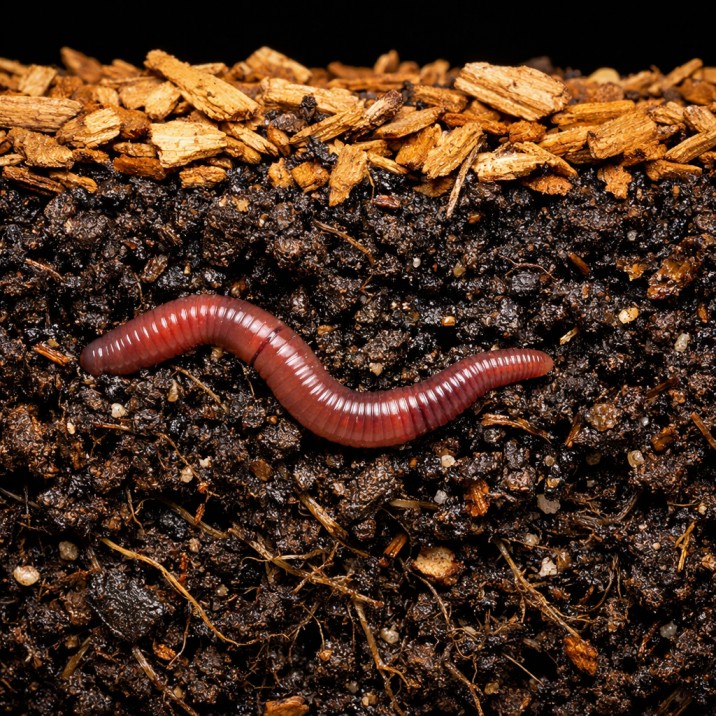
- The Protective Wall: Mulch. After you plant, you must mulch. A 5-10cm thick layer of wood chips, straw, or sugar cane mulch is like putting a blanket over your soil’s sponge.
- In Summer: It deflects the sun’s rays, keeping roots cool and slashing evaporation.
- In Winter: It insulates the soil from severe frosts.
- Always: It suppresses water-hungry weeds.
- The Moat: Drainage. If you have clay soil, it can become a bathtub in wet weather. Raising your garden beds, even slightly, guarantees good drainage and prevents root rot. For a perfect start, building a DIY raised garden bed Australia style is a brilliant move.
Step 3: Pick Your Dream Team – The “Climate-Smart” Plant Revolution
This is where you start to have real fun. It’s time to choose plants that will high-five you for your local weather, not give up on life.
The “Right Plant, Right Place” Hall of Fame:
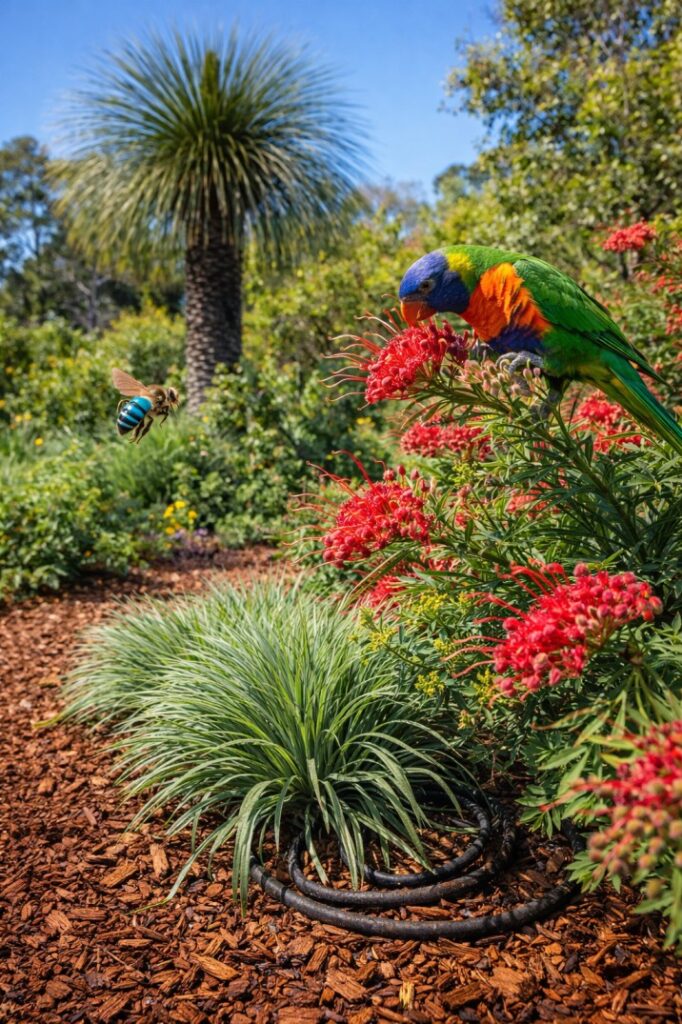
- For Sun-Baked, Dry Gardens (Arid & Temperate): This is the realm of Australian natives. Think beyond just flowers. Lomandra grasses for stunning structure, Grevilleas for year-round bird-attracting nectar, and Dwarf Flowering Gums for breathtaking summer colour. They’re drought-hardy, low-maintenance, and stunning. For a full list, our guide to native plants for a sustainable Aussie backyard is your go-to.
- For Subtropical Humidity (QLD, NSW North Coast): Embrace the lush! Plants like ginger, taro, monstera, and hibiscus revel in the warmth and moisture. Focus on good air circulation to avoid fungal issues.
- For Frosty & Cold Winter Areas (Southern States, Highlands): Seek out plants that need a “chill” to thrive. Deciduous fruit trees like apples and pears, flowering bulbs (tulips, daffodils), and winter veggies like kale and Brussels sprouts are your allies.
Pro Tip: Visit a local native nursery or a well-regarded local garden centre. Tell them your suburb and the aspect of your garden (e.g., “full sun, front yard, clay soil”). Their recommendations are worth their weight in gold.
Step 4: Master the Art of the “Smart Water”
In the backyard gardening Australia climate, water is liquid gold. How you use it separates the thriving garden from the thirsty, struggling one.
Forget the Sprinkler. Embrace These Heroes:
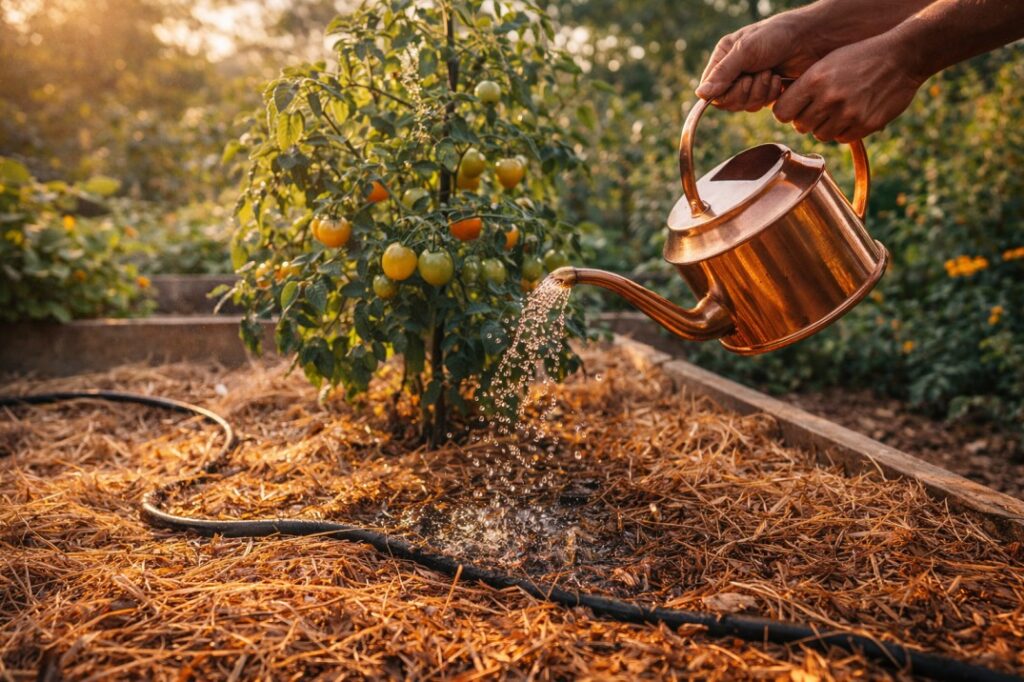
- The Soaker Hose: Laid under your mulch, it “sweats” water directly into the soil, with zero evaporation.
- Drip Irrigation: The pinnacle of efficiency. Tiny emitters deliver water drop-by-drop to the root zone of each plant. Hook it to a timer, and you can water at 5 am without even being awake.
- The Watering Can: For pots and small beds, nothing gives you more control. You see exactly where every drop goes.
The Golden Rules of Watering:
- The “Finger Test”: Before you water, stick your finger into the soil up to the second knuckle. If it’s damp, wait. If it’s dry, water.
- Deep and Infrequent: A long, slow drink encourages roots to grow deep, searching for moisture. This makes plants incredibly resilient. A quick splash every day makes for shallow, weak roots.
- Morning is Sacred: Always water in the early morning. This gives plants a reservoir for the day, allows leaves to dry (preventing disease), and minimises evaporation. For a complete system on saving this precious resource, our guide on how to save water in your backyard is essential reading.
Step 5: Become a Microclimate Magician
This is the secret weapon of clever gardeners. You can’t change the weather for your whole city, but you can absolutely create tiny, perfect pockets of ideal climate in your own backyard.
Your Bag of Magical Tricks:
| Microclimate Goal | How to Create It | Perfect For… |
|---|---|---|
| Create Shade & Coolth | Plant a deciduous tree on the western side. It gives summer shade but lets in winter sun. Use shade cloth (30-50%) over veggie patches in peak summer. | Protecting lettuce, spinach, and ferns from scorch. |
| Tame the Wind | Install a permeable screen (lattice, slatted timber) or plant a dense hedge. It filters wind, slowing it down without creating turbulent eddies. | Preventing physical damage and reducing moisture loss from leaves. |
| Trap Warmth | Use a north-facing brick or stone wall. It absorbs heat by day and radiates it slowly at night, creating a “frost-free” zone. | Growing citrus in cooler areas, or getting early tomatoes. |
| Increase Humidity | Group potted plants together. As they transpire, they create a more humid local atmosphere. Place pots on pebble trays filled with water. | Ferns, orchids, and other humidity-loving beauties. |
| Portable Gardens | Use pots! They are mobile microclimates. Move a sun-loving basil into more shade during a heatwave. Bring a frost-tender herb under the eaves in winter. | Total control for small spaces and sensitive plants. |
Your Seasonal Game Plan: What to Do & When
Let’s make this practical. Here’s your year-round guide for the backyard gardening Australia climate.
Summer (Dec-Feb): The Season of Protection.
- Mood: Defensive. Protect from sun and conserve water.
- Key Tasks: Water deeply before 9am. Top up mulch. Harvest veggies early morning. Drape shade cloth over delicate greens. Let your lawn go golden—it’s dormant, not dead.
Autumn (Mar-May): The Season of Opportunity.
- Mood: Strategic and busy. The best planting time!
- Key Tasks: Plant new trees, shrubs, and winter veggies. Divide perennials. Plant spring-flowering bulbs. It’s the perfect time to start a new raised garden bed.
Winter (Jun-Aug): The Season of Planning & Care.
- Mood: Reflective and nurturing.
- Key Tasks: Prune deciduous trees and roses. Protect tender plants from frost with cloth or move pots. Plant bare-rooted trees. Order seeds for spring. It’s the ideal time to plan and dream.
Spring (Sep-Nov): The Season of Growth & Vigilance.
- Mood: Excited and watchful.
- Key Tasks: Plant summer veggies after the last frost. Feed everything with organic fertiliser. Watch for aphids on new growth. Tie up climbing peas and beans. Enjoy the explosion of colour!
The Final Word: Grow With the Flow
Mastering your backyard gardening Australia climate isn’t a destination; it’s a journey of observation and adaptation. Some years will be wet, others dry. Some summers mild, others brutal.
The goal is to build a garden that can roll with these punches. A garden where the soil is rich, the plants are chosen for their toughness and beauty, and every drop of water is used with respect.
Start small. Pick one tip from this guide—maybe adding a proper layer of mulch, or visiting a nursery to buy one truly climate-appropriate plant. Each smart choice you make adds another layer of resilience.
Before long, you’ll look at a forecast for a heatwave not with dread, but with calm. Your garden is ready. You’ve built it for this. And that feeling—of working in harmony with the powerful, beautiful Australian climate—is the greatest reward of all.