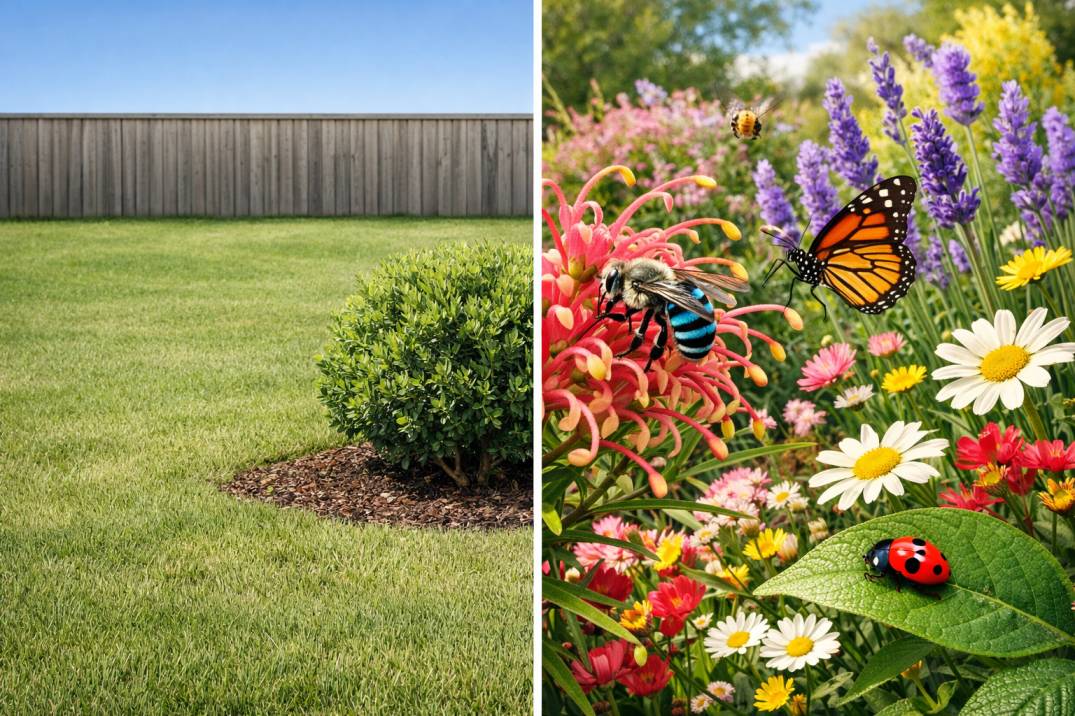
Attract pollinators Australia, this isn’t just a nice idea for your garden; it’s a vital step in creating a thriving, resilient, and incredibly productive backyard ecosystem. If you’ve ever wondered why your zucchini flowers don’t set fruit or wished for more life and colour among your plants, the answer often lies in welcoming our native pollinators.
G’day, I’m Mehedi Hasan. Over the years in my Melbourne garden, I’ve learned that a plot buzzing with bees, fluttering with butterflies, and humming with life is a healthy one. It’s a sign that everything is in balance. Moving from a quiet garden to one filled with pollinators was a game-changer. My harvests became more abundant, my plants looked healthier, and I spent less time battling pests.
This guide brings together everything I’ve discovered. We won’t just talk about planting a few flowers. We’ll build a complete, year-round sanctuary for Australia’s essential pollinators, from the famous honeybee to our incredible native blue-banded bees and gorgeous butterflies. It’s easier than you think, and the rewards are immense.
Table of Contents
Why Your Garden Needs Pollinators (And They Need You)
Think of pollinators as your garden’s essential workforce. They’re not just visitors; they’re active partners in your garden’s success.
- Bigger, Better Harvests: Many of our favourite fruits and vegetables, like zucchinis, pumpkins, apples, berries, and tomatoes, rely on pollinators to set fruit. More pollinator visits often mean more fruit, and sometimes even larger, better-shaped produce.
- Natural Pest Control: A diverse pollinator garden attracts beneficial insects that are natural predators of common pests. Hoverflies, ladybirds, and certain wasps feast on aphids and caterpillars, helping you manage problems without sprays.
- Supporting Biodiversity: By creating a native bee habitat and food source, you’re supporting local populations that face habitat loss. You’re strengthening the whole local ecosystem, one garden at a time.
- Pure Garden Joy: There’s nothing quite like the satisfaction of watching a bright blue butterfly land on a flower you planted or seeing a teddy bear bee bob between your lavender spikes. It brings your garden to life.
Step 1: Plant the Ultimate Pollinator Buffet
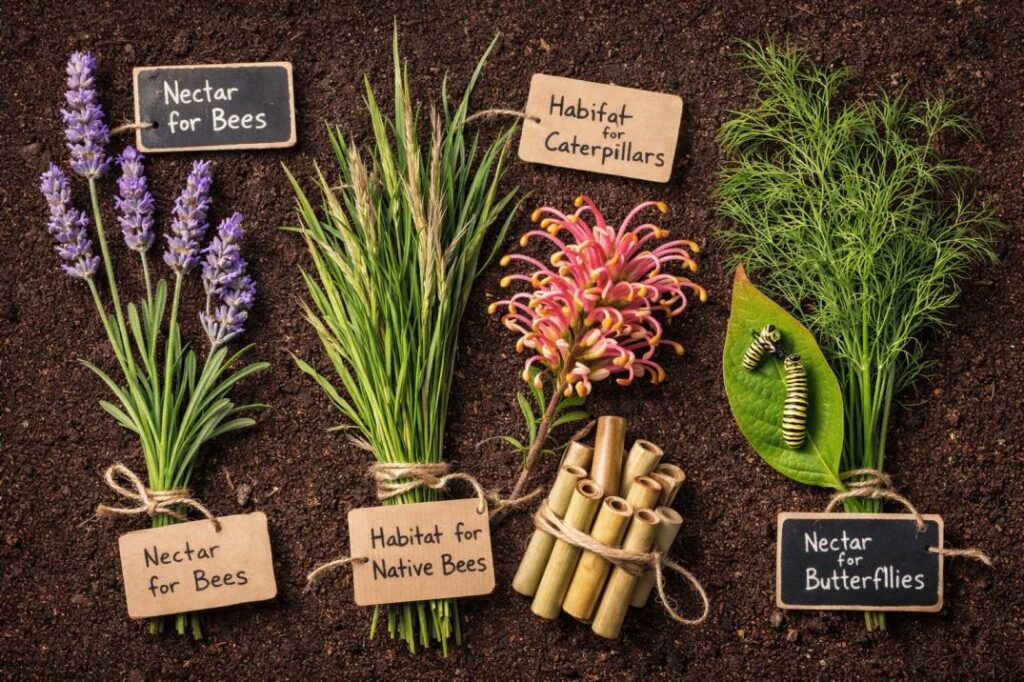
The core of any plan to attract pollinators Australia-wide is the right plants. You want to provide a reliable, long-term source of nectar (energy) and pollen (protein).
The Golden Rules for Planting:
- Go for Year-Round Blooms: Pollinators need food across all seasons. Aim for a sequence of flowering so something is always in bloom. Winter-flowering plants like some grevilleas and correas are especially critical.
- Plant in Clumps: Group several of the same plant together. A large patch of colour and scent is much easier for pollinators to find than single, scattered plants.
- Embrace Diversity: Different pollinators have different preferences. Include a mix of flower shapes, colours, and sizes to cater to everyone.
To make planning easy, here’s a guide to some of the best Australian-native and exotic plants, organised by their peak flowering season.
Top Australian Native Plants for Pollinators
Excellent Exotic & Herb Plants for Pollinators
Don’t overlook non-natives! Many herbs and flowering annuals are fantastic for pollinators and are easy to grow in veggie patches or pots.
- Lavender: A universal bee magnet with a long flowering period.
- Basil, Sage, Thyme, Rosemary: Let your culinary herbs flower! Their blooms are highly attractive to bees and other beneficial insects.
- Borage: Renowned as one of the best bee plants. Its pretty blue flowers are edible, too.
- Sunflowers: Their large, open faces are irresistible to bees and provide a landing pad.
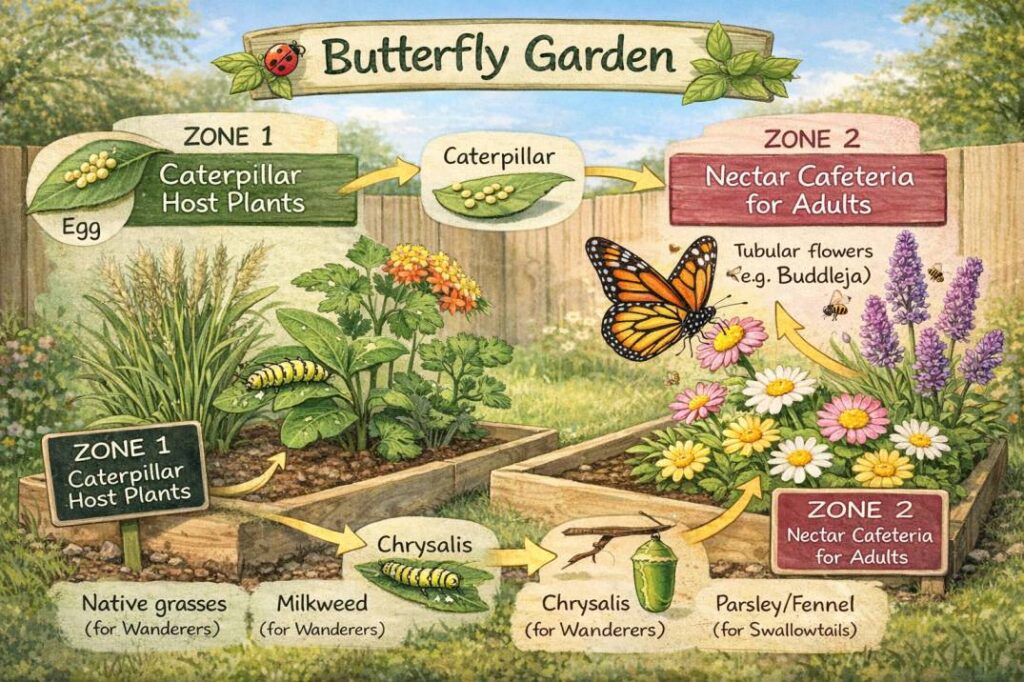
Creating a Garden for Butterflies
To truly support butterflies, you need to think about their entire lifecycle: plants for butterflies to feed on, and plants for their caterpillars to eat.
- Nectar Plants for Adult Butterflies: Butterflies love flat, daisy-like flowers or clusters of small tubular flowers where they can land easily. Great choices include:
- Host Plants for Caterpillars: To have butterflies, you must welcome caterpillars. Plant their food sources:
Step 2: Provide Safe Water Sources
Pollinators need to drink, especially on hot Australian days. A safe water source prevents them from drowning.
- Create a “Bee Bath”: Use a shallow dish, bowl, or pot saucer. Fill it with clean water and add plenty of pebbles, marbles, or corks so insects can land safely and drink without falling in.
- Keep it Clean: Refresh the water every couple of days to prevent mosquitoes from breeding.
- Add a Dripper: A slow drip or leaky tap over a muddy patch can be perfect for butterflies and bees that gather minerals from damp soil.
Step 3: Build a Native Bee Habitat
Most of our native bees are solitary, meaning they don’t live in hives. They need places to nest. Creating a native bee habitat is simple and rewarding.
- Leave Bare, Undisturbed Ground: About 70% of native bees nest in the ground. Leave a sunny, bare patch of soil in a quiet corner of your garden. Avoid walking on it or covering it with mulch.
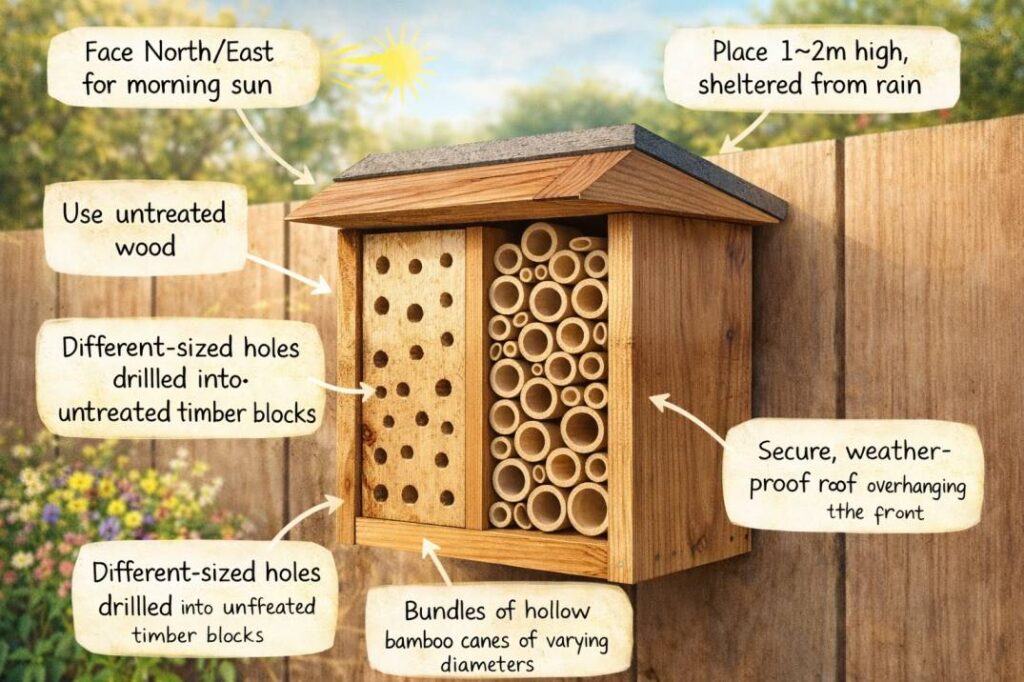
- Create a “Bee Hotel”: For cavity-nesting bees (like Blue-banded Bees and Resin Bees), you can make a simple hotel.
- Materials: Bundle together hollow sticks (bamboo, reeds) or drill holes of varying sizes (2-10mm) into a block of untreated timber.
- Placement: Mount it securely in a sunny, north or east-facing spot, sheltered from heavy rain.
- Maintenance: Bee hotels need care. Replace or clean the nesting materials every couple of years to prevent the build-up of pests and diseases.
- Leave Garden “Mess”: A neat garden is often a poor habitat. Leave some dead wood, piles of leaves, or old, pithy plant stems (like lavender or raspberry canes) standing over winter. These provide crucial nesting and overwintering sites.
Step 4: Ditch the Pesticides
This is non-negotiable. Insecticides don’t discriminate; they will kill your pollinator friends along with the pests.
- Embrace Natural Balance: A diverse garden attracts predators like ladybirds, lacewings, and birds that will keep pest numbers in check.
- Spot Treat Problems: If you must intervene, use targeted, physical methods. Blast aphids off with a hose, hand-pick caterpillars, or use a mild soap spray.
- Read Labels Carefully: If you use any garden product, choose ones certified for organic use and labelled as low-toxicity to bees. Always apply in the late evening when most pollinators are not active.
Step 5: Design for Your Australian Climate
Our continent has diverse climates, and your pollinator garden should reflect that.
- Arid & Hot Zones (WA, SA, Inland): Focus on deep-rooted, drought-tolerant natives. Banksias, Eucalypts, and Grevilleas are perfect. Mulch heavily to conserve soil moisture. A shallow bee bath is crucial here.
- Subtropical & Tropical (QLD, Northern NSW): Humidity can promote fungal disease. Prioritise plants with good airflow. Bottlebrush, Lilly Pilly, and Native Gingers work well. Ensure your bee hotel is in a spot with good air circulation to prevent mould.
- Temperate (VIC, NSW Coast, SA, WA SW): You have the widest plant selection. Plan for a true four-season garden. Use spring bulbs, summer-flowering herbs, autumn Sedum, and winter Grevilleas for year-round food.
- Cool Temperate (TAS, High Country): Frost is a factor. Choose cold-hardy varieties. Correas are fantastic winter flowerers here. Place bee hotels in the sunniest, most sheltered spots.
Common Mistakes to Avoid
- Only Planting for Spring/Summer: Pollinators starve in autumn and winter. Ensure you have late and early-season bloomers.
- Over-Mulching Everywhere: Remember to leave some bare earth for ground-nesting bees.
- Using “Weed Mat” or Heavy Landscape Fabric: This prevents ground-nesting bees from accessing the soil.
- Being Too Tidy: Don’t deadhead every spent flower in autumn. Leave some seed heads for birds and overwintering insects.
- Forgetting that Caterpillars Become Butterflies: Tolerate some leaf munching! It’s a sign your garden is supporting the full lifecycle.
Your Pollinator Garden Questions, Answered
Q: I only have a balcony. Can I still help?
A: Absolutely! A few pots with lavender, alyssum, or a dwarf grevillea will attract visitors. Add a small bee bath and a tiny bee hotel fixed to the wall. Every little bit creates a “stepping stone” for pollinators in the urban landscape.
Q: Are European Honeybees bad for native bees?
A: They can compete for resources in times of scarcity. The best approach is to plant so abundantly that there’s enough for everyone. A diverse, nectar-rich garden supports all pollinators.
Q: What’s the single best thing I can do this weekend?
A: Plant one pollinator-friendly shrub, like a Westringia or a Bottlebrush. Then, put out a shallow dish with water and stones. You’ll make an immediate difference.
Q: How do I deal with wasps?
A: Most wasps are beneficial predators, not aggressive. If you have a problem with European Wasps, use specifically targeted traps placed away from your garden activity zones. Never spray nests indiscriminately.
Q: Where can I learn more about identifying my native bee visitors?
A: The Aussie Bee website is a fantastic resource for information and identification guides.
Conclusion: Your Garden, A Sanctuary
Creating a garden to attract pollinators Australia-wide is one of the most rewarding projects you can undertake. It connects you to the natural rhythms of your local environment. You’re not just gardening for yourself; you’re gardening for the blue-banded bees, the dazzling butterflies, the cheerful honeyeaters, and the entire web of life that depends on them.
Start small. Choose a corner, plant a cluster of flowers, add some water, and watch. You’ll be amazed at how quickly life arrives. Your garden will become more resilient, more productive, and infinitely more magical.
Ready to build the perfect foundation for your pollinator paradise? It all starts with the soil. Learn how to create a thriving ecosystem underground with our ultimate guide on how to improve your garden soil in Australia. And for a beautiful, low-maintenance framework that supports both plants and pollinators, explore our guide to building the perfect DIY raised garden bed. To learn about pest control, you can read this article too.
2 thoughts on “Attract Pollinators Australia: 7 Best Steps to a Bee & Butterfly Haven”