Disclosure: As an Amazon Associate, I earn from qualifying purchases. This post contains affiliate links, which means I may receive a commission if you click a link and purchase something I have recommended. This comes at no extra cost to you and helps support the site. Thank you!
Let’s be honest. You know you should be doing more for the environment. You see the headlines about droughts, heatwaves, and habitat loss. You feel that quiet guilt when you hose the driveway or send another bin full of green waste to landfill. You want to help, but it all feels so big. What difference can one person in one backyard really make?
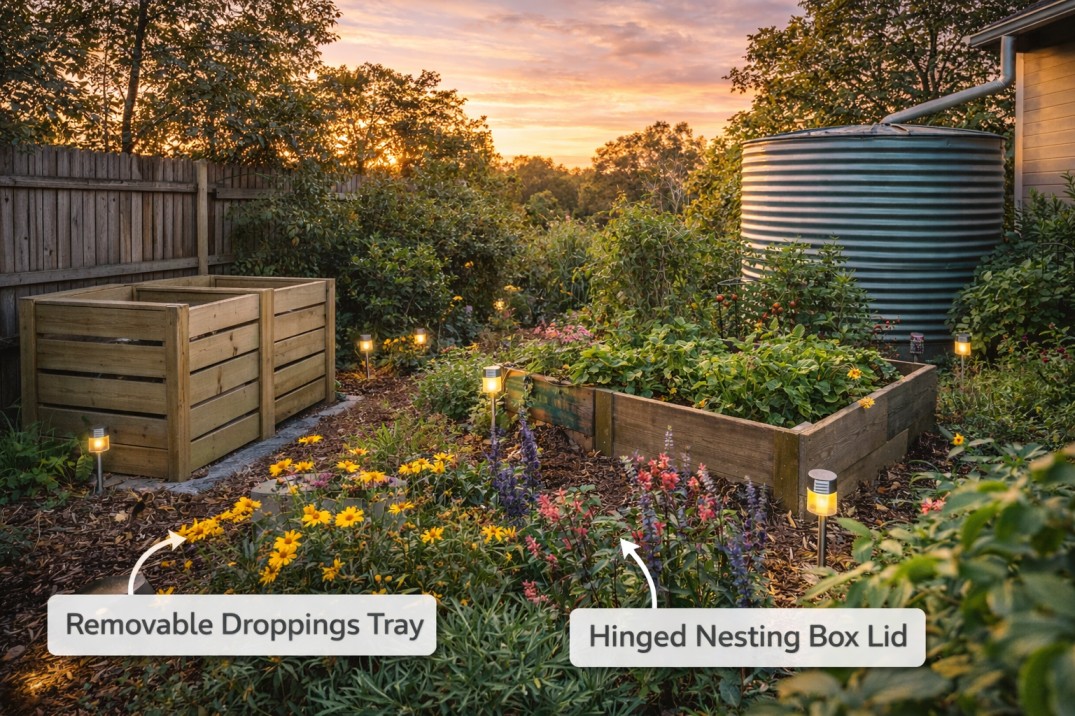
Here’s the secret I discovered after transforming my own barren Melbourne yard: a massive difference. Your backyard isn’t just a plot of grass, it’s a potential carbon sink, a wildlife sanctuary, a water-catchment system, and a food factory all rolled into one. The most powerful eco friendly backyard projects don’t require a degree in environmental science. They require a weekend, some basic tools, and the decision to work with nature instead of against it.
I started with a single compost bin ten years ago. Today, my suburban block harvests 12,000 litres of rainwater annually, grows 40% of our seasonal veggies, and buzzes with native bees. The journey wasn’t complicated, it was just seven key projects, built one at a time. This guide walks you through those exact eco friendly backyard projects, adapted for Australian realities: our climate, our wildlife, and our unique challenges.
Ready to stop feeling guilty and start feeling capable? Let’s begin.
Table of Contents
What Does “Eco Friendly” Really Mean in an Australian Backyard?
Before we pick up a shovel, let’s reframe what we’re actually doing. In the Australian context, eco friendly backyard projects aren’t about aesthetics, they’re about resilience.
Think about our challenges: Scorching summers. Water restrictions. Intense UV. Declining native species. A truly eco-friendly backyard directly addresses these issues by becoming:
- A Water Bank: Capturing every possible drop before it hits the stormwater drain.
- A Cooling System: Using plants and shade to reduce local temperatures by up to 6°C (CSIRO research confirms this).
- A Wildlife Corridor: Creating stepping-stones of habitat in our suburban sprawl.
- A Circular System: Where “waste” from one process becomes “food” for another.
This isn’t just gardening. It’s ecosystem engineering on a micro-scale. Every project below connects to this bigger picture.
Project 1: Start a Compost System – The Engine Room of Your Sustainable Backyard
The Why (Beyond Just Less Waste):
When organic matter breaks down in landfill without oxygen, it creates methane, a gas 28x more potent than CO₂. By composting at home, you’re running a personal methane-prevention plant. But the magic doesn’t stop there. The finished compost is a living medicine for Australian soils, which are often ancient, compacted, and low in organic matter. It improves water retention in sand and drainage in clay, and feeds the microbial life that plants need to thrive.
The Realistic Australian Start:
Forget perfection. Choose a system that fits your life:
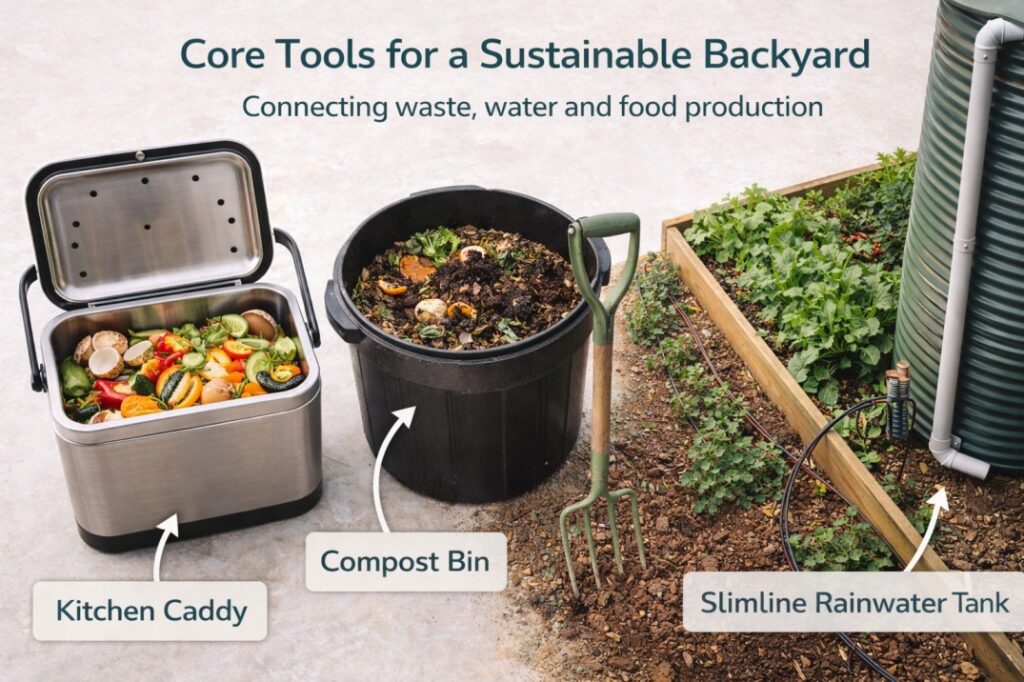
- For the Hands-Off Gardener: A simple enclosed compost bin (often <$50 from your council). Add scraps, turn occasionally, forget about it.
- For the Space-Challenged: A worm farm. I’ve run one on a 2nd-floor balcony for 5 years. It’s odorless, produces liquid gold (“worm tea”) fertilizer, and processes a family’s veggie scraps easily.
- For the Serious Food Grower: A three-bay composting system made from pallets. This lets you have compost in three stages: fresh, cooking, and ready-to-use.
Pro Tip from Experience: Your number one tool isn’t the bin, it’s a $5 bag of straw or sugar cane mulch. Keep it next to your compost. Every time you add a bucket of kitchen scraps (greens), toss in two handfuls of this straw (browns). This simple 2:1 browns-to-greens ratio prevents smells and flies instantly.
For a deep dive into getting this right from day one, our Australian Composting Guide is your manual. And if you’re just focusing on kitchen output, our guide to composting kitchen waste Australia cuts straight to the chase.
Project 2: Install a Rainwater Tank – Your Liquid Gold Reserve
The Stark Reality:
Australian cities like Sydney and Melbourne get enough rainfall annually to meet their residents’ needs several times over. Yet, we let over 90% of the rain that hits our roofs run straight into stormwater drains, picking up pollutants on its way to our rivers and bays.
The Project (Start Small, Think Big):
You don’t need a $3,000 underground system. A simple 200-500L slimline tank connected to a single downpipe is a powerful start.
- Cost: ~$150-$400.
- Impact: Can capture over 5,000 litres from an average roof in a year.
- Best Use: Connect it directly to your veggie patch or greenhouse via a dripper system. Plants thrive on rainwater’s slight acidity and lack of chemicals.
The Game-Changer Hack: Install a first-flush diverter. This cheap device ($30-$80) diverts the first, dirtiest 20L of rain (carrying roof dust and bird droppings) away from your tank. The water in your tank stays crystal clear for longer.
Project 3: Plant a Native Bee & Pollinator Sanctuary
Why Our Pollinators Need Help:
Australia has over 2,000 species of native bees (most are solitary, stingless, and adorable), plus countless flies, beetles, and wasps that pollinate. Habitat loss and pesticides are hitting them hard. Without them, our food supply and native ecosystems collapse.
Creating a True Sanctuary (It’s More Than Just Flowers):
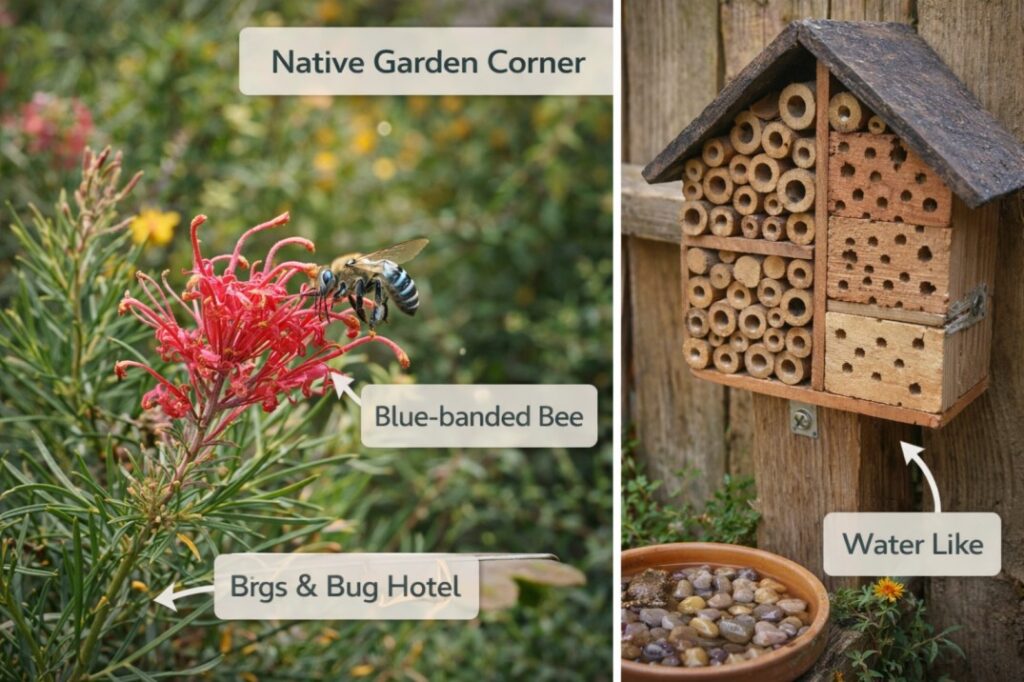
- Food: Plant clusters of the same native species. Mass planting of Grevilleas, Callistemons (Bottlebrush), and native Daisies provides a reliable “fuel station.”
- Shelter: Leave a small patch of bare, undisturbed, sunny soil for ground-nesting bees. Stack some hollow bamboo sticks or drilled timber blocks in a north-facing spot for cavity nesters.
- Water: Place a shallow dish with pebbles and fresh water. Bees need to drink but can drown in deep water.
- The Critical Rule: Stop using insecticides. Full stop. Even “organic” pyrethrum can be deadly to beneficial insects. If you’ve built a balanced ecosystem, pest outbreaks become rare.
Project 4: Build a “No-Dig” Garden Bed – Instant, Living Soil
The Problem with Digging: Turning soil destroys its delicate fungal networks (the “internet of plants”), releases stored carbon, and brings weed seeds to the surface.
The No-Dig Solution: You build rich, fluffy, living soil on top of the ground.
The “Australian Backyard Lasagne” Method:
- Layer 1 (Weed Block): Cardboard or 10+ sheets of newspaper. Wet it thoroughly.
- Layer 2 (Carbon/Browns): 15cm of straw or lucerne hay.
- Layer 3 (Nitrogen/Greens): 10-15cm of finished compost (from Project 1!). This is your planting layer.
- Layer 4 (Mulch): 10cm of straw.
Why It’s Revolutionary for Australia: This method creates a sponge. It can absorb and hold huge amounts of our sporadic rainfall, reducing watering needs by up to 70%. It also sequesters carbon in the soil where it belongs.
Project 5: Set Up a Simple, Safe Greywater System
Understanding Greywater: It’s the water from your shower, bath, bathroom sink, and laundry (rinse cycle only). It’s not drinking quality, but it’s perfect for ornamentals and established trees.
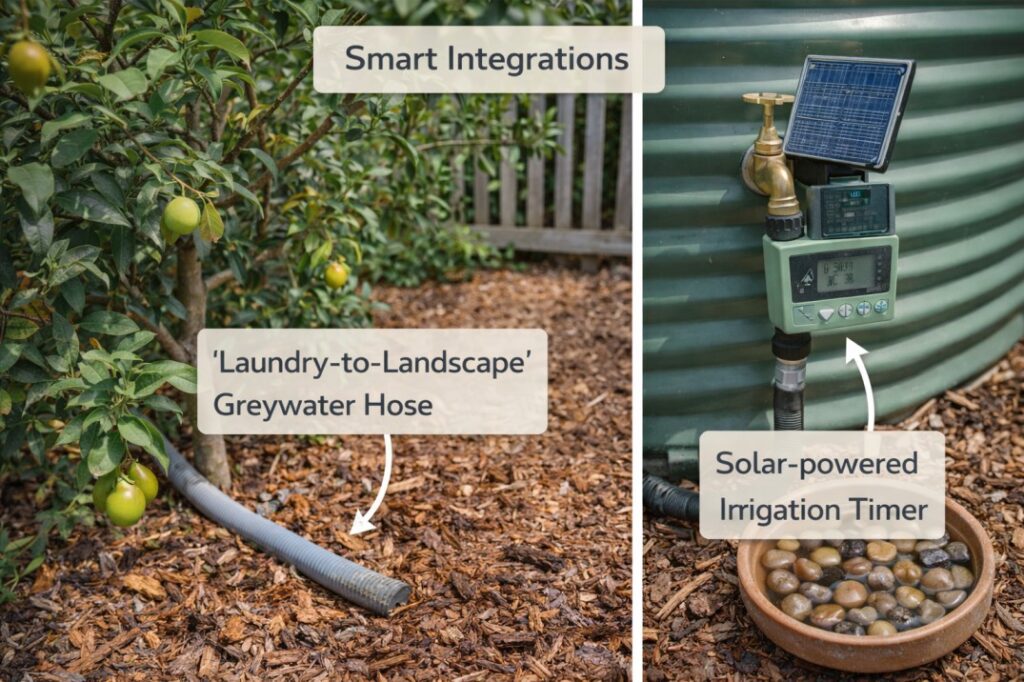
The Easiest, Safest System: Laundry-to-Landscape.
- How: A licensed plumber (or a handy DIYer where legal) installs a three-way diverter valve on your washing machine outlet. One pipe goes to sewer, the other to an underground irrigation line in your garden.
- The Non-Negotiables:
- Use plant-friendly, low-phosphorus, low-sodium detergents (look for the “greywater safe” label).
- Irrigate under 10cm of mulch via a sub-surface pipe, never spray it on the surface.
- Diverter switch: You must have a valve to send water to the sewer when using bleach, disinfecting during illness, or when the soil is already saturated.
Impact: This single project can halve your outdoor water use. In Perth or Adelaide, this isn’t just eco-friendly, it’s essential.
Project 6: Create a “Bug Hotel” & Frog-Friendly Zone
Thinking Like an Ecosystem Manager:
Pests like aphids and caterpillars explode in population when their natural predators (other insects, frogs, birds) have nowhere to live. Your job is to recruit that army.
Build a Five-Star Bug Hotel:
Use untreated timber, bricks, and recycled materials to create layers with different-sized gaps. Fill them with:
- Bamboo stems for solitary bees.
- Pine cones and bark for ladybirds and lacewings (aphid assassins).
- Corrugated cardboard for lacewings.
- Place it in a sheltered, north-east facing spot.
Install a Frog Pond (No Pump Needed):
Frogs are a sign of a healthy environment and eat slugs and mosquitoes.
- Bury a plastic tub or half a wine barrel.
- Add a sturdy ramp (a stack of rocks) so frogs can get in and out.
- Plant native aquatic sedges like Carex around the edges to filter the water.
- Let it fill with rain. Mosquitoes won’t breed if you have frog tadpoles—they eat the larvae!
Project 7: Go Solar in the Garden – Beyond Just Lights
The Low-Hanging Fruit:
Swapping to solar-powered LED path lights is a no-brainer. But let’s think bigger.
The Real Solar Projects:
- Solar-Powered Pond Pump: Runs a small fountain for your frog pond, keeping water oxygenated without a power cord snaking across the yard.
- Solar-Powered Irrigation Timer: Connects to your rainwater tank tap. Set it to water your no-dig garden bed at 5 am for maximum efficiency. No mains power required.
- Solar Dehydrator: A simple wooden box with a glass front and black interior. Use it to dry herbs, fruits, and tomatoes from your garden, preserving food without kitchen electricity.
Common Questions About Eco Friendly Backyard Projects
Q: Are these projects expensive?
A: Many are very low-cost or save you money in the long run. Composting saves on bin fees and fertiliser. Rainwater saves on water bills. Native gardens need less water and care. Start with the free or cheap projects first.
Q: I live in an apartment with just a balcony. Can I still do this?
A: Absolutely! Focus on Project 1 (a worm farm or bokashi), Project 3 (pots with native flowering plants), Project 6 (a small bug hotel in a pot), and Project 7 (solar lights). You can make a real difference.
Q: Will a native garden look boring?
A: Not at all! Australian natives offer stunning flowers (grevilleas, kangaroo paws), beautiful textures (grasses, ferns), and year-round colour. They’re often more interesting and vibrant than many traditional garden plants.
Q: How do I deal with mosquitoes if I have a frog pond or water tank?
A: For ponds, ensure there’s movement (a small solar fountain helps) and include mosquito-eating fish like native pygmy perch (where allowed). For rain barrels, make sure they’re fully sealed with a tight-fitting lid and mesh over any inlets.
Your Action Plan: Where to Start This Weekend
Feeling inspired but unsure where to begin? Follow this priority list:
If You Only Do One Thing: Start Composting (Project 1). It’s the foundational skill that feeds every other project. The soil you create is the bedrock of your new ecosystem.
The “Maximum Impact” Duo: Rainwater Tank (Project 2) + No-Dig Bed (Project 4). Use the captured water to irrigate your super-productive, water-wise garden. This combo slashes your water bill and grocery bill simultaneously.
The “Biodiversity Booster” Weekend: Native Bee Garden (Project 3) + Bug Hotel (Project 6). These projects work synergistically to create a self-regulating garden that needs less pest control.
Remember, eco friendly backyard projects are a journey, not a destination. Start with what excites you most. A single step creates momentum. You’ll be amazed at how one project naturally leads to the next, as your backyard transforms from a consumer of resources into a producer of life.
2 thoughts on “7 Best Transformative Eco Friendly Backyard Projects You Can Start This Weekend (Australian Edition)”