Let’s be honest. Sometimes, traditional gardening can feel like a constant battle. You fight the scorching sun with endless watering. You wage war on pests with sprays. You watch good soil and money literally wash away. It’s exhausting, expensive, and honestly, not that much fun.
But what if your garden could be different? What if it could be a partner instead of a problem?
Imagine a backyard that buzzes with bees, shelters little lizards, and gives you fresh food, all while barely touching your tap water and creating zero green waste. This isn’t a fantasy. It’s the heart of sustainable gardening Australia.
Sustainable gardening isn’t about being a perfect eco-warrior or spending a fortune on fancy products. It’s about working with nature, not against it. It’s a series of smart, simple choices that make your garden more resilient, more beautiful, and way less work in the long run.
This guide walks you through five foundational steps. We’ll skip the jargon and focus on what you can actually do. Whether you have a sprawling yard or a sunny balcony, you can start building your own little ecosystem today.
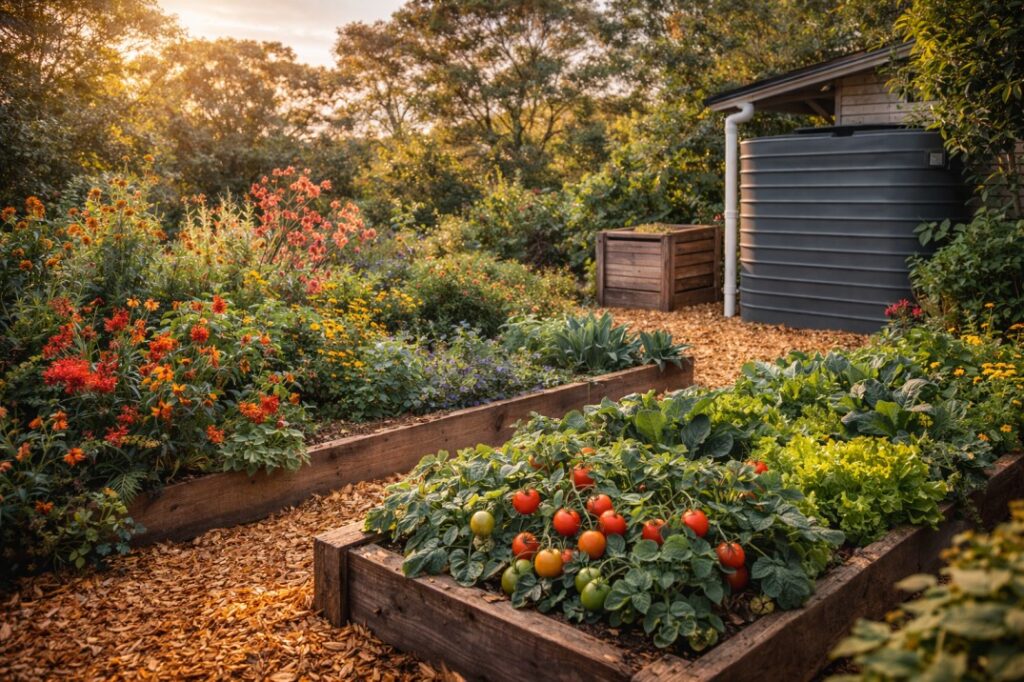
Table of Contents
What Does “Sustainable Gardening” Actually Feel Like?
Before we dive into the “how,” let’s picture the “why.” A sustainable garden isn’t just a list of rules. It’s an experience.
It’s the satisfaction of using rainwater you caught yourself. It’s the wonder of watching a ladybird you didn’t buy clear aphids off your roses. It’s the rich, earthy smell of compost you made from kitchen scraps. It’s the deep quiet of knowing your beautiful space is also a sanctuary for wildlife.
In short, sustainable gardening Australia is about creating a circle of life right outside your door. Nothing is wasted. Everything has a purpose. And you get to be the proud conductor of it all.
Step 1: Become a Water Ninja (The Art of Using Every Drop)
In Australia, water wisdom isn’t just good practice, it’s essential. This is where your sustainable journey has the biggest immediate impact.
Catch It, Keep It, Use It Wisely
- Your Roof is a Goldmine: Think of your roof as a giant rainwater catchment area. Installing a tank is the single best move you can make. The water is free, chlorine-free, and your plants will absolutely love it. Even a single slimline tank can make a massive difference. If space is tight, we’ve found some great options in our guide to the best rainwater tank for small backyards in Australia.
- The “Soak, Don’t Sprinkle” Rule: How you water matters just as much as where it comes from. Ditch the overhead sprinkler that waters the leaves and the driveway. Instead, use a soaker hose snaked through your garden beds or a drip irrigation system. These deliver water slowly, directly to the soil where the roots are. It’s like giving your plants a long, deep drink through a straw instead of splashing their face.
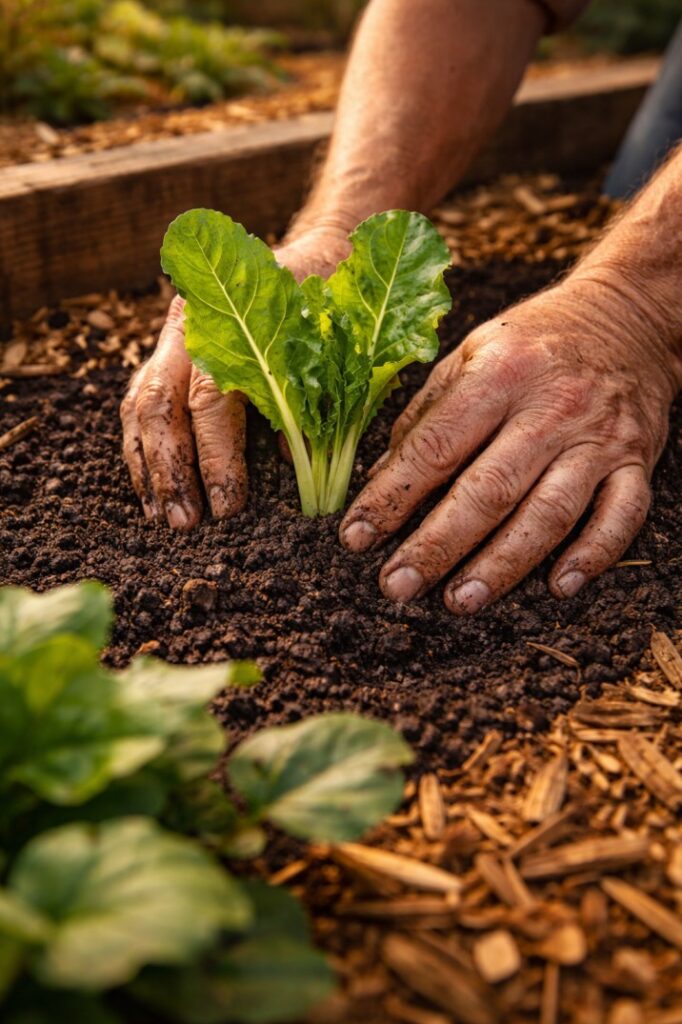
- Mulch: Your Garden’s Best Friend: I cannot say this enough. After you plant, smother your soil in a 7-10cm layer of mulch. Wood chips, sugar cane, pea straw, whatever you can get. This layer is magic. It keeps the soil cool, stops weeds in their tracks, and slashes water evaporation. It’s the easiest, cheapest upgrade you’ll ever make.
Want a full system for slashing your water bill? Our complete guide on how to save water in your backyard ties all these tricks together.
Step 2: Forget “Dirt.” Build Living Soil.
This is the secret that most gardening guides gloss over. Your plants don’t live in dirt. They live in a universe. A single handful of healthy soil contains more microorganisms than there are people on Earth. Your job isn’t to feed the plant; it’s to feed this universe.
How to Be a Great Host for Billions of Tiny Guests
- Start a Compost System: This is non-negotiable. Composting is the ultimate act of sustainable gardening. You take your food scraps, lawn clippings, and leaves stuff that would otherwise be waste, and transform it into “black gold.” This rich compost is alive with microbes and is the best food your soil will ever get. Not sure where to start? We’ve broken down the two best methods in our compost bin vs worm farm Australia guide.
- Just Say No to Chemical Powders: Synthetic fertilizers are like junk food for your soil. They give a quick, artificial high but can harm the delicate soil life in the long run. They also wash away easily, polluting our waterways. Stick to natural, slow-release foods like your own compost, pelletised chook manure, or liquid seaweed solution.
- Never, Ever Leave Soil Naked: Bare soil is sad soil. It bakes in the sun, erodes in the rain, and loses life. Always protect it. Plant a cover crop, use mulch, or let some low-growing plants spread. Keep it covered, and it will repay you with incredible fertility.
Step 3: Choose Your Plant Allies Wisely
The plants you choose set the whole tone for your garden. Are you constantly propping up needy divas, or are you hosting a party of resilient, low-maintenance locals?
The “Right Plant, Right Place” Revolution
- Go Local with Natives: Australian native plants are the undisputed champions of sustainable gardening Australia. They’ve spent millions of years adapting to our specific climate, pests, and poor soils. This means they’re tough. Once established, they need far less water and no coddling. But they’re not just hardy, they’re breathtaking. A flowering grevillea covered in honeyeaters is a sight no rose bush can match. For a hit list of stunning, easy-care natives, check out our guide to the best native plants for a sustainable Aussie backyard.
- Grow a Snack Attack: Is there anything more fundamentally satisfying than eating something you grew? Planting a small veggie patch is the pinnacle of sustainable living. You cut food miles, reduce packaging, and get the freshest, tastiest produce possible. Start simple with a few pots of herbs or a dedicated bed. For the perfect controlled environment, building a DIY raised garden bed Australia style is a fantastic weekend project.
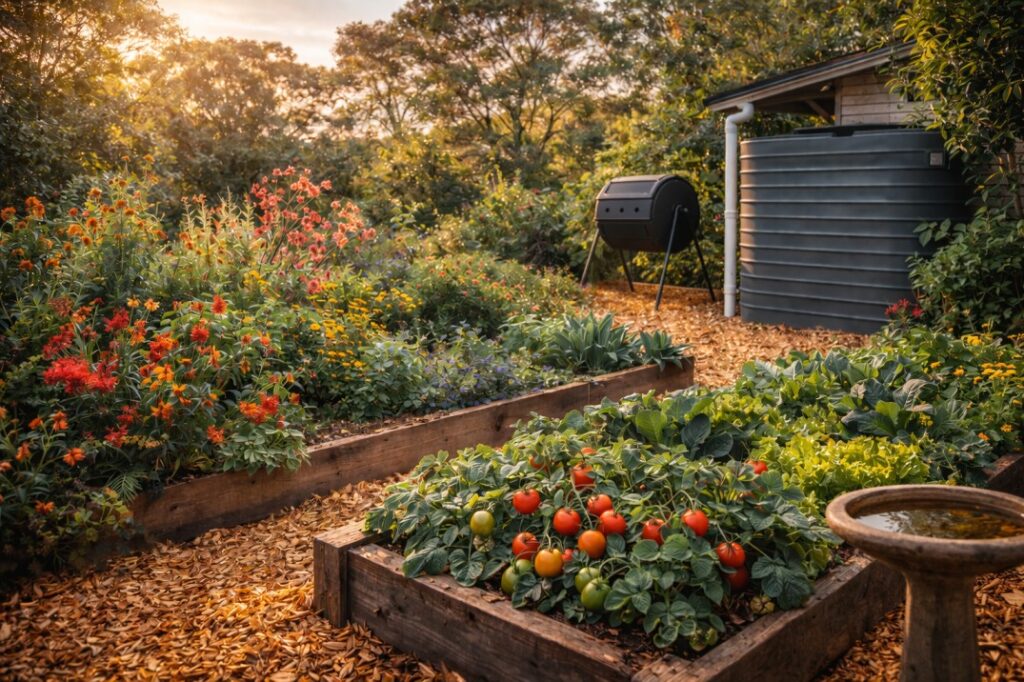
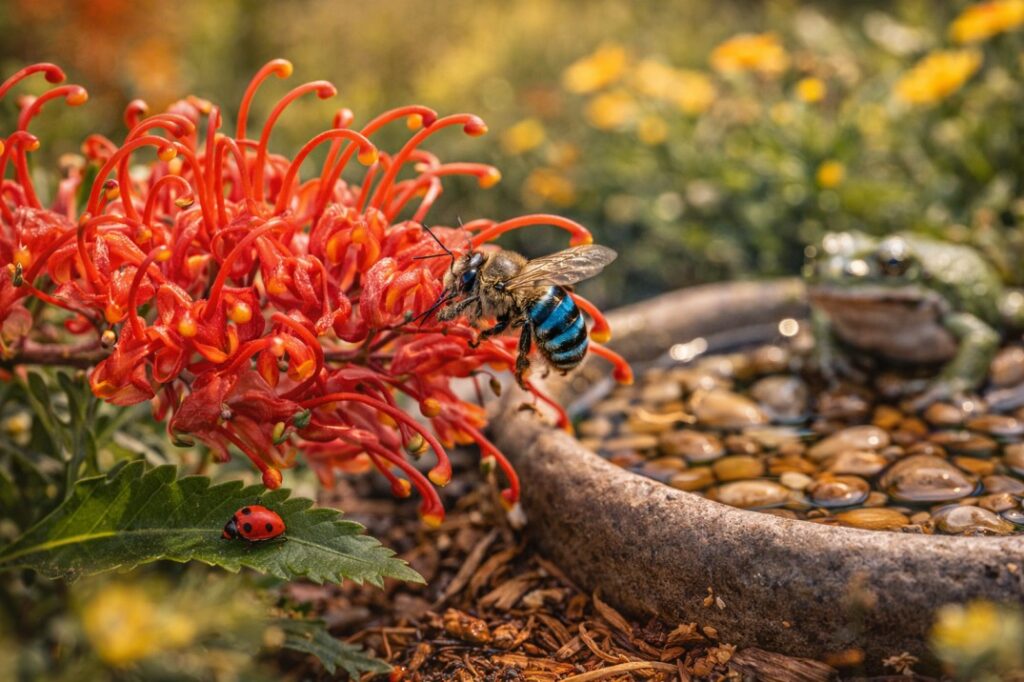
- Plant a Pub, Not a Museum: Your garden should be alive. Choose plants that provide food and shelter for wildlife. A water dish for birds and bees, a dense shrub for small birds to hide in, a patch of flowering herbs for butterflies. You’re not just gardening; you’re rebuilding habitat, one plant at a time.
Step 4: Embrace the (Natural) Circle of Life (Pests Included)
In a sustainable garden, you’re not the sole defender. You’re the manager of a whole ecosystem where pests are part of the balance.
Working With Your Garden’s Defenders
- Welcome the Clean-Up Crew: Before you reach for the spray, look for the helpers. Are there ladybird larvae (they look like tiny black and orange alligators) already munching on your aphids? Is a spider building a web between your plants? These are your free, on-site pest controllers. Encourage them by avoiding broad-spectrum insecticides that kill everything, good and bad.
- Get Strategic with Companions: Companion planting is like setting up good neighbours. Some plants just help each other out. Planting fragrant French marigolds near your tomatoes can deter root-knot nematodes. Letting some parsley flower attracts parasitic wasps that control caterpillars. It’s a gentle, clever way to build plant health.
- Tolerance is a Virtue: A garden with zero insect damage is a dead garden. It means nothing else is living there either. Accept that you might share a few leaves with the caterpillars. A healthy plant can handle it. If a pest outbreak gets bad, try the gentlest method first: squish them by hand, spray them off with a hose, or use an organic soap spray.
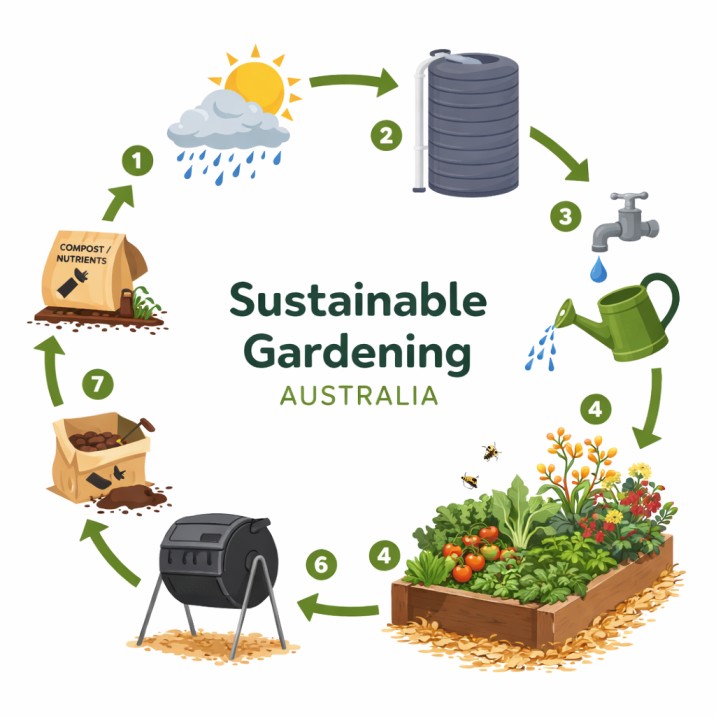
Step 5: Think Cycles, Not Trash (The Mindset Shift)
The final step is a shift in how you see everything in your garden. There is no “waste,” only resources in the wrong place.
Closing the Loop in Your Own Backyard
- Choose Materials with a Past (and a Future): When you need a new garden seat or some timber for a bed, look for recycled options. Recycled plastic timber lasts forever. Old bricks have character. It reduces demand for new resources and keeps stuff out of landfill.
- Become a Seed Saver: This is one of the most empowering parts of sustainable gardening. At the end of the season, let your best, healthiest plants go to seed. Collect those seeds, dry them, and plant them next year. Over time, you’ll develop plants that are uniquely adapted to your garden’s specific conditions. It’s the ultimate act of self-reliance.
- Share the Bounty (Even the Weird Stuff): Got too many zucchinis? Swap them with a neighbour for some lemons. Have a pile of leaves? Offer them to a friend with a compost bin. Sustainable gardening often builds community, turning your backyard project into a neighbourhood connection.
Your No-Stress, Sustainable Start Plan
Feeling inspired but not sure where to begin? Don’t try to do it all at once. That’s how you get overwhelmed and give up. Pick one thing from this list.
- This Weekend: Buy a bag of mulch and pile it on your garden beds. That’s it. You’ve already started.
- This Month: Visit a native nursery and buy just one plant that you love. Plant it well, water it in, and watch it grow.
- This Season: Get a compost bin or a worm farm. Start tossing in your coffee grounds and veggie peels.
Every single action, no matter how small, moves you toward a garden that’s not just a pretty picture, but a living, breathing, resilient part of your home and our environment.
Your sustainable garden isn’t about achieving perfection. It’s about progress. It’s about learning, experimenting, and finding joy in the process of working with nature. So take a deep breath, step outside, and start your circle.