
Looking at your latest water bill with a sense of dread? You’re not alone. Learning how to save water in your backyard is the single most effective way to slash that cost and build a garden that can handle our Aussie climate. It’s a fact that in Australia, the driest inhabited continent, a staggering 40% or more of household water is used outdoors. That’s a huge opportunity. A water-smart garden isn’t about having less—it’s about having smarter. It’s about creating a lush, resilient, and vibrant space that thrives with less input from the mains tap.
This guide walks you through seven practical, powerful strategies that go beyond just taking shorter showers. From the very soil under your feet to the smart tech you can install, you’ll learn how to create a beautiful backyard that actively conserves our most precious resource for the long haul.
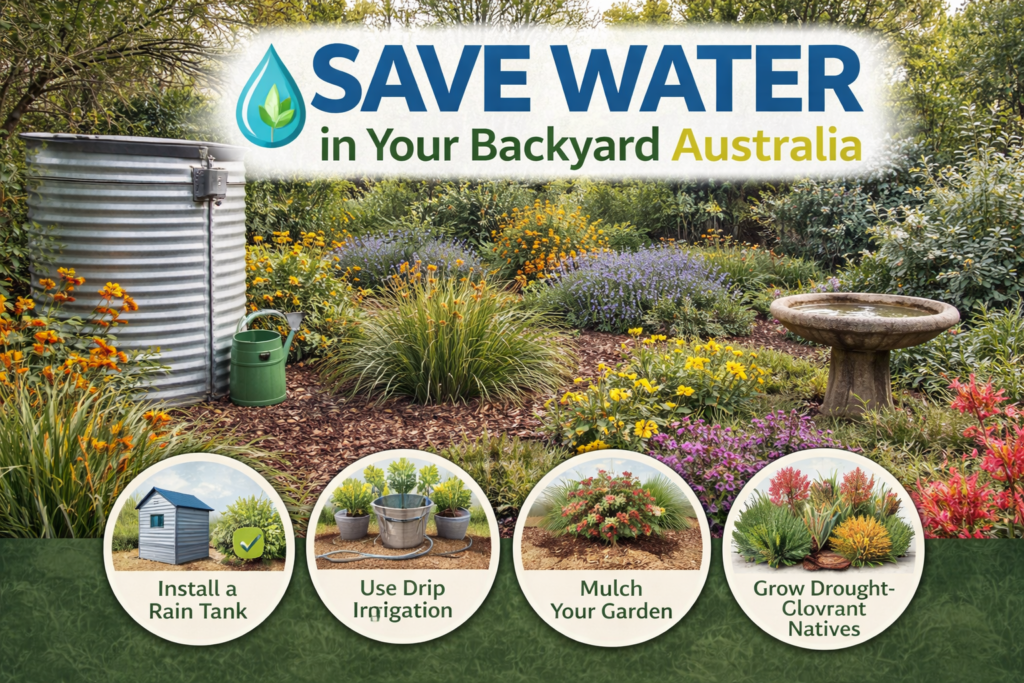
1. Rethink Your Green Space: It Starts with What You Plant
The single easiest way to save water in your backyard is to stop fighting nature. Choosing plants that are naturally adapted to thrive here with minimal extra water is a game-changer.
- Embrace Australian Natives: Plants like Kangaroo Paw (Anigozanthos), Lomandra grasses, and various Grevilleas have spent millennia adapting to our cycles of drought and rain. Their roots are designed to seek deep moisture, and their leaves often minimise water loss. By choosing them, you’re not just saving water; you’re building a sanctuary for native birds, bees, and butterflies. For a dedicated list of champions, our guide to the best native plants for a sustainable Aussie backyard is a perfect starting point.
- Master “Hydro-Zoning”: This is a professional landscaping trick you can use at home. Don’t scatter thirsty plants around your garden. Instead, map your yard into zones based on water need. Group all your high-water-use veggies and annual flowers together in one sunny, accessible bed. Place drought-tolerant natives and succulents in another area, perhaps on a slope or in a hotter spot. This way, you water each zone efficiently without wasting a drop on plants that don’t need it.
- The Great Lawn Debate: Let’s be honest—the traditional green lawn is often the biggest water guzzler. Consider reducing its size. Replace underused lawn areas with decorative gravel paths, a permeable patio, or a hardy, flowering groundcover like Myoporum. If you love your lawn, choose a drought-tolerant variety like Sir Walter Buffalo and practice “let it go golden” in summer. It will bounce back with the autumn rains.
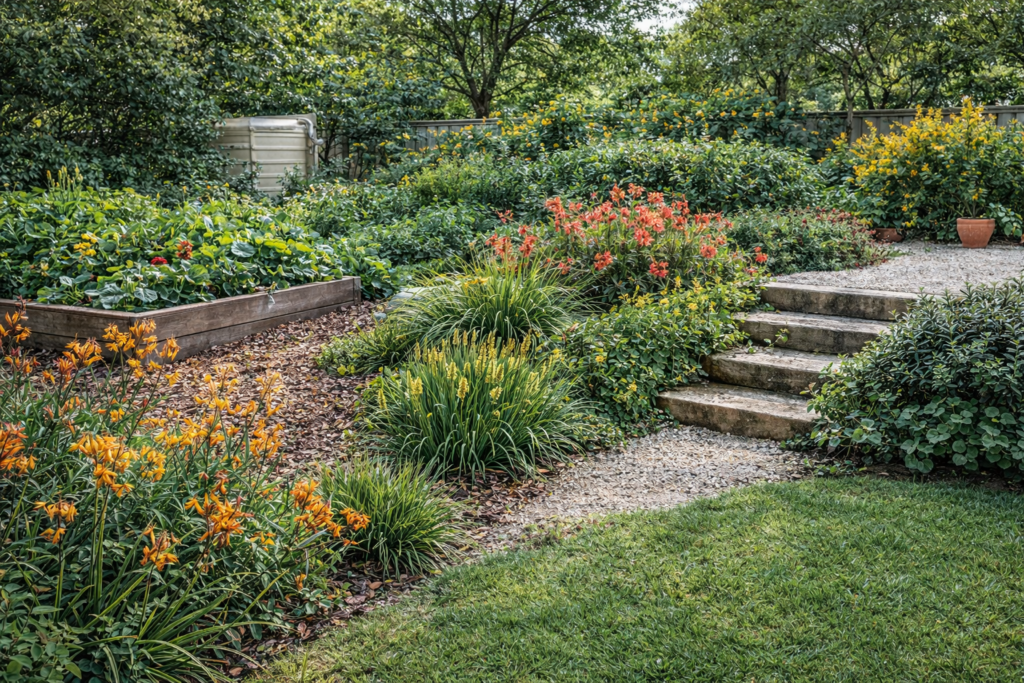
2. Build Your Foundation: Create Soil That Holds Water
Think of your soil as a reservoir. Healthy, spongy soil stores water for your plants. Poor, compacted, or sandy soil lets it drain straight through. Investing in your soil is a non-negotiable first step to save water in your backyard truly.
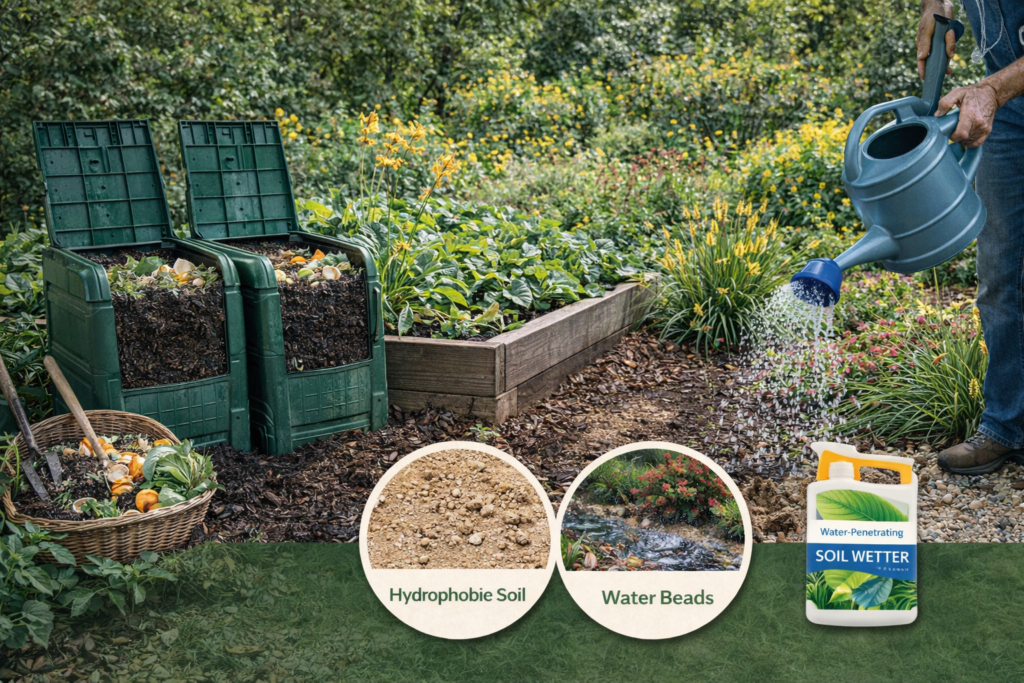
- Become a Composter: This is the golden rule. Regularly adding homemade compost, well-rotted manure, or worm castings is like giving your soil a water-holding superpower. Organic matter improves soil structure, creating tiny pores that absorb and retain moisture. Starting this cycle at home is easy and free—our compost bin vs worm farm Australia guide helps you choose the perfect system for your space.
- Fight Hydrophobic Soil: In our heat, soil can become water-repellent (hydrophobic). You’ll see water bead up and run off instead of soaking in. The fix? A soil wetter or wetting agent. This is a liquid or granular product that breaks down the waxy coating on soil particles, allowing water to penetrate deeply to the root zone where it’s needed. Apply it at the start of spring and summer for best results.
3. Lock Every Drop In: The Non-Negotiable Power of Mulch
If you only do one thing from this list, make it this. Mulch is a protective blanket for your soil and your secret weapon to save water in your backyard. A proper layer can reduce evaporation from the soil surface by up to 70%.
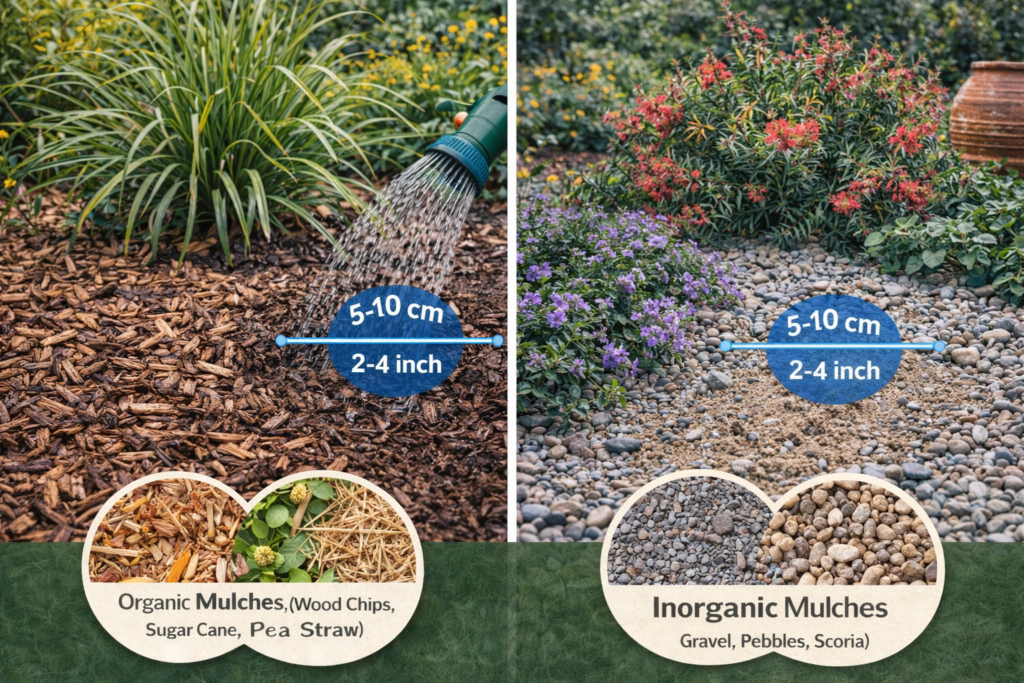
- How it Works: A 5-10 cm thick layer of mulch performs three critical functions: it shields the soil from the harsh sun and drying wind, drastically slows evaporation, and suppresses water-hungry weeds.
- Choosing Your Mulch:
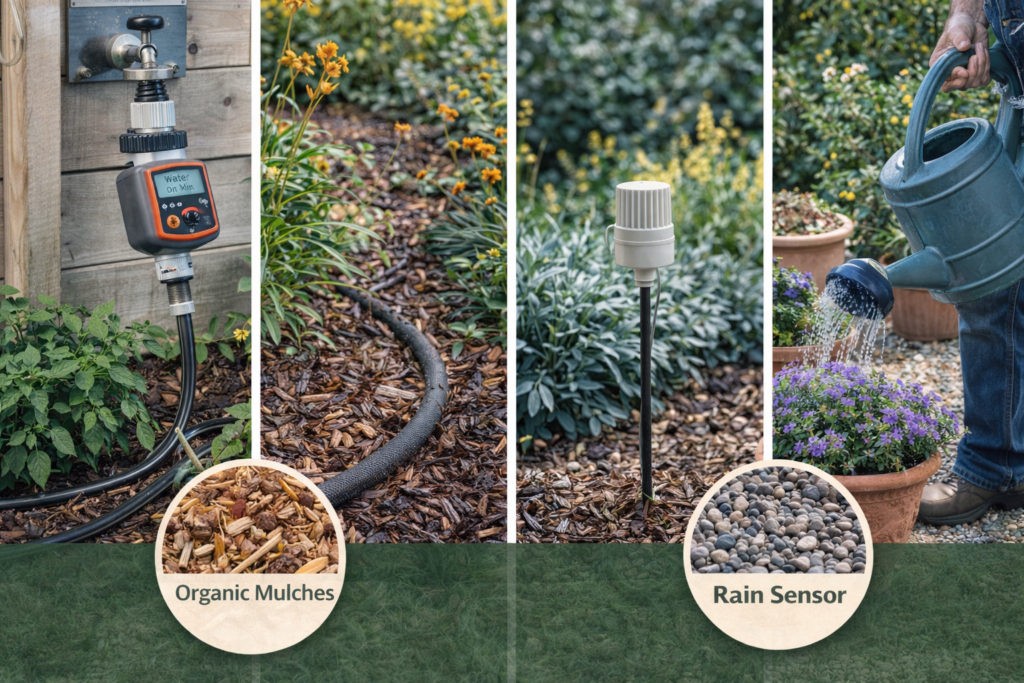
- Organic Mulches (wood chips, sugar cane, pea straw): These break down over time, feeding your soil and improving its structure. They need to be topped up every year or two.
- Inorganic Mulches (gravel, pebbles, scoria): These are permanent and excellent for succulent gardens, pathways, and around feature plants. They don’t improve soil but are superb at reducing evaporation.
- Pro Tip: Always water the soil deeply before you apply mulch. Lay the mulch on top, keeping it a few centimetres away from plant stems to prevent rot.
The Ultimate Moisture-Locking Combo
For maximum water savings, combine these techniques in your garden beds:
| A healthy medium for plant roots to access moisture and nutrients. | Material | Primary Function |
|---|---|---|
| Top Layer (Blanket) | Coarse Wood Chip Mulch | Prevents evaporation, suppresses weeds, cools soil. |
| Middle Layer (Sponge) | Quality Compost or Soil Wetter | Improves water absorption and retention in the root zone. |
| Foundation (Bed) | Well-Draining Garden Soil | Healthy medium for plant roots to access moisture and nutrients. |
4. Water with Intelligence: It’s All About When and How
How you water is just as important as what you water. Ditch the old habits and adopt these smarter techniques.
- Timing is Everything: Always water in the early morning. This is the golden hour. It’s cool, there’s little wind, and water has time to soak deep into the soil before the sun gets strong and steals it away. Watering in the evening leaves foliage damp overnight, inviting fungal diseases like powdery mildew.
- Soak, Don’t Sprinkle: Train your plants to be resilient. Water deeply and less frequently. A long, slow soak encourages roots to grow deep into the soil in search of moisture, creating tougher, more drought-proof plants. Light, daily sprinkling encourages lazy, shallow roots that are the first to fail in a heatwave.
- Target the Roots, Not the Leaves: Watering foliage is a waste. It evaporates quickly and can promote disease. Apply water directly to the soil at the base of the plant. Drip irrigation is the champion of this, but even with a hose, use a wand to direct water to the roots.
5. Upgrade Your Toolkit: Smart Gear for Smart Gardens
Modern technology takes the guesswork and waste out of watering. A small investment here can lead to massive long-term savings.
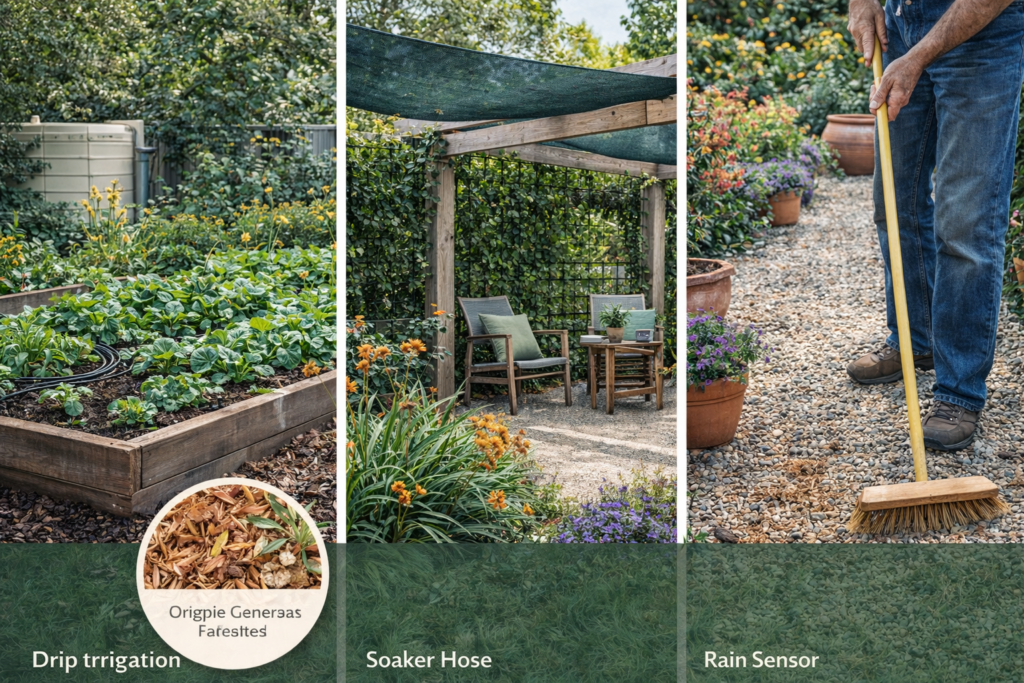
- Install a Drip Irrigation System: This is the most efficient watering method you can use. Thin tubes deliver water slowly and directly to the root zone of each plant, with virtually no evaporation, runoff, or overspray. Pair it with a simple tap timer to automate your early morning watering. It’s perfect for garden beds, vegetable patches, and pots.
- Use a Soaker Hose: A great alternative to drip irrigation. These porous hoses “sweat” water along their entire length. Lay them under your mulch, and they’ll deliver a gentle, deep soak to your garden rows or hedges.
- The Essential Rain Sensor: If you have any automated system, this is a must-have. A basic rain sensor will override your timer when it detects adequate rainfall, preventing your garden from being watered in a downpour.
- The Humble Watering Can: For pots, seedlings, and small gardens, nothing beats the control and zero waste of a watering can. It forces you to be mindful of each plant’s needs.
6. Harvest the Sky and Re-Use Every Litre
Why use expensively treated drinking water on your garden when you can harvest pure, soft rainwater for free?
- Install a Rainwater Tank: This is the ultimate step towards garden water independence. Capturing runoff from your roof provides a chemical-free supply that plants adore. Even a single slimline tank can hold enough to keep a productive veggie patch thriving. For urban spaces, we’ve reviewed the best rainwater tank for small backyards in Australia to help you find the perfect fit.
- Re-Use Greywater Safely: Water from your laundry, shower, or bathroom sink (using plant-friendly, low-phosphorus detergents) can be diverted to water gardens. Crucial: Always check your local council regulations first, as rules vary. Generally, use greywater on established ornamentals and lawns, not on vegetables or seedlings.
- Catch the “Bonus” Water: Get creative. Keep a bucket in the shower to catch cold water while you wait for it to heat up. Empty the kids’ paddling pool onto the garden. Use leftover water from steamed vegetables or pasta (once cooled) on your pot plants. Every litre counts.
7. Design for the Dry: Long-Term Water Wisdom
True water efficiency is baked into the design of your garden. Think about creating a landscape that naturally requires less.
- Build Raised Beds for Control: For growing your own food, a DIY raised garden bed Australia project is a brilliant move. You fill it with a perfect, moisture-retentive soil mix from day one, leading to less frequent watering and fantastic plant growth. The contained space also makes installing drip irrigation incredibly easy.
- Create Shade and Shelter: Use trees, pergolas, or shade cloth to create cool microclimates. Shade lowers soil and air temperature, directly reducing evaporation. Planting windbreaks (like hardy shrubs) protects more delicate plants from drying winds.
- Sweep, Don’t Hose: This is a simple but powerful habit. Use a broom to clean paths, patios, and driveways. Hosing these hard surfaces is one of the most wasteful uses of water in the home.
Your Seasonal Water-Wise Action Plan
Don’t try to do everything at once. Follow this seasonal plan to build your water-smart garden.
| Season | Key Actions to Save Water in Your Backyard |
|---|---|
| Autumn (Mar-May) | Top up mulch, plant new drought-tolerant natives, install a rainwater tank, service irrigation systems. |
| Winter (Jun-Aug) | Plan next season’s garden, focus on indoor “bonus” water collection, prune trees to shape. |
| Spring (Sep-Nov) | Apply soil wetter, refresh mulch, check for and fix all leaks, set up drip irrigation for veggies. |
| Summer (Dec-Feb) | Water deeply before 9am, let lawns go golden, harvest rainwater, monitor plants for stress. |
By weaving these strategies into the life of your garden, you’re doing so much more than saving on your utility bill. You’re building a resilient, beautiful, and sustainable outdoor space that is in true harmony with the Australian environment. You’re creating a legacy of conservation, one smart drop at a time.
Troubleshooting: Quick Fixes for Common Problems
“My water just runs off the soil!”
You likely have hydrophobic soil. Aerate the area with a garden fork, apply a soil wetter, and water in gently with a watering can. Follow up with a thick layer of organic mulch.
“I have an irrigation system, but my plants are still dry.”
Check for clogged drippers or spray heads. Run the system and look for dry patches or geysers. Filters at the tap timer often need cleaning. Ensure you’re watering for long enough to soak the root zone—poke your finger into the soil to check.
“Is it worth the cost to install a drip system?”
Absolutely. A basic DIY kit for a veggie patch can cost under $100. The water savings, healthier plants, and time saved will pay it back quickly. Start small with one bed to see the benefits.
3 thoughts on “7 Brilliant Ways to Save Water in Your Backyard (Australia)”