
Let’s be honest. How many hours have you spent watering, feeding, and fussing over plants that just seem to struggle? You chose them because they were pretty at the nursery, but in your soil, under the fierce Australian sun, they wilt. They become a constant demand on your time and the tap. I’ve been there, too.
There’s a better way. It starts with a simple shift: working with our environment, not against it. The most powerful step you can take is to choose native plants for a sustainable Aussie backyard.
This isn’t about sacrificing beauty for practicality. It’s about discovering a whole new palette of plants that are breathtakingly beautiful, incredibly tough, and alive with wildlife. They are the key to a garden that feels less like a chore and more like a thriving, natural sanctuary. Let’s explore how to choose them.
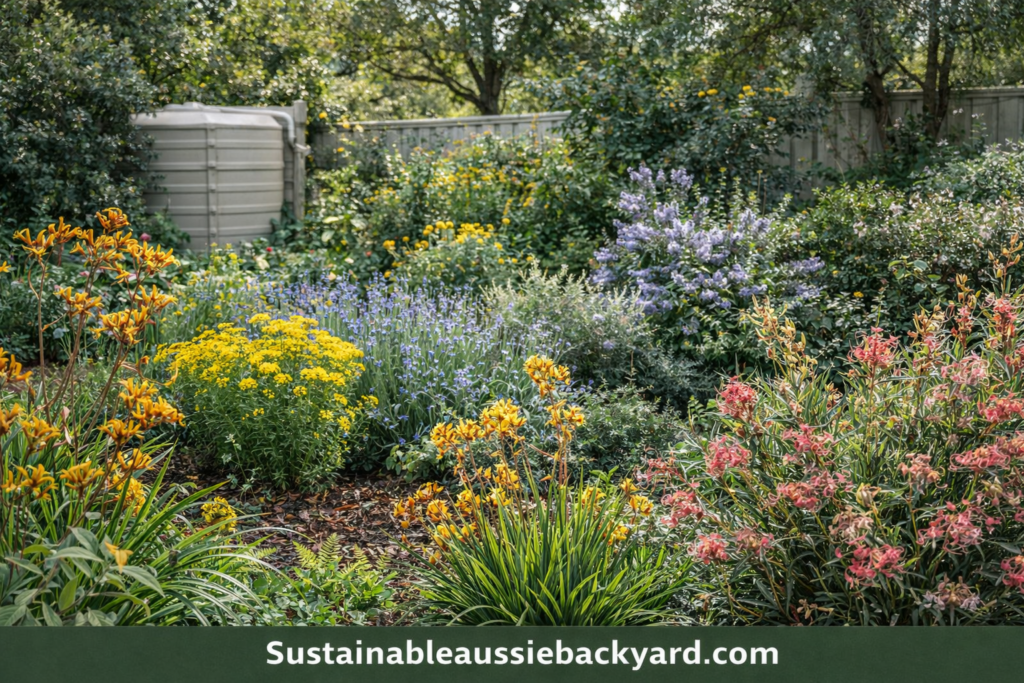
Table of Contents
Why Go Native Plants for a Sustainable Aussie Backyard? More Than Just a Trend
Planting native is the heart of a sustainable Aussie backyard. But what does that really mean? It’s not just about “planting Australian.” It’s about creating a resilient ecosystem.
They Save Serious Water: Native plants are adapted to our cycles of drought and rain. Their roots often go deep, or their leaves are designed to minimise water loss. Once established, many need little to no extra watering beyond what falls from the sky. This is a game-changer for your water bill and our precious resources. Imagine your garden thriving through a dry spell while your neighbour’s lawn turns to straw.
They Feed and Shelter Our Wildlife: Our birds, bees, butterflies, and lizards evolved alongside these plants. A grevillea is a servo for honeyeaters. A mat of native daisies is a playground for blue-banded bees. You’re not just gardening; you’re rebuilding habitat piece by piece. The sound of birdsong returning to your garden is a reward you can’t buy.
They Need Next to No Fuss: Forget constant fertilising and spraying. Natives are adapted to our often nutrient-poor soils. They rarely get the pests and diseases that plague exotic plants. This means less work, no chemicals, and a healthier garden ecosystem. It’s freedom from the garden centre’s chemical aisle.
They Just Belong: There’s a deep sense of place that comes from a native garden. It looks like it fits. It feels right. It connects your patch of land to the broader Australian landscape, telling a story of where you live.
Getting Started: The Mindset Shift
Before we talk about specific plants, let’s talk about mindset. A native garden is different. It often looks its best when it’s a bit more relaxed, a bit more textured. It’s not about perfect green lawns and manicured hedges. It’s about movement, colour, and life. Embrace a more natural aesthetic. Watch how plants grow in the bush – they’re often layered, a bit wild, and absolutely stunning.
5 Essential Native Plant Categories to Start Your Sustainable Backyard
Ready to get planting? You don’t need to transform everything overnight. Start with these five superstar categories. Each one brings something special to your sustainable Aussie backyard.
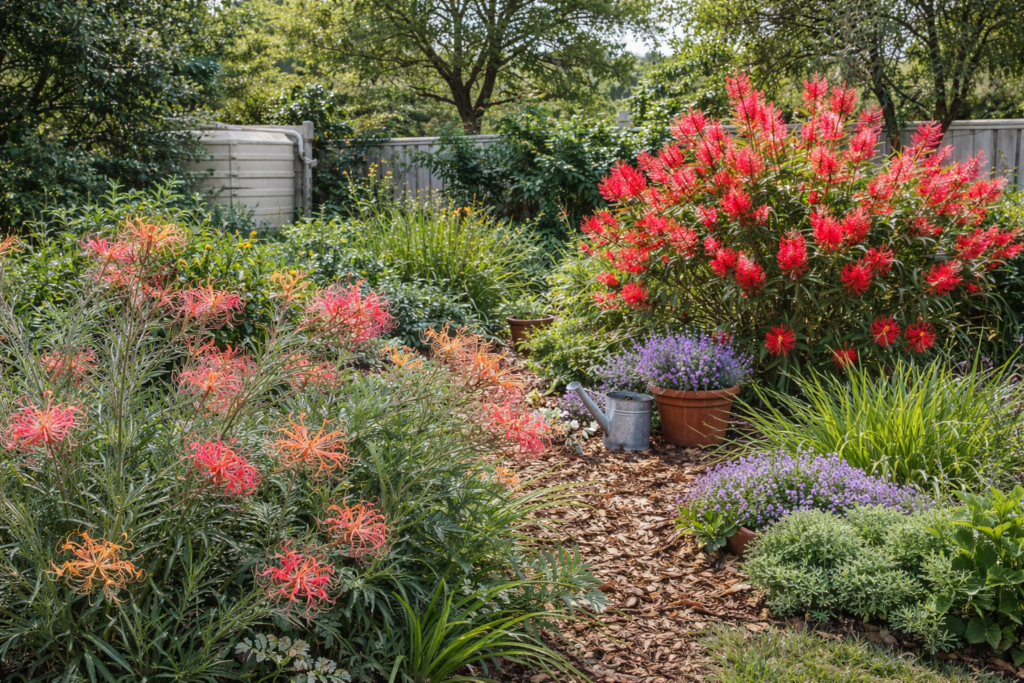
1. The Bird & Bee Magnet: Grevilleas & Bottlebrushes
If you want instant life in your garden, plant a grevillea or callistemon (bottlebrush). Their nectar-rich flowers are power stations for local wildlife.
Great Starter Picks:
- Grevillea ‘Robyn Gordon’: The ultimate survivor. A tough, sprawling shrub with stunning red flowers almost every day of the year. It’s forgiving and fast-growing.
- Grevillea rosmarinifolia (Rosemary Grevillea): Neat, upright growth with fine leaves. Perfect for smaller spaces, hedging, or even a large pot. The red flowers are a classic.
- Callistemon ‘Little John’ (Dwarf Bottlebrush): A compact, rounded shrub with gorgeous blue-grey foliage and dense, crimson bottlebrush flowers. Stunning contrast in the garden.
Care Tip: Plant in full sun with excellent drainage. They hate wet feet. After the main flowering flush, give them a light prune to encourage a bushy shape. Never use a standard fertiliser – the phosphorus can kill them. Opt for a native-specific, low-phosphorus formula.
2. The Structural Show-Offs: Grasses, Lomandras & Flaxes
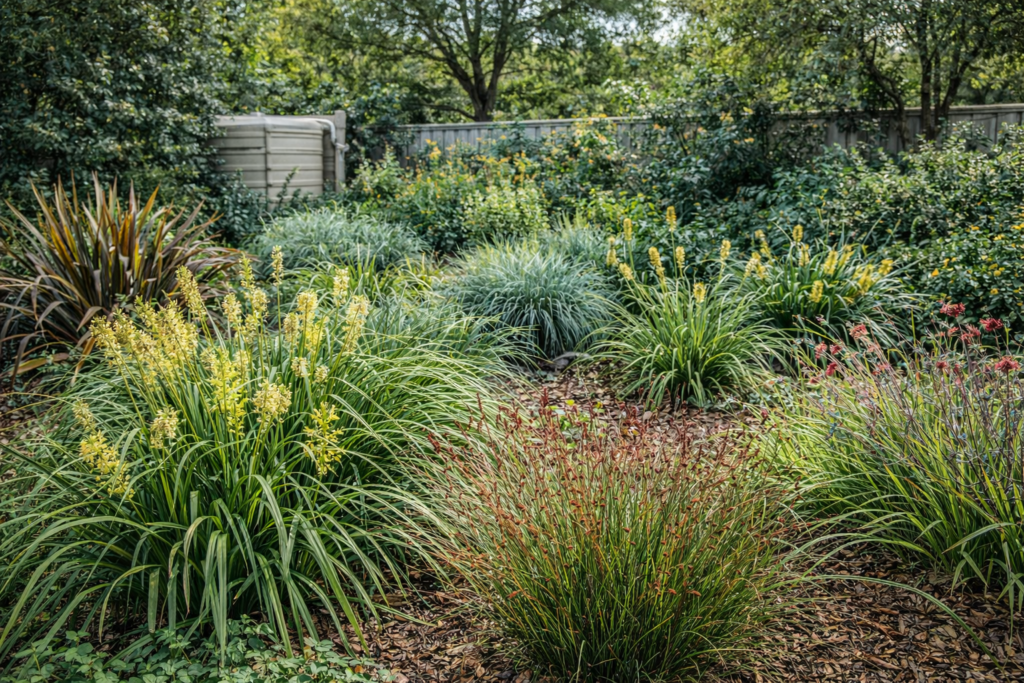
Every garden needs architecture. Native grasses and strappy-leafed plants provide beautiful, year-round structure, soft texture, and movement. They are the backbone of your design.
Great Starter Picks:
- Lomandra ‘Tanika’ or ‘Lime Tuff’: The undisputed champions of toughness. These form perfectly neat, bright green clumps that never seem to stress. Use them as a border, mass plant for a modern look, or in pots. They’re almost impossible to kill.
- Kangaroo Grass (Themeda triandra): Planting this is an act of connection. It’s the iconic grass of our country. It forms elegant tussocks, with beautiful seed heads that turn a breathtaking copper-red in summer, catching the light.
- New Zealand Flax (Phormium): While not strictly Australian, many cultivars thrive here and add incredible sculptural form with their bold, upright leaves in colours from bronze to pink-striped.
Care Tip: They are incredibly low maintenance. Simply cut them back hard every year or two in late winter to remove old growth and make way for fresh new leaves. They’re perfect for softening the edges of a DIY Raised Garden Bed Australia.
3. The Fragrant Fillers: Groundcovers & Sprawling Shrubs
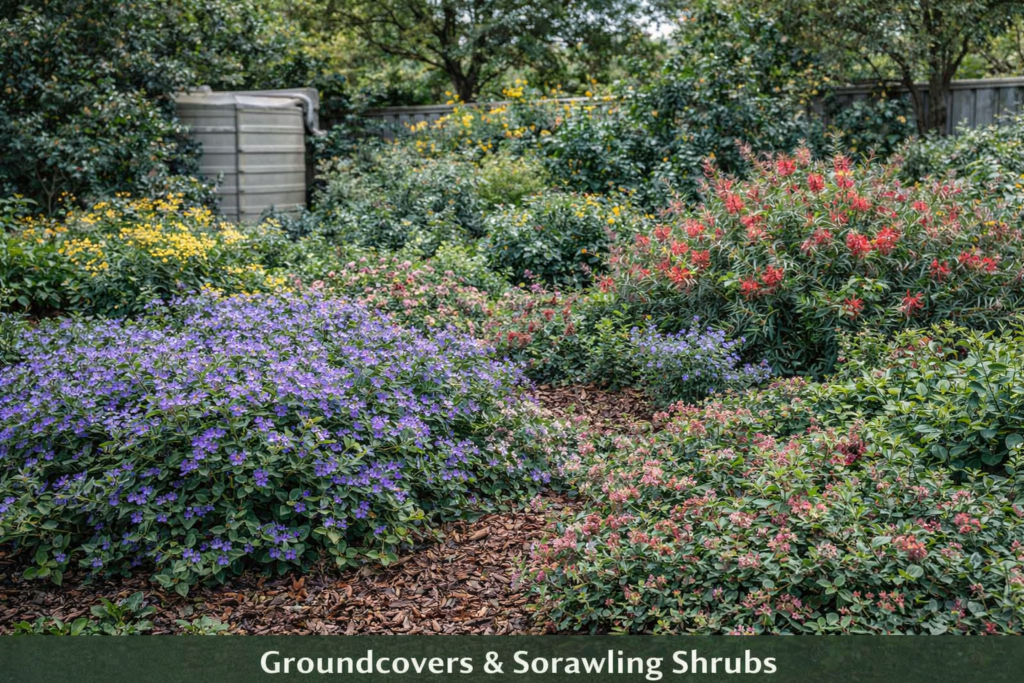
These plants fill the gaps, suppress weeds, and add a wonderful sensory layer. Brush past them to release beautiful scents.
Great Starter Picks:
- Prostrate Mint (Mentha satureioides): A fast-growing carpet of tiny leaves with a strong, clean minty aroma. Fantastic between stepping stones or at the front of a bed.
- Native Thyme (Prostanthera ovalifolia): A small shrub that becomes covered in lovely purple flowers in spring. The leaves are highly aromatic.
- Happy Wanderer (Hardenbergia violacea): A versatile climber or groundcover that explodes with masses of purple pea flowers in late winter/spring. It’s a beacon for early bees.
Care Tip: These love good drainage. If your soil is heavy, mix in some gravel at planting time. They’re ideal for cascading over walls or banks.
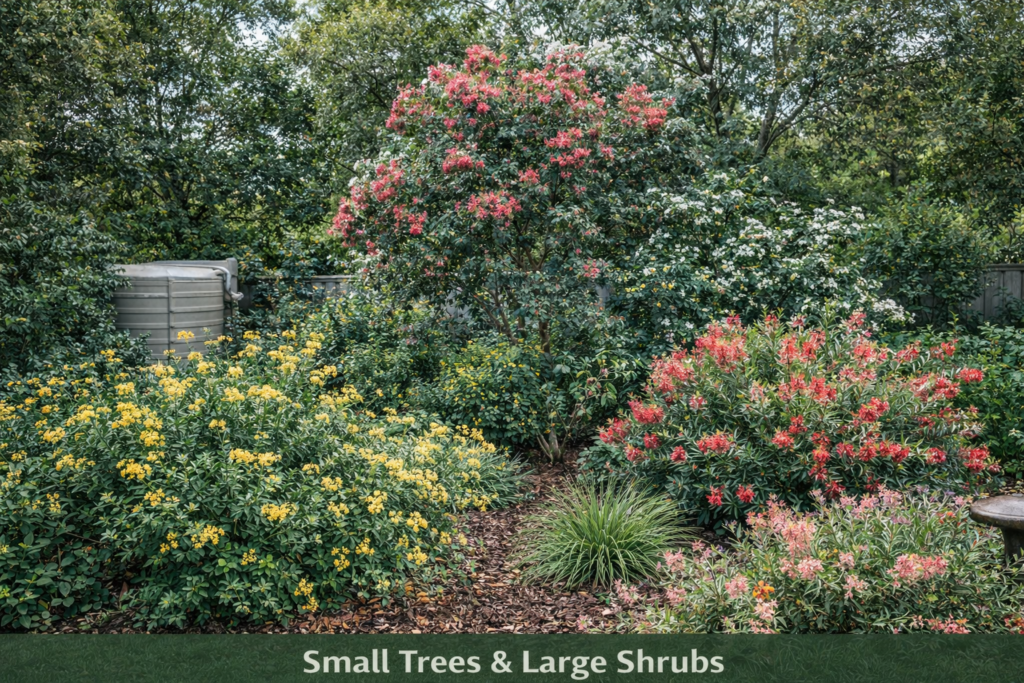
4. The Feature Makers: Small Trees & Large Shrubs
This is where you make a statement. Choose a small tree or large shrub as a focal point for shade, privacy, or sheer beauty.
Great Starter Picks:
- Lilly Pilly (Syzygium or Acmena): Fantastic for hedging or as a small tree. Glossy leaves, fluffy flowers, and edible pink/red berries that birds adore. Varieties like ‘Cascade’ resist psyllid insect damage.
- Dwarf Flowering Gum (Corymbia ficifolia ‘Mini Marvel’): Yes, you can have a gum tree in a small yard! Dwarf cultivars offer the spectacular summer blossom of their bigger cousins on a compact frame.
- Coastal Rosemary (Westringia fruticosa): A superb, hardy shrub with neat, grey-green foliage and small white flowers. It tolerates wind, salt, and drought beautifully. A brilliant, tidy alternative to exotic box hedges.
Care Tip: Water these deeply and regularly for their first full summer to establish a strong root system. After that, they’ll be remarkably self-sufficient. For a truly sustainable Aussie backyard, water them with harvested rain from your best rainwater tank for small backyards in Australia.
5. The Seasonal Sparkle: Wildflowers & Daisies
For unbelievable pops of colour that bring sheer joy, plant some native wildflowers. They provide vital pollen and nectar.
Great Starter Picks:
- Everlasting Daisies (Xerochrysum bracteatum): The classic. Papery flowers in pink, white, and yellow that last for ages on the plant and can be dried.
- Swan River Daisy (Brachyscome iberidifolia): Clouds of delicate blue, purple, or white daisies on feathery foliage. Perfect for pots, baskets, or garden edges.
- Native Violet (Viola hederacea): A charming groundcover for shady, damp spots (yes, natives for shade exist!). It forms a carpet of tiny green leaves and sends up small white and purple flowers.
Care Tip: Many of these are annuals or short-lived perennials. Let them set seed at the end of their season, and you’ll often be rewarded with new volunteers next year. It’s a delightful surprise.
How to Plant Your Natives for Success (The Right Way)
Getting them in the ground correctly is 90% of the battle. It’s different from planting a rose or a petunia.
- Timing is Everything: Autumn is absolutely prime time. The soil is still warm, encouraging root growth, and the cool, wetter months ahead give the plant a stress-free establishment period. Early spring is your second-best option.
- The Hole Truth: Dig a hole twice as wide as the pot, but only just as deep. Natives hate being buried too deep. Roughen up the sides of the hole—if it’s glazed and smooth, roots will struggle to break out.
- The Soil Mix: This is critical. Do not enrich the hole with rich compost, manure, or standard potting mix. Our natives are adapted to low-phosphorus soils. If your soil is terrible, mix what you dug out with a small amount of native-specific potting mix or well-weathered compost.
- The Planting Ritual: Water the plant well in its pot. Gently tap it out, teasing out any coiled roots. Place it in the hole, backfill, and firm the soil gently. Create a small soil berm around the edge to form a water well.
- The First Drink: Water it in thoroughly with a seaweed solution (like Seasol). This isn’t fertiliser; it’s a plant tonic that reduces transplant shock and stimulates root growth.
- Mulch Mindfully: Apply a 5-7cm layer of coarse, organic mulch like woodchips or gravel. Keep it away from the plant’s stem to prevent rot. This mulch is your best friend—it keeps roots cool and suppresses weeds.
Building a Complete Ecosystem: Think in Layers
Nature doesn’t garden in isolated specimens. It builds communities. Mimic this in your sustainable Aussie backyard for resilience and beauty.
- Canopy Layer (The Overstorey): Your small trees (Lilly Pilly, Gum).
- Understorey Layer (The Mid-Level): Your shrubs (Grevilleas, Bottlebrush, Westringia).
- Ground Layer (The Carpet): Your grasses, groundcovers, and wildflowers.
- Vertical Layer (The Climbers): Plants like Happy Wanderer or Wonga Wonga Vine (Pandorea pandorana) on a fence or trellis.
This creates microclimates—shadier, cooler spots at ground level. It maximises habitat for creatures big and small. A bird might nest in the canopy, feed from the grevillea flowers, and bathe in a dish placed within the protective cover of the grasses below.
Your Natives and the Bigger Sustainable Picture
Your native garden is the core of a holistic system. It connects beautifully with other sustainable practices.
- Water Wisdom: Their low water needs pair perfectly with water from a rainwater tank for small backyards. You’ll barely touch the mains supply.
- Soil Cycle: Let leaf litter break down naturally to feed the soil. Boost this cycle by adding homemade compost. If you’re deciding on a system, our compost bin vs worm farm Australia guide can help you choose the best way to recycle your kitchen scraps into garden gold.
- The Productive Patch: Native plants attract beneficial insects that will help pollinate your veggies and control pests like aphids. Planting a border of natives around your veggie patch, or interspersing flowers like everlasting daisies, is a brilliant organic strategy for your best vegetables to grow in Australia backyard.
Common Questions (And Real, Honest Answers)
“Won’t it look messy and untidy?”
It can be as neat or as relaxed as you want. Using defined edges, choosing compact cultivars, and strategic pruning gives a very tidy, contemporary look. It doesn’t have to be a wild bushland.
“What if I only have a balcony or courtyard?”
Absolutely! The world of dwarf and compact natives is huge. Dwarf grevilleas, small Lomandras, potted grasses, and groundcover thyme are all perfect for containers. Just ensure pots have excellent drainage.
“Where do I buy them?”
Seek out a specialist native nursery if you can. The staff are passionate and have excellent local knowledge. Many general nurseries now have good native sections—just check the label to ensure it’s an Australian species.
“What about frost/salt wind/heavy clay?”
There’s a native for almost every condition! Coastal banksias for salt wind, woolly tea-trees for frost, and swamp paperbarks (Melaleuca) for heavy, wet soils. Do a little research for your specific challenge.
The First Step is Simple (And Exciting)
You don’t need to rip out your entire garden. That feeling is overwhelming. Start small.
Next weekend, visit a nursery. Don’t just look—touch the leaves. Smell the foliage. Imagine the birds. Pick one plant from this list that truly calls to you. Maybe it’s the soft feel of Kangaroo Grass or the vibrant promise of a ‘Robyn Gordon’ grevillea.
Take it home. Plant it well, following the steps above. Then watch it.
Watch the insects discover it first. Then the birds. Notice how it stands proud after a scorching day. Feel the satisfaction of a plant that truly, deeply belongs.
That one plant is the seed of your sustainable Aussie backyard. A place that saves you time and water, supports our unique wildlife, and gives you a deep, quiet connection to this ancient and beautiful land. It’s not just a garden; it’s a legacy.
Your sustainable oasis is waiting to grow. All it needs is you to start.
6 thoughts on “5 Amazing Native Plants for a Sustainable Aussie Backyard That Thrive”