
Let’s be honest. You see those big, round corrugated iron tanks on country properties and think, “Nice, but not for me.” Your backyard is a different story. It’s a modest patch of grass, a few garden beds, maybe a patio. Space is precious. The idea of squeezing in a rainwater tank feels like trying to fit a second car in a single garage.
But here’s what I’ve learned from helping dozens of friends and neighbours: that feeling is exactly why you should get one. In a small space, every resource counts double. Every drop of water you save is a bigger win. The best rainwater tank for small backyards in Australia isn’t a burden—it’s a brilliant space-saving sidekick.
This isn’t about installing a giant eyesore. It’s about making a clever, almost invisible upgrade to your home. A upgrade that saves you money, keeps your garden lush during water restrictions, and gives you a quiet sense of self-reliance. Let’s walk through how to find the Best Rainwater Tank for Small Backyards in Australia, without the headache for water wise gardening.
Table of Contents
Why a Small Tank is Your Smartest Garden Investment
First, let’s bust a myth. You don’t need a 20,000-litre monster to make a difference. Think of your roof as a giant catchment area. Even a light shower can yield hundreds of litres. A small, well-placed tank captures that “free money” falling from the sky.
In a compact backyard, this water is liquid gold for:
- Your veggie patch and pot plants: Rainwater is soft, chlorine-free, and plants absolutely thrive on it.
- Topping up a little pond or bird bath.
- Washing your car or bike on the lawn (where the runoff waters the grass!).
- Building a buffer against those sudden summer water restrictions.
Starting small is still starting. A 500-litre tank can mean the difference between your garden surviving a hot week or wilting. It’s a practical, achievable step toward sustainability.
Before You Shop: 5 Minutes of Crucial Thinking
Jumping online to look at tanks is tempting. But a quick ponder first will save you time and regret. Grab a cuppa and ask yourself to find the best rainwater tank for small backyards in Australia:
- The “Why” Check: Is this just for topping up the garden with a watering can? Or do you dream of connecting a drip irrigation system or even the washing machine? Garden-only is simpler and cheaper.
- The Downpipe Detective Work: Go outside. Where are your downpipes? The best rainwater tank for small backyards in Australia will live close to one. That side passage, the back wall of the garage, or a rear corner are prime real estate.
- The Budget Reality: It’s not just the tank. Factor in a solid stand (if needed), a proper first-flush diverter (trust me, you want this), a leaf filter, and maybe basic plumbing. A $500 tank can easily become a $1,000 project.
- The Rulebook: Councils have rules about tanks, mostly about height and placement. A small, sub-2.5m high tank usually falls under “exempt development,” but a quick call or website check with your local council is non-negotiable. Don’t guess.
- The Aesthetic Wish: Be real with yourself. Do you want to hide it completely, or are you okay with something that looks neat and tidy? This decides everything.
The Contenders: 7 Best Tank Styles for Tight Spots
Alright, with that thinking done, let’s meet the team. These are the shapes and solutions that turn “no space” into “perfect space.”
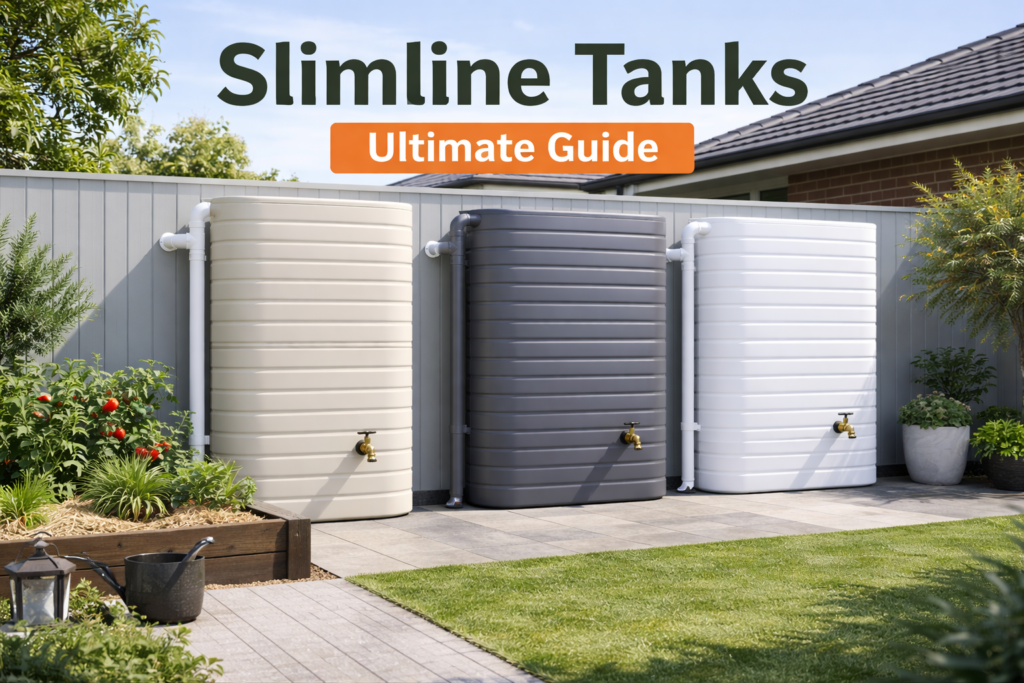
1. Slimline Tanks: The Unbeatable Space-Saver
This is the MVP for suburban blocks. Picture a tall, narrow panel. That’s a slimline tank. They’re designed to hug your wall or fence, taking up a sliver of ground while holding a serious amount of water (1,000 to 5,000 litres).
- Perfect for: That dead space along the side of your house, a narrow boundary fence line, or tucked beside the shed.
- The Good: Incredibly space-efficient. Many come in colours like ‘Basalt’ or ‘Surfmist’ to blend with modern homes. You can often link two together for more capacity.
- The Consideration: They need a perfectly flat, level base (a concrete slab or compacted crusher dust). Their height means the tap is conveniently placed for filling watering cans.
- Pro Tip: Look for brands with a reinforced design. A full tank is very heavy, and you want it to stay perfectly straight.
2. Under-Deck Tanks: The Secret Agent
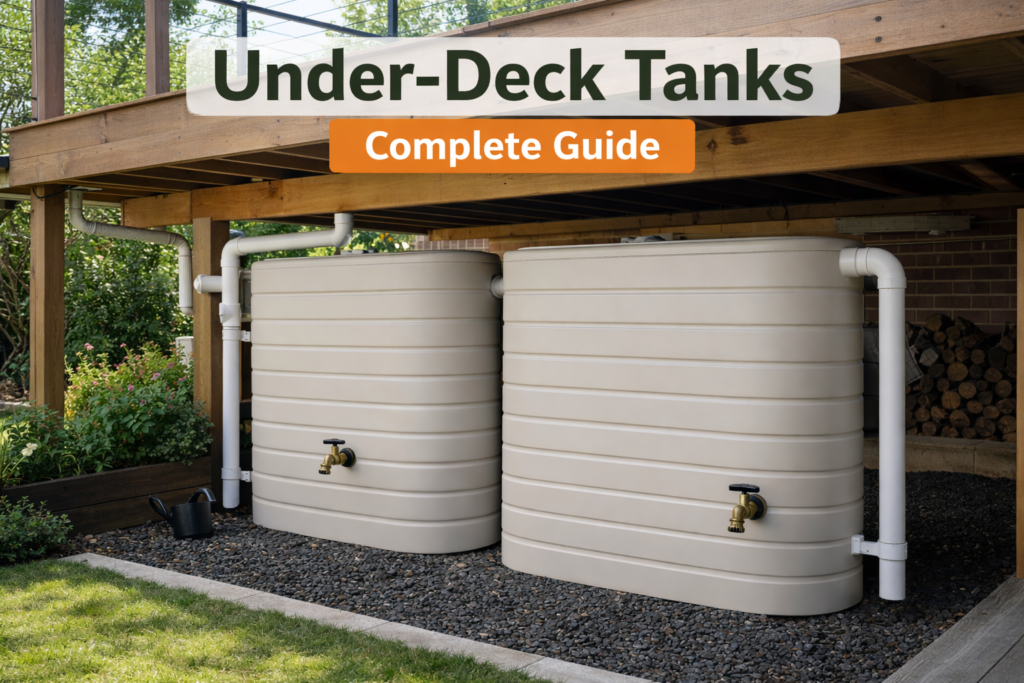
Got a raised wooden deck? You might be sitting on the perfect tank spot. Under-deck tanks are flat, modular units that slot into the cavity beneath your feet.
- Perfect for: Anyone who wants zero impact on their usable garden space. It’s completely out of sight.
- The Good: Maximises every centimetre. Keeps water cool and dark, preventing algae. Can be configured to fit the specific space.
- The Consideration: Installation needs to be precise during deck construction or a major retrofit. Access for maintenance is key.
- Pro Tip: This is often a more premium option, but for a seamless look, it’s unbeatable.
3. Bladder Tanks: The Invisible Solution
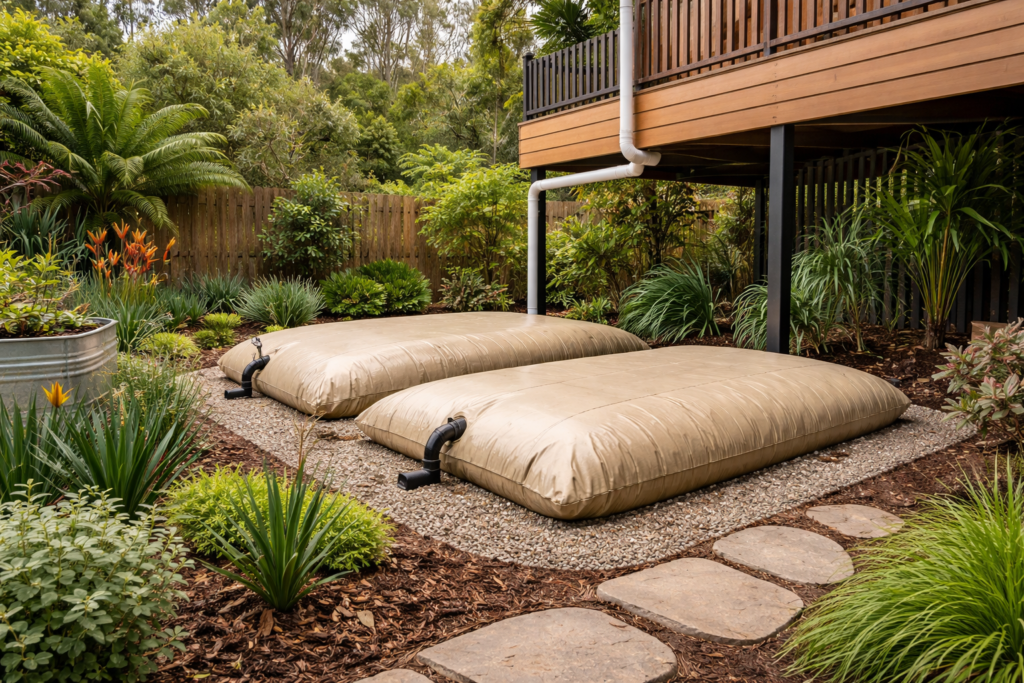
This is next-level space hacking. A bladder tank is a heavy-duty, flexible liner that fits into a cavity—under a floor, in a bench seat, or in a specially built compartment under the lawn.
- Perfect for: The absolute tightest spots where a rigid tank is impossible. Great for new builds with space designed in.
- The Good: When empty, it’s just a void. It conforms to irregular spaces.
- The Consideration: Professional installation is highly recommended. They are not a DIY, off-the-shelf product for most.
- Pro Tip: Often used in conjunction with a small submersible pump to get the water back out.
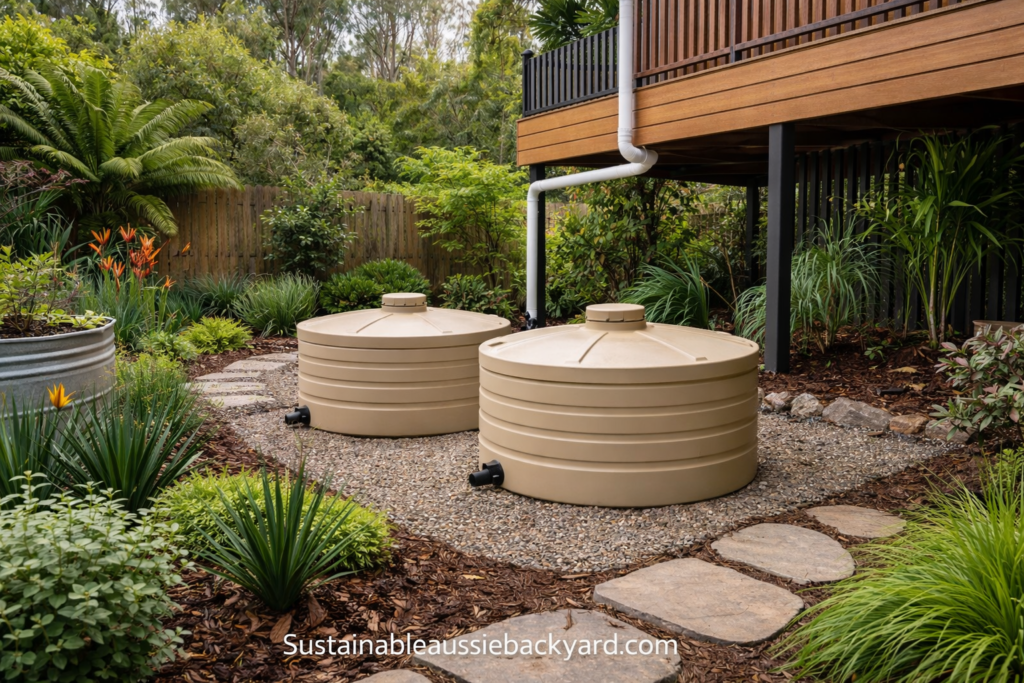
4. Small Round Poly Tanks: The Honest Workhorse
Don’t overlook the classic. Modern polyethylene round tanks aren’t just the giant rural ones. They come in small, neat sizes like 500L, 750L, and 1,100L.
- Perfect for: A spare corner where you have a bit more width to play with. They have a friendly, familiar look.
- The Good: Often the most cost-effective option per litre. Simple, robust, and easy to install.
- The Consideration: Their round shape means they take up more floor area for the same volume as a slimline.
- Pro Tip: Some have a “flat back” design to push them snug against a wall. Look for UV-stabilised poly so they don’t become brittle in the sun.
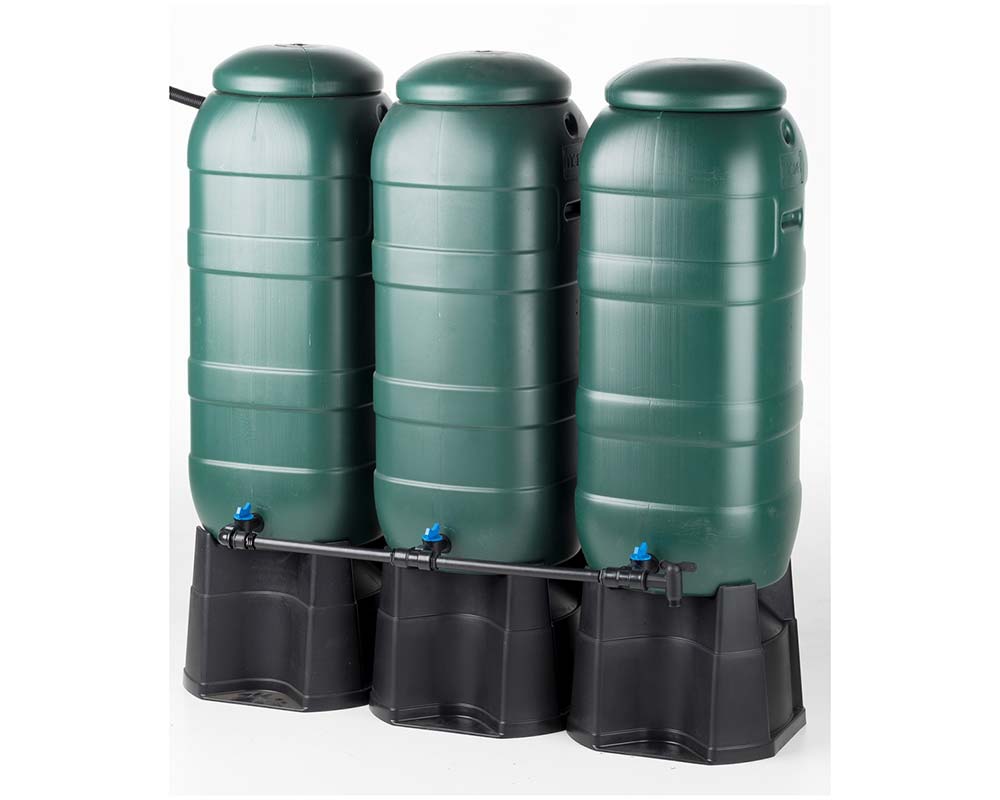
5. Tank Stands & Linking Kits: The Vertical Thinkers
This is where you get clever. Sometimes the best rainwater tank for small backyards in Australia is about working in layers.
- The Stand: Putting any tank on a 1-2 foot high stand is a game-changer. It creates storage space underneath for bins, pots, or the lawnmower. It also gives you better water pressure for a hose.
- Linking Kits: Can’t fit one big tank? Link two or three smaller slimlines together. This spreads the load and can fit around corners.
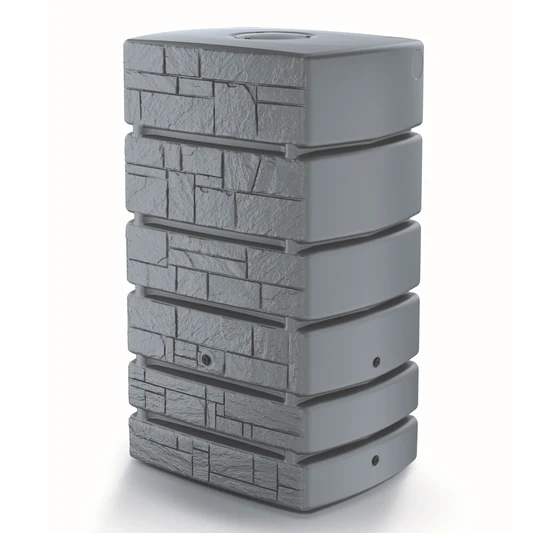
6. Decorative & Sculptural Tanks: The Statement Piece
Who said function can’t be beautiful? A new wave of designers is making tanks you’ll want to show off.
- Perfect for: The centre of a courtyard or a prominent spot in a modern garden.
- The Good: They become a water feature and a talking point. Options include tanks that look like giant glazed pots, textured rock columns, or sleek metal sculptures.
- The Consideration: You pay a premium for the design. Capacity might be more limited.
- Pro Tip: Brands like Rainwater HOG offer modular tanks that can be stacked like Lego to form a wall or screen.
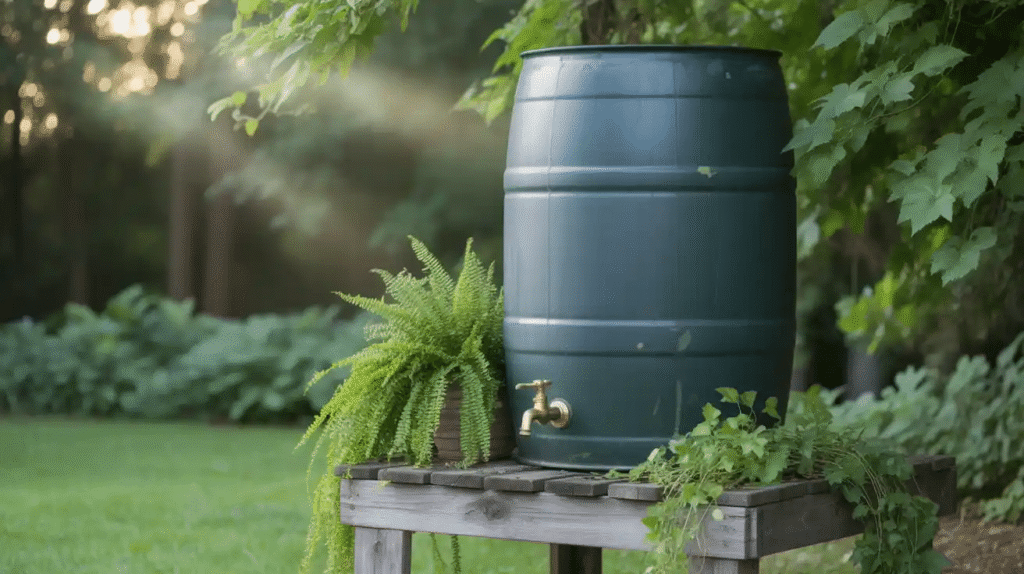
7. The Modest Rain Barrel: The Perfect First Step
Let’s not forget the humble hero. A simple 200-300 litre plastic or oak-look barrel with a tap is a brilliant start.
- Perfect for: Renters, balcony gardeners, or anyone who wants to test the waters (pun intended) with minimal fuss.
- The Good: Cheap, available at any hardware store, and installs in an afternoon with a downpipe diverter kit.
- Pro Tip: Place it on a few pavers or a small stand. This makes using the tap easier and improves flow.
The Unsung Heroes: Filters, Pumps & Keeping It Clean
A tank is more than a storage bin. These extras make the system work smoothly for years.
- First Flush Diverter: This little device is crucial. The first water off your roof contains most of the dust, pollen, and bird droppings. The diverter catches this and redirects it away, so only cleaner water enters your tank. It’s a must for water quality.
- Leaf Filter & Strainer: A mesh screen over the inlet stops leaves and twigs. Simple, effective.
- The Pump Question: For gravity-fed watering can use, no pump needed if the tank is raised. To run a drip irrigation system or a hose with decent pressure, a small, quiet submersible pump is worth the investment. Look for a pump with a pressure-sensitive automatic switch.
- Maintenance (It’s Easy): Once a year, check your filters and screens. Every few years, if you notice sediment, you might need to drain and gently clean the tank. It’s minimal work for a huge payoff.
Your Decision Toolkit: From Dreaming to Doing
Feeling clearer? Let’s lock it in. Here’s your action plan:
- Measure Twice: Get the tape out. Measure the exact spot you’re thinking of, including height clearances. Don’t forget to leave room for connections and a little breathing space.
- Calculate Rough Needs: A great free tool is the Bureau of Meteorology Rainfall Calculator. Plug in your roof area and see what a typical downpour could yield. It’s eye-opening!
- Get Quotes: Contact a few local tank suppliers. A good one will ask about your space and needs, not just try to sell you the biggest unit.
- Visualise It: Ask the supplier for a photo of a similar tank installed. Can you live with how it looks?
- Plan the Install: Will you DIY with a handy friend, or pay for professional installation? For anything connected to your house plumbing, a licensed plumber is a wise choice.
The Ripple Effect of Your Choice
Choosing the best rainwater tank for small backyards in Australia does more than just fill your watering can. It changes your relationship with water. You start watching the weather forecast with hope. You feel a pang of pride when your garden is green while others are brown. You’ve built a small piece of resilience against a dry future.
It starts with looking at that narrow side passage or that empty space under the deck not as a limitation, but as an opportunity. Your perfect tank is out there, waiting to turn rainfall into resilience.
So, what are you waiting for? That next shower is coming. Will you let it all run down the drain, or will you catch it and put it to work?
6 thoughts on “7 Clever Choices for the Best Rainwater Tank for Small Backyards in Australia”